Cyrtostylis reniformis
(R. Br.) Schltr.
Mosquito orchid, Gnat Orchid
iNaturalist· cc-by-nc
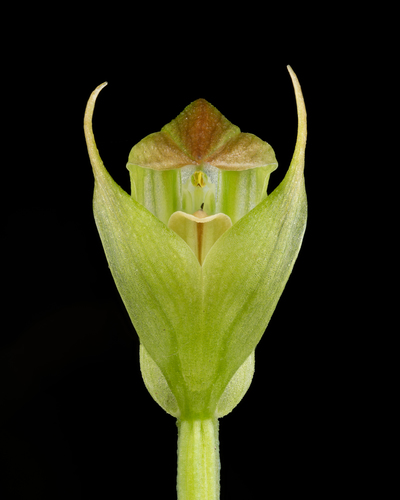
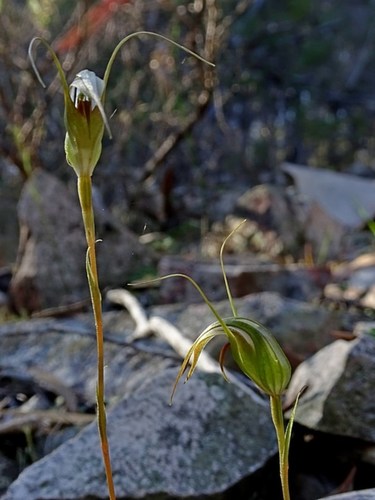
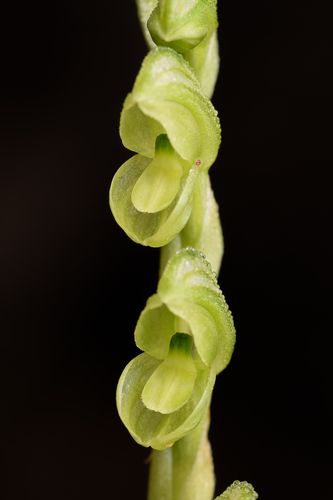
(c) Andrew Dilley, some rights reserved (CC BY-NC), uploaded by Andrew Dilley
iNaturalist· cc-by-nc
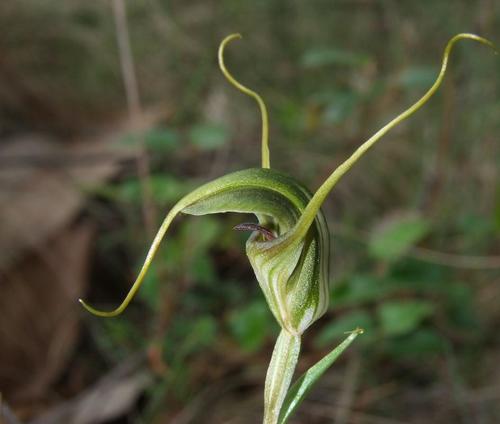
(c) wombatplace, some rights reserved (CC BY-NC)
iNaturalist· cc-by-nc
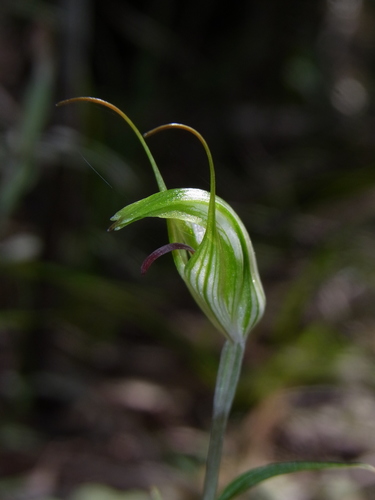
(c) Andrew Dilley, some rights reserved (CC BY-NC), uploaded by Andrew Dilley
Summary
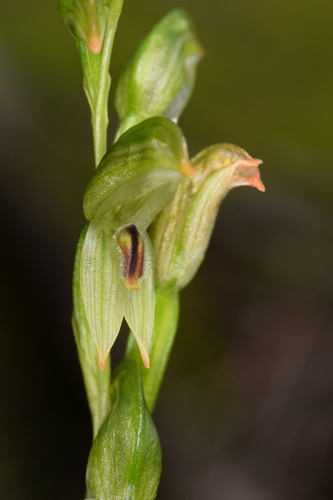
Source: WikipediaCyrtostylis reniformis, commonly known as common gnat-orchid, is a species of orchid endemic to eastern Australia. It usually has a single kidney-shaped leaf and a flowering spike with up to eight reddish flowers with a shelf-like labellum.
Description
A small orchid. It is an evergreen plant. It grows 5-20 cm high and a spread of 20 cm across. The stem is erect and carries the flower. The leaves are kidney shaped and 4 cm long by 5 cm across. They are green and with hairs on the underside. The flowers are reddish-brown. Up to 8 flower blooms can occur at the top of the plant. They are 1.5 cm long and pink or red. The lip of the orchid flower shows up clearly and is flat and oblong.
Edible Uses
The tuber is eaten.
Traditional Uses
The tuber is eaten.
This uses section is brief — help expand it
Distribution
It is a warm temperate plant. A plant native to coastal New South Wales in Australia. It prefers light sandy soils. It does best in well drained soils and a protected position which can be in partial shade. It is damaged by frost and drought. Often colonies of the plants grow together.
Where It Grows
Australia, New Zealand, Tasmania,
Cultivation
It is grown by dividing the rootstock. It is easy to grow.
Synonyms
References (7)
- Bodkin, F., 1991, Encyclopedia Botanica. Cornstalk publishing, p 45 (As Acianthus reniformis)
- Cherikoff V. & Isaacs, J., The Bush Food Handbook. How to gather, grow, process and cook Australian Wild Foods. Ti Tree Press, Australia p 194 (As Acianthus reniformis)
- Collier, P., 1993, Orchids of Tasmania. Plant Identikit. Society for growing Australian Plants. Tasmania. p 12
- Elliot, W.R., & Jones, D.L., 1982, Encyclopedia of Australian Plants suitable for cultivation. Vol 2. Lothian. p 137 (As Acianthus reniformis)
- Lim, T. K., 2015, Edible Medicinal and Non Medicinal Plants. Volume 9, Modified Stems, Roots, Bulbs. Springer p 32
Show all 7 references Hide references
- Minchin, R.F., Tasmanian Wildflowers. A Field Guide. Volume one. Regal Publications, Launceston p 34 (As Acianthus reniformis)
- Tasmanian Herbarium Vascular Plants list p 70 (Cyrtostylis reniformis)