Babiana mucronata
(Jacq.) Ker Gawl
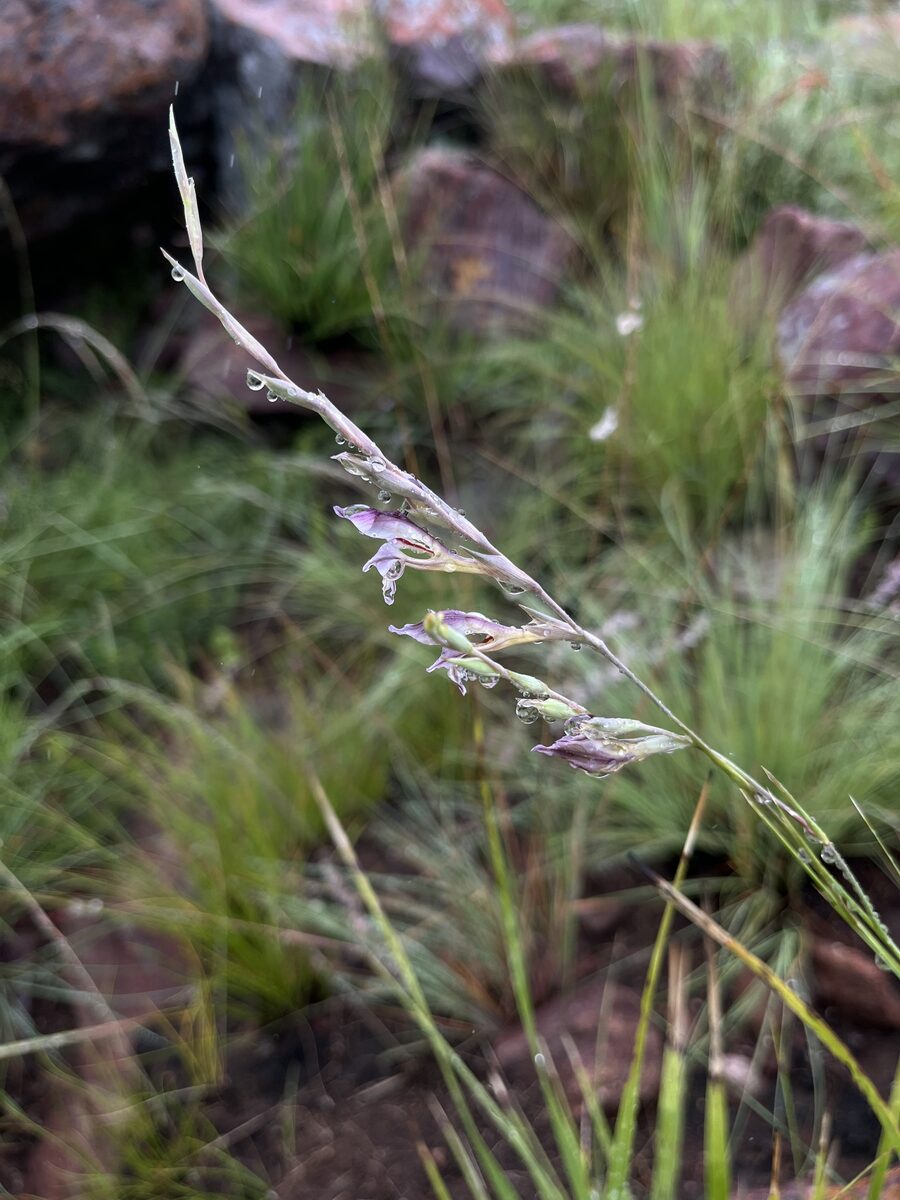
iNaturalist· cc-by-nc
(c) Mark Johnston, some rights reserved (CC BY-NC), uploaded by Mark Johnston
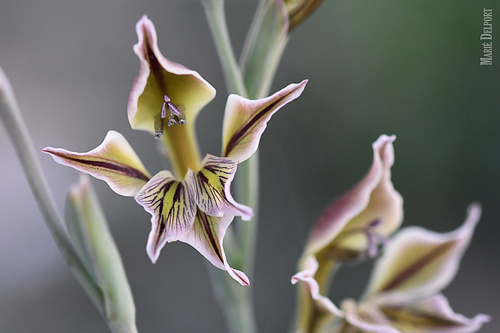
iNaturalist· cc-by-sa
(c) Tony Rebelo, some rights reserved (CC BY-SA), uploaded by Tony Rebelo
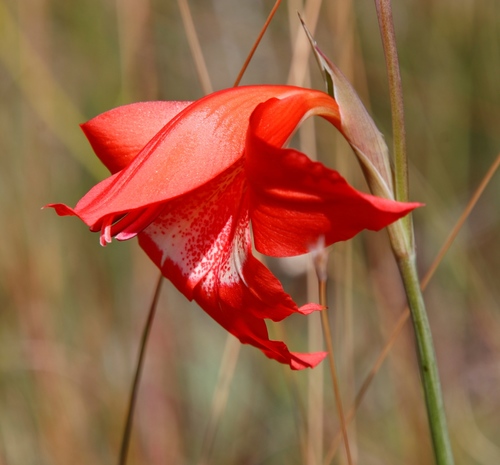
iNaturalist· cc-by-nc
(c) Gawie Malan, some rights reserved (CC BY-NC), uploaded by Gawie Malan
Summary
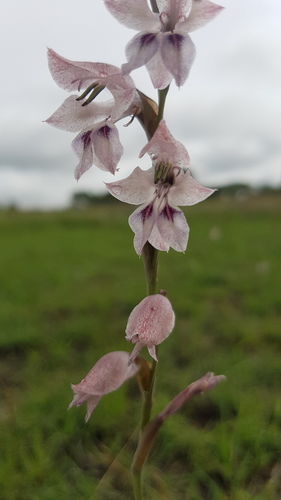
Source: WikipediaBabiana mucronata is a perennial plant species that grows to about 5–18 cm (2.0–7.1 in) high and annually forms leaves and flowers from an underground corm. It is assigned to the iris family. It has a simple or branched, more or less upright spike of 3-12 dark to pale violet-blue, mirror-symmetrical flowers. Each flower consists of a perianth that is merged below into a funnel-shaped tube of 10–25 mm (0.39–0.98 in) long but splits into six unequal tepals. Three stamens are curved, crowded near the upper lip, and carry pale violet anthers. Flowers may be found between late July and September.
Description
A herb. It is a bulb plant.
This description is brief — help expand it
Distribution
It is a subtropical plant.
Where It Grows
Africa, South Africa*, Southern Africa,
Nutrition
| Part | Moisture | kJ | kcal | Protein | Vit A | Vit C | Iron | Zinc |
|---|---|---|---|---|---|---|---|---|
| Bulb | 76 | 405 | 97 | 0.7 | — | — | 1.8 | 0.9 |
Synonyms
References (3)
- Ruiters-Welcome, A. K., 2019, Food plants of southern Africa. Ph.D. thesis. Univ. of Johannesburg p 66
- Wehmeyer, A. S, 1986, Edible Wild Plants of Southern Africa. Data on the Nutrient Contents of over 300 species
- Welcome, A. K. & Van Wyk, B.-E., 2019, An inventory and analysis of the food plants of southern Africa. South African Journal of Botany 122 (2019) 136–179