Romulea rosea
(L.) Ecklon
Onion grass, Onion weed, Guildford grass
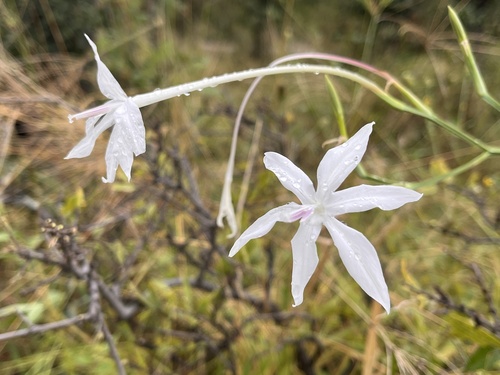
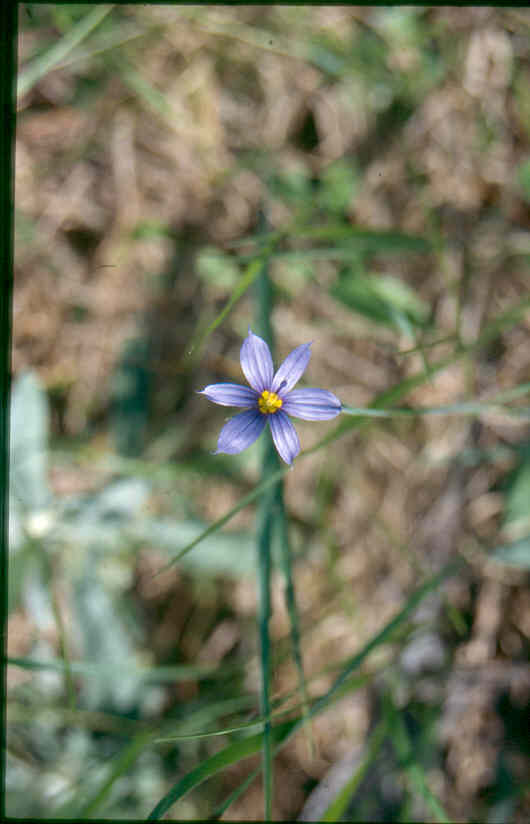
iNaturalist· cc-by-nc
(c) rachelf, some rights reserved (CC BY-NC), uploaded by rachelf
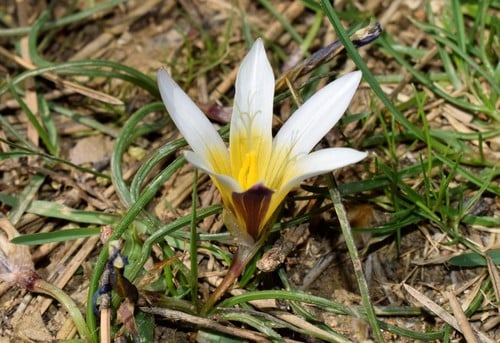
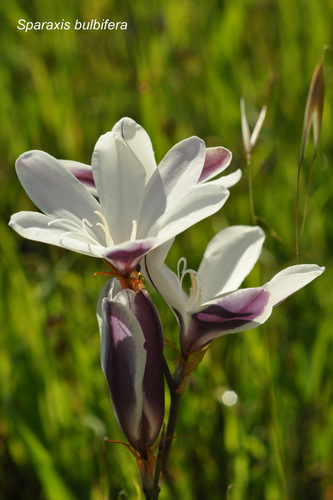
iNaturalist· cc-by-nc-sa
(c) Attilio Demicheli, some rights reserved (CC BY-NC-SA)
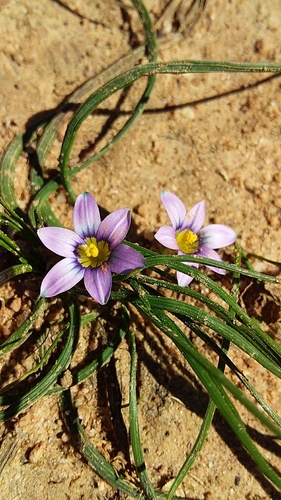
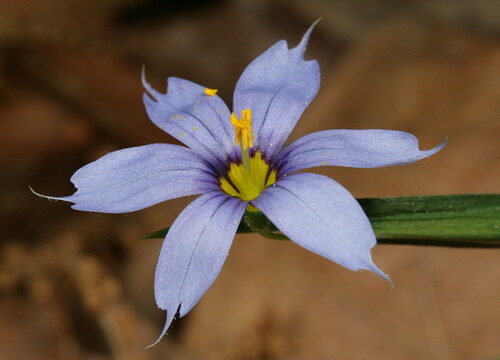
iNaturalist· cc-by
(c) Jason Sturner, some rights reserved (CC BY)
Summary
Source: WikipediaRomulea rosea is a herbaceous perennial plant in the family Iridaceae. It is a small plant, usually less than 20 cm high, with grass-like leaves. The flowers, which appear in spring, are pink with a yellow throat. Common names include Guildford grass, onion grass and rosy sandcrocus. R. rosea is endemic to the western Cape Province (now Western Cape, Eastern Cape and Northern Cape) in South Africa, but it has become naturalised in Europe, Australia, New Zealand, and California in the United States. It is considered to be an environmental weed in much of Australia.
Description
A small herb. It keeps growing from year to year. It arises from a bulb under the ground. The leaves are narrow and linear. They are 30 cm long and grooved. They are like grass. They are very tough. They have a thickened edge and midrib. The base of the leaves sheaths the stem underground. There are up to 4 flowers from each corm. They are on a leaf free stem. The flowers are pink. They are like stars. They are supported by an unequal pair of sword shaped bracts. The fruit is a capsule with 3 sections. It has broad wrinkles. There are 10-30 seeds. The capsule opens widely into 3 blunt leathery lobes.
Edible Uses
The young green fleshy fruit and pods are eaten, particularly by children.
Traditional Uses
CAUTION: The plants have caused infertility and abortion in cattle. The young green fleshy fruit are eaten.
This uses section is brief — help expand it
Known Hazards
The plants have caused infertility and abortion in cattle.
Distribution
It is a temperate plant. It grows in pasture.
Where It Grows
Africa, Australia, South Africa, Southern Africa, St Helena, Tasmania,
Other Information
The fruit are eaten especially by children.
Notes
There are about 90 Romulea species.
Also Known As
Froetang, Frutangs, Knikkers
References (16)
- Bodkin, F., 1991, Encyclopedia Botanica. Cornstalk publishing, p 887
- De Vynk, J. C., et al, 2016, Indigenous edible plant use by contemporary Khoe-San descendants of South Africa's Cape South Coast. South African Journal of Botany. 102 (2016) 60-69
- Fox, F. W. & Young, M. E. N., 1982, Food from the Veld. Delta Books. p 243
- Harris, S., Buchanan, A., Connolly, A., 2001, One Hundred Islands: The Flora of the Outer Furneaux. Tas Govt. p 215
- Hibbert, M., 2002, The Aussie Plant Finder 2002, Florilegium. p 252
Show all 16 references Hide references
- Hussey, B.M.J., Keighery, G.J., Cousens, R.D., Dodd, J., Lloyd, S.G., 1997, Western Weeds. A guide to the weeds of Western Australia. Plant Protection Society of Western Australia. p 34
- Lamp, C & Collet F., 1989, Field Guide to Weeds in Australia. Inkata Press. p 241
- Lazarides, M. & Hince, B., 1993, Handbook of Economic Plants of Australia, CSIRO. p 206
- Low, T., 1992, Bush Tucker. Australia’s Wild Food Harvest. Angus & Robertson. p 88
- Manning, J., 2007, Field Guide to Fynbos. Struik Nature p 126
- Paczkowska, G. & Chapman, A.R., 2000, The Western Australian Flora. A Descriptive Catalogue. Western Australian Herbarium. p 72
- Ruiters-Welcome, A. K., 2019, Food plants of southern Africa. Ph.D. thesis. Univ. of Johannesburg p 69
- Tasmanian Herbarium Vascular Plants list p 66
- Topogr. Verz. Pflanzensamml. Ecklon 19. 1827
- van Wyk, Be., & Gericke, N., 2007, People's plants. A Guide to Useful Plants of Southern Africa. Briza. p 54
- Welcome, A. K. & Van Wyk, B.-E., 2019, An inventory and analysis of the food plants of southern Africa. South African Journal of Botany 122 (2019) 136–179