Sisyrinchium angustifolium
Mill.
Bermuda Blue-Eyed Grass, Narrowleaf blue-eyed grass
iNaturalist· cc-by-nc-sa
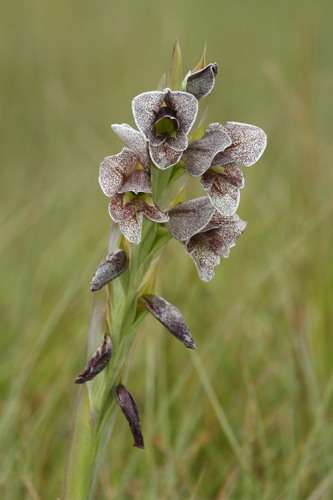
(c) Patrick Coin, some rights reserved (CC BY-NC-SA)
iNaturalist· cc-by
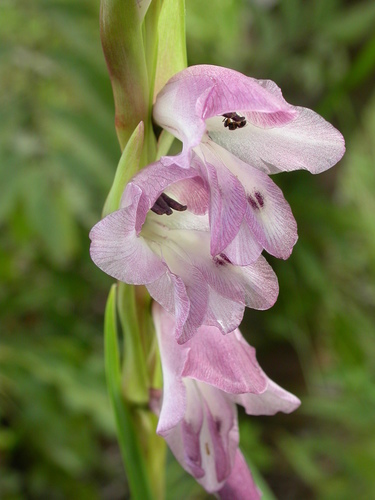
(c) Michael J. Papay, some rights reserved (CC BY), uploaded by Michael J. Papay
iNaturalist· cc-by-nc
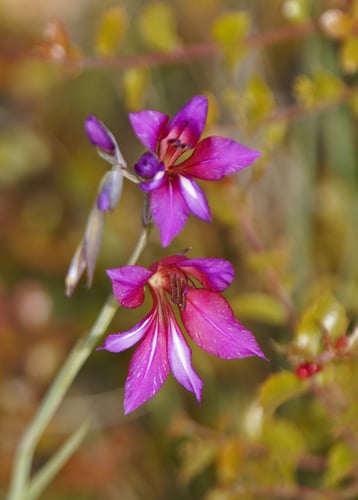
(c) Eric Keith, some rights reserved (CC BY-NC), uploaded by Eric Keith
Description
Sisyrinchium angustifolium is a PERENNIAL growing to 0.4 m (1ft 4in). See above for USDA hardiness. It is hardy to UK zone 3. It is in flower from July to August. The species is hermaphrodite (has both male and female organs). Suitable for: light (sandy), medium (loamy) and heavy (clay) soils. Suitable pH: mildly acid, neutral and basic (mildly alkaline) soils. It can grow in semi-shade (light woodland) or no shade. It prefers moist soil.
Edible Uses
Leaves - cooked. They are mixed with other greens.
Medicinal Uses
The root is astringent. An infusion is used to treat diarrhoea in adults and children. The leaves are eaten as a cooked green to regulate the bowels. An infusion of the plant has been used to treat stomach complaints and stomach worms.
Distribution
Western Ireland. South-eastern N. America. Naturalized in Britain.
Where It Grows
NORTHERN AMERICA: Canada (Québec, Nova Scotia, Ontario, Newfoundland and Labrador), United States (Indiana, Maine, Massachusetts, Michigan, New Hampshire, New Jersey, New York, Ohio, Pennsylvania, Rhode Island, West Virginia, Connecticut, Illinois, Iowa, Kansas, Minnesota, Missouri, Nebraska, Oklahoma, Wisconsin, Alabama, Arkansas, Delaware, District of Columbia, Florida, Georgia, Kentucky, Louisiana, Maryland, North Carolina, South Carolina, Virginia, Mississippi, Tennessee, Texas)
Cultivation
Prefers a moist but well-drained humus-rich loamy soil and a position in full sun, though it will tolerate part-day shade. gives a hardiness rating of zone 3 to this plant (tolerating winter temperatures down to about -40°c) but then says that the plant will need the protection of a cold greenhouse in areas where the temperature falls much below freezing. Plants will often self-sow when growing in a suitable position.
Propagation
Seed - best sown as soon as it is ripe in a greenhouse in the autumn, though it can also be sown in the spring. When large enough to handle, prick the seedlings out into individual pots and grow them on in the greenhouse for their first winter. Plant out in late spring, after the last expected frosts. Division in early spring.