Tigridia pavonia
(L. f.) DC.
Tiger flower, Mexican shell flower
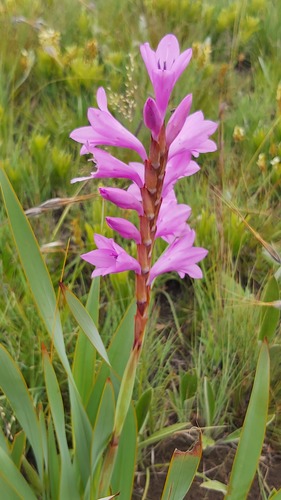
iNaturalist· cc-by-nc
(c) Matteo Cassella, some rights reserved (CC BY-NC), uploaded by Matteo Cassella
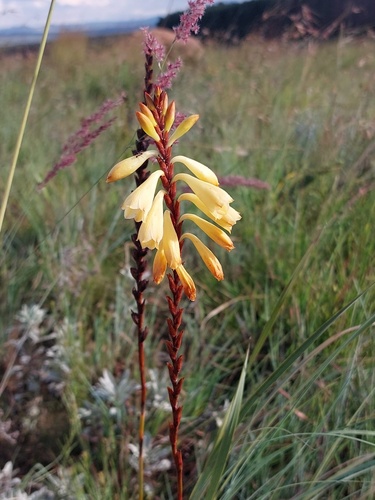
iNaturalist· cc-by-nc
(c) domiguez-761, some rights reserved (CC BY-NC)
iNaturalist· cc-by-sa
(c) Goldi64, some rights reserved (CC BY-SA)
Summary
Source: WikipediaTigridia pavonia is a species of flowering plant in the iris family Iridaceae. Common names include jockey's cap lily, Mexican shellflower, peacock flower, jaguar flower, tiger iris, and tiger flower. The Aztecs of Mexico called the flower ocēlōxōchitl meaning "jaguar flower". The Inga and Kamëntšá peoples of Colombia refer to this flower as watsimba. This summer-flowering bulbous herbaceous perennial is widespread across much of Colombia, El Salvador, Guatemala, Honduras, and Mexico. It is naturalized in Ecuador and Peru. The leaves are narrow and lance-shaped. The three-petalled blooms occur in a variety of colour combinations with strongly contrasting central markings. The three sepals are larger, to 7.5 cm (3.0 in) long, giving the flower a total width of 15 cm (5.9 in). They open early in the morning and close before dusk. Blooms are successional throughout summer. Plants bloom in the first year after sowing. Tigridia pavonia is cultivated as an ornamental plant. It prefers a sheltered position in full sun, in sandy but fertile soil. The plants are said to be hardy to as low as −12 °C (10 °F) in many sources, while in some others only to 5 °C (41 °F). Most authorities recommend that the corms should be lifted and stored throughout the winter months in colder areas. The roasted bulbs are edible and have been used by the American Indians and Indigenous peoples of Mexico. It has a chestnut-like flavour. The Indigenous communities of Colombia's Sibundoy Valley, the Inga and Kamëntšá, know the flower as watsimba and use its bulbs in a variety of recipes. Indigenous women in the valley also use Tigridia pavonia bulbs to produce reddish dyes for makeup and clothes. It is used extensively as chicken feed, and is considered by these communities to produce better meat and eggs than other feeds. When used for culinary purposes, watsimba is also considered a substitute for potatoes. Tigridia pavonia is considered a good source of food security in these communities' chagras (Indigenous polyculture gardens), given that if other staple crops fail to produce well, one can eat the flower bulbs. The Indigenous communities of the Sibundoy Valley also use the flowers for medicinal purposes in a variety of infusions and poultices, particularly for acid reflux, gastritis, and abdominal distension. The aphid Aphis newtoni may be found on this plant.
Description
A plant with a corm. It grows 40-60 cm high and 10-15 cm wide. The leaves form a fan shape from the base. There are 2 ranks of leaves which sheath the stem. The leaves are 25-40 cm long. The flowers have 3 large segments. When fully open they are 10 cm across. The colours range from red, orange, yellow, white and purple. There are often spots on the inner segments.
Edible Uses
The corm can be cooked and is delicious when baked, with a flavour similar to sweet potato. It is unfortunately quite small, so it makes for a very tasty but occasional treat rather than a staple food. Eating the corm raw causes an unpleasant burning sensation in the mouth.
Traditional Uses
The bulbs are roasted and eaten. They are starchy and have a chestnut like flavour.
This uses section is brief — help expand it
Medicinal Uses
The plant has been used to promote fertility.
Distribution
It is a subtropical plant. It grows in the cloud forest zone in Mexico. It is damaged by frost. It suits hardiness zones 9-10.
Where It Grows
Asia, Australia, Central America, Europe, Guatemala, India, Mexico, North America, USA,
Cultivation
Tigridia pavonia is found mainly in subtropical climates in central America. It prefers climates with hot summers and cool winters. The plant is not very cold-hardy, though it can tolerate short periods with temperatures falling to around -8°c. In areas with cold winters the corms should be dug up in the autumn and stored in a cool but frost free place over winter. In areas with cool summers the plant might not manage to develop adequate corms for subsequent growing. Prefers a well-drained light sandy soil in a warm sunny position. Likes plenty of moisture in the growing season. Plants flower in their first or second year from seed. A beautiful, late flowering corm, it self-sows freely with us on a well-drained soil in Cornwall, even very wet winters do not seem to affect this plant.
Propagation
Sow seed in early spring in a greenhouse; it usually germinates freely. Prick the seedlings out into individual pots when large enough to handle and grow them on under glass through their first winter. Plant out in late spring after the last expected frosts. Seedlings potted up while still small and grown on quickly will sometimes flower in their first year. Offsets can be divided in autumn — store the corms in a cool but frost-free place and plant them out in late spring. Smaller corms are best potted up and grown on in a greenhouse for a year before planting out in spring.
Other Uses
None known.
Other Information
It is a commercially cultivated vegetable.
Notes
There are about 35 Tigridia species.
Also Known As
Cacomite, Carcomeca, Cocomitl, Peacock flower, Shell flower
References (18)
- Ambasta, S.P. (Ed.), 2000, The Useful Plants of India. CSIR India. p 639
- Cundall, P., (ed.), 2004, Gardening Australia: flora: the gardener's bible. ABC Books. p 1418
- Facciola, S., 1998, Cornucopia 2: a Source Book of Edible Plants. Kampong Publications, p 123
- Hedrick, U.P., 1919, (Ed.), Sturtevant's edible plants of the world. p 650
- Hellmuth, N. M., 2011, Maya Ethnobotany. Complete Inventory of plants. Associacion FLAAR Mesoamerica. Tenth edition.
Show all 18 references Hide references
- Hermandez Bermejo, J.E., and Leon, J. (Eds.), 1994, Neglected Crops. 1492 from a different perspective. FAO Plant Production and Protection Series No 26. FAO, Rome. p 20
- Hibbert, M., 2002, The Aussie Plant Finder 2002, Florilegium. p 300
- Joyce, D., 1998, The Garden Plant Selector. Ryland, Peters and Small. p 308
- Kays, S. J., and Dias, J. C. S., 1995, Common Names of Commercially Cultivated Vegetables of the World in 15 languages. Economic Botany, Vol. 49, No. 2, pp. 115-152
- Kermath, B. M., et al, 2014, Food Plants in the Americas: A survey of the domesticated, cultivated and wild plants used for Human food in North, Central and South America and the Caribbean. On line draft. p 868
- Larios, et al., 2013, Plant management and biodiversity conservation in Náhuatl homegardens of the Tehuacán Valley, Mexico. Journal of Ethnobiology and Ethnomedicine 2013 9:74.
- Lim, T. K., 2015, Edible Medicinal and Non Medicinal Plants. Volume 9, Modified Stems, Roots, Bulbs. Springer p 82
- Morley, B. & Everard, B., 1970, Wild Flowers of the World. Ebury press. Plate 167
- Piedra-Malagón, E. M., et al, 2022, Edible native plants of the Gulf of Mexico Province. Biodiversity Data Journal 10: e80565 p 20
- Plants for a Future database, The Field, Penpol, Lostwithiel, Cornwall, PL22 0NG, UK. http://www.scs.leeds.ac.uk/pfaf/
- P. J. Redoute, Liliac. 1:5, t. 6. 1802
- Smith, N., Mori, S.A., et al, 2004, Flowering Plants of the Neotropics. Princeton. p 449
- Yetman, D., 2002, The Guarijios of the Sierra Madre: Hidden People of Northwestern Mexico. University of New Mexico Press. p 209