Opuntia ficus-barbarica
A. Berger
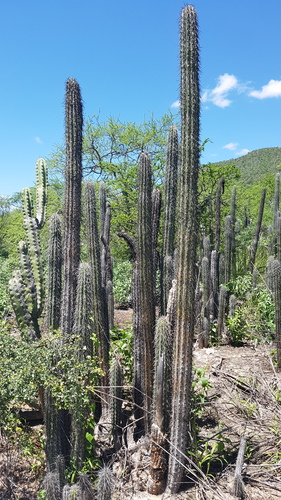
iNaturalist· cc-by-nc
(c) Judá Alfredo Bernal Vázquez, some rights reserved (CC BY-NC)
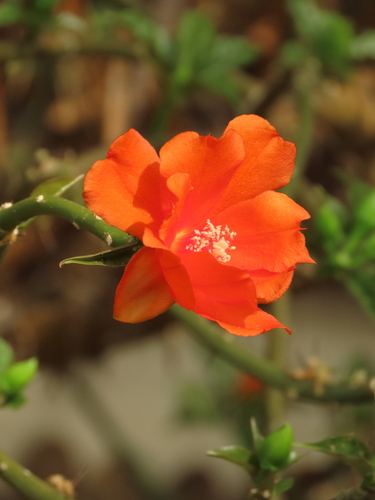
iNaturalist· cc-by-nc
(c) Judá Alfredo Bernal Vázquez, some rights reserved (CC BY-NC)
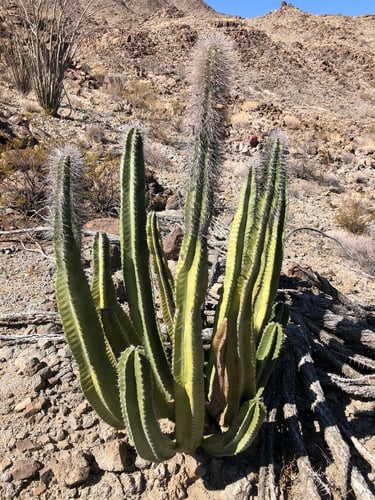
iNaturalist· cc-by-nc
(c) 🦔🐠🐝🌿🦆🐢 Rocky 🦘🐌🪻🐜🍄🦋, some rights reserved (CC BY-NC)
Description
A cactus in the Cactaceae family native to Mediterranean climates. Both the fruit and flattened stem segments (cladodes) are edible.
This description is brief — help expand it
Edible Uses
O. ficus-indica is consumed widely as food. The fruits are commercialized in many parts of the world, eaten raw, and have one of the highest concentrations of vitamin C of any fruit. The young "leaves" (actually cladodes, which technically are stems) are cooked and eaten as a vegetable known as nopalitos. They are sliced into strips, skinned or unskinned, and fried with eggs and jalapeños, served as a breakfast treat. They have a texture and flavor like green beans. The fruits or leaves can be boiled, used raw, or blended with fruit juice, cooked on a frying pan, used as a side dish with chicken, or added to tacos. Jams and jellies are produced from the fruit, which resemble strawberries and figs in color and flavor. Mexicans use Opuntia fruit to make an alcoholic drink called colonche.In Sicily, a prickly pear-flavored liqueur called ficodi is produced, flavored somewhat like a medicinal aperitif. In Malta, a liqueur called bajtra (the Maltese name for prickly pear) is made from this fruit, which grows wild in almost every field. On the island of Saint Helena, the prickly pear also gives its name to locally distilled liqueur, Tungi Spirit.
Traditional Uses
The fruit are peeled and eaten raw. The cladodes are boiled and used in stews.
This uses section is brief — help expand it
Distribution
It is a Mediterranean climate plant.
Where It Grows
Europe, Jordan, Mediterranean, Middle East, Spain, Turkey, Türkiye,
Also Known As
Figuera de moro, Sabr, Subbair
References (3)
- Al-Qura'n, S. A., 2010, Ethnobotanical and Ecological Studies of Wild Edible Plants in Jordan. Libyan Agriculture Research Center Journal International 1(4):231-243
- Bonet, M. A. & Valles, J., 2002, Use of non-crop food vascular plants in Montseny biosphere reserve (Catalonia, Iberian Peninsula). International Journal of Food Sciences and Nutrition (2002) 53, 225–248
- Ertug, F, Yenen Bitkiler. Resimli Türkiye Florası -I- Flora of Turkey - Ethnobotany supplement