Pereskia grandifolia
Haw.
Rose-cactus, Wax rose
iNaturalist· cc-by
(c) Bill Levine, some rights reserved (CC BY), uploaded by Bill Levine
Description
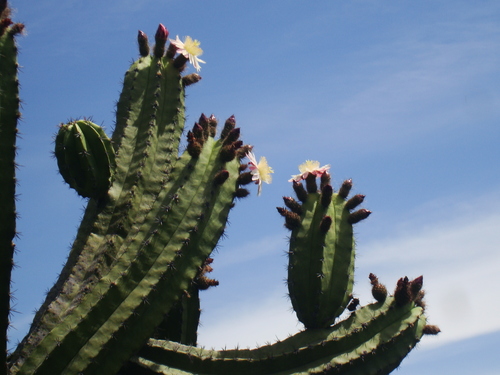
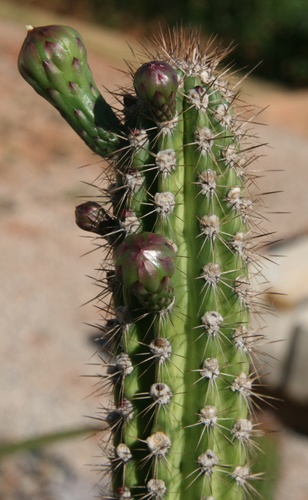
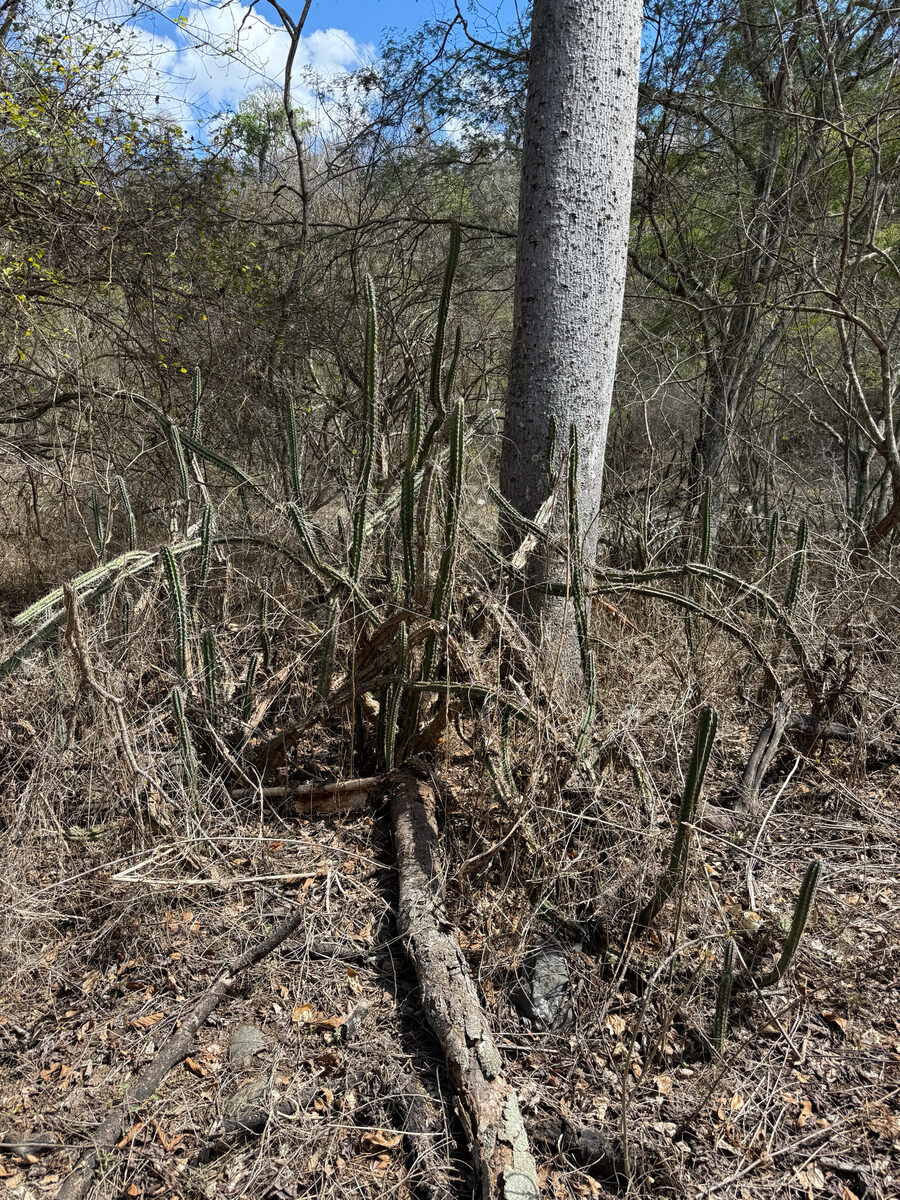
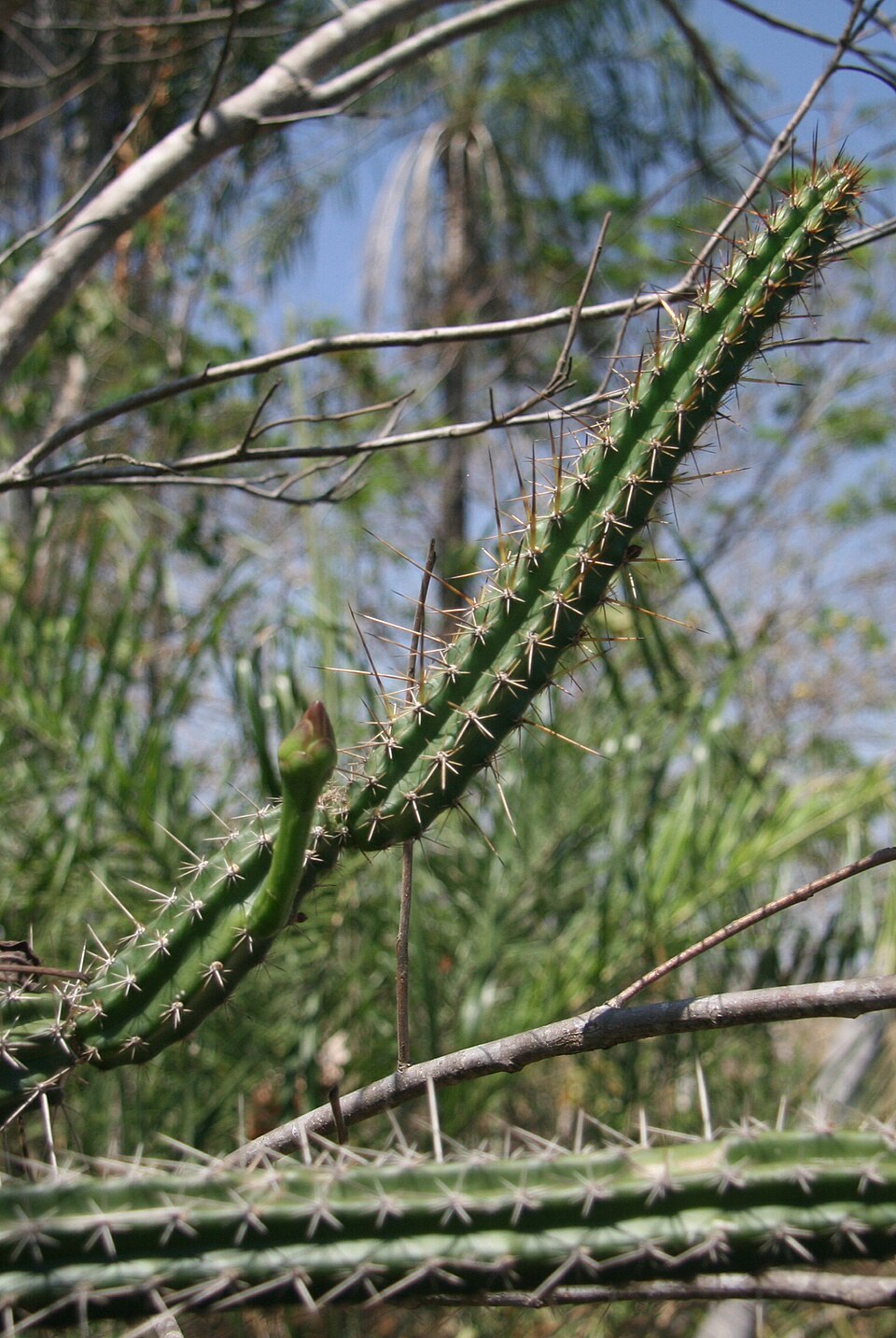
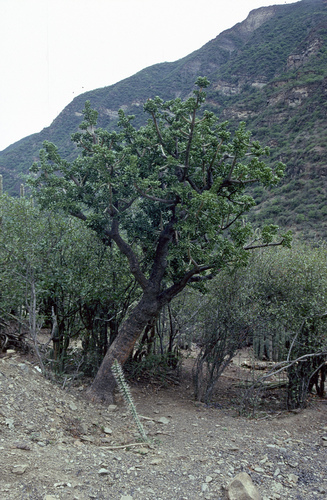
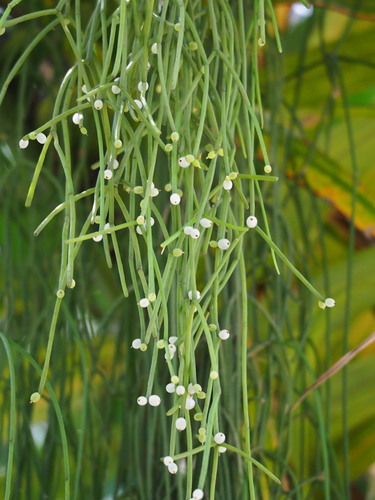
A cactus. It is an evergreen shrub. It grows 2-5 m tall. The stems are erect or arch over. The trunks are 20 cm across and rough. The leaves vary in size. They can be oval or sword shaped. They are 9-23 cm long by 4-6 cm wide. The leaf stalks are 5-12 mm long. There can be groups of 0-8 spines on the twigs. These are 1-4 cm long. There can be groups of 25-90 spines on the older branches and trunks. These are 2-6.5 cm long. The flowers are in groups of 10-15 on the side and ends of branches. They are pink or purple and 3-5 cm across. The fruit are in clusters and are 5-10 cm long by 3-7 cm wide. They are pear shaped. They are yellow at maturity. They have leaf like bracts attached.
Edible Uses
Rhodocactus grandifolius is grown as an ornamental plant, appreciated for its flowers. It is also used as a hedge. Its leaves can be eaten as a salad or used in stews.
Traditional Uses
The leaves are eaten as a vegetable. The fruit are eaten raw.
This uses section is brief — help expand it
Distribution
A tropical plant. It needs regular moisture. It needs a coarse, sandy, well-drained soil. It does best in full sun. It grows in coastal locations. It needs several hours of sunshine to flower. It suits plant hardiness zones 9-12.
Where It Grows
Asia, Australia, Brazil*, Central America*, Costa Rica, Hawaii, Honduras, India, Indonesia, Jamaica, Mexico, Myanmar, Nicaragua, Pacific, SE Asia, South America, USA, West Indies,
Cultivation
Plants can be grown from seeds and cuttings.
Synonyms
Also Known As
Cactos-rosa, Guamacho, Kaktus mawar Morado, Ora-pros-nobis tree, Perdu oeresia, Phyu-pya-mu-yar, Quiabento, Rosa-madeira, Saboneta
References (14)
- Ambasta, S.P. (Ed.), 2000, The Useful Plants of India. CSIR India. p 440
- Anderson, E.F., 2001, The Cactus Family, Timber Press. p 568 (As Pereskia grandifolia)
- Arora, R. K., 2014, Diversity in Underutilized Plant Species - An Asia-Pacific Perspective. Bioversity International. p 80
- Cundall, P., (ed.), 2004, Gardening Australia: flora: the gardener's bible. ABC Books. p 1010 (As Pereskia grandifolia)
- Grandtner, M. M. & Chevrette, J., 2013, Dictionary of Trees, Volume 2: South America: Nomenclature, Taxonomy and Ecology. Academic Press p 490
Show all 14 references Hide references
- Kermath, B. M., et al, 2014, Food Plants in the Americas: A survey of the domesticated, cultivated and wild plants used for Human food in North, Central and South America and the Caribbean. On line draft. p 630
- Llamas, K.A., 2003, Tropical Flowering Plants. Timber Press. p 167 (As Pereskia grandifolia)
- Martin, F. W., et al, 1987, Perennial Edible Fruits of the Tropics. USDA Handbook 642 p 89
- Staples, G.W. and Herbst, D.R., 2005, A tropical Garden Flora. Bishop Museum Press, Honolulu, Hawaii. p 216 (As Pereskia grandifolia)
- Sukarya, D. G., (Ed.) 2013, 3,500 Plant Species of the Botanic Gardens of Indonesia. LIPI p 686, 1041 (As Pereskia grandifolia)
- Suppl. pl. succ. 85. 1819 (As Pereskia grandifolia)
- Wiersema, J. H. & Leon, B., 2013, World Economic Plants. A Standard Reference CRC Press. 2nd Ed. p 508
- World Checklist of Useful Plant Species 2020. Royal Botanic Gardens, Kew (As Rhodocactus grandifolius)
- www.colecionandofrutas.org