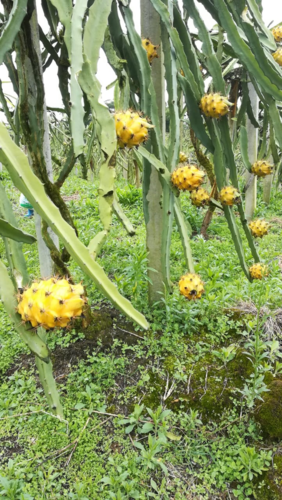
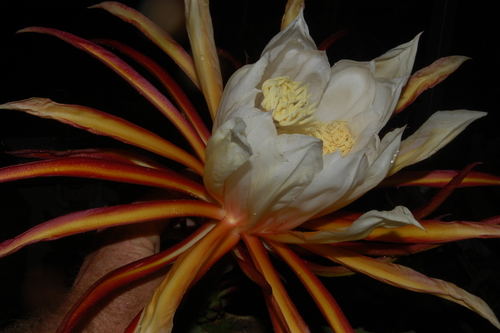
Pereskia aculeata
Mill.
Leaf Cactus, Barbados-gooseberry
iNaturalist· cc-by-nc
(c) wilsonpni, some rights reserved (CC BY-NC)
iNaturalist· cc-by-nc
(c) Claudia, some rights reserved (CC BY-NC), uploaded by Claudia
iNaturalist· cc-by-nc
(c) Dietmar Weise, some rights reserved (CC BY-NC), uploaded by Dietmar Weise
Summary
Source: WikipediaPereskia aculeata is a scrambling shrub in the family Cactaceae. Common names include Barbados gooseberry, blade-apple cactus, leaf cactus, rose cactus, and lemonvine. It is native to tropical America. The leaves and fruits are edible, containing high quantities of protein, iron and other nutrients, and it is a popular vegetable in parts of the Brazilian state of Minas Gerais under the name of ora-pro-nóbis.
Description
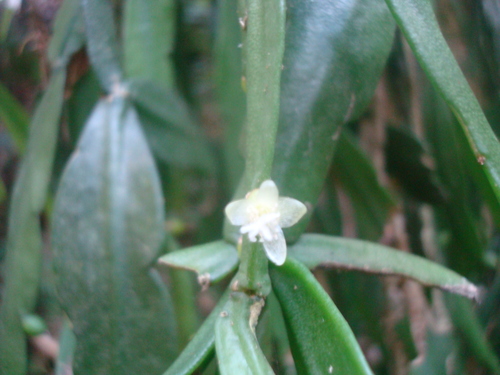
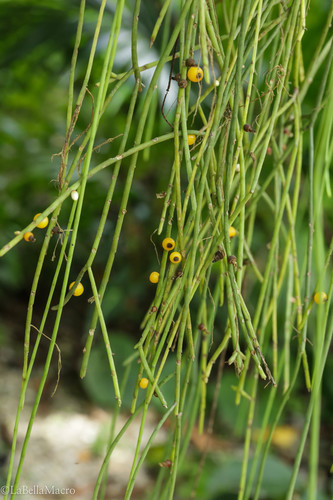
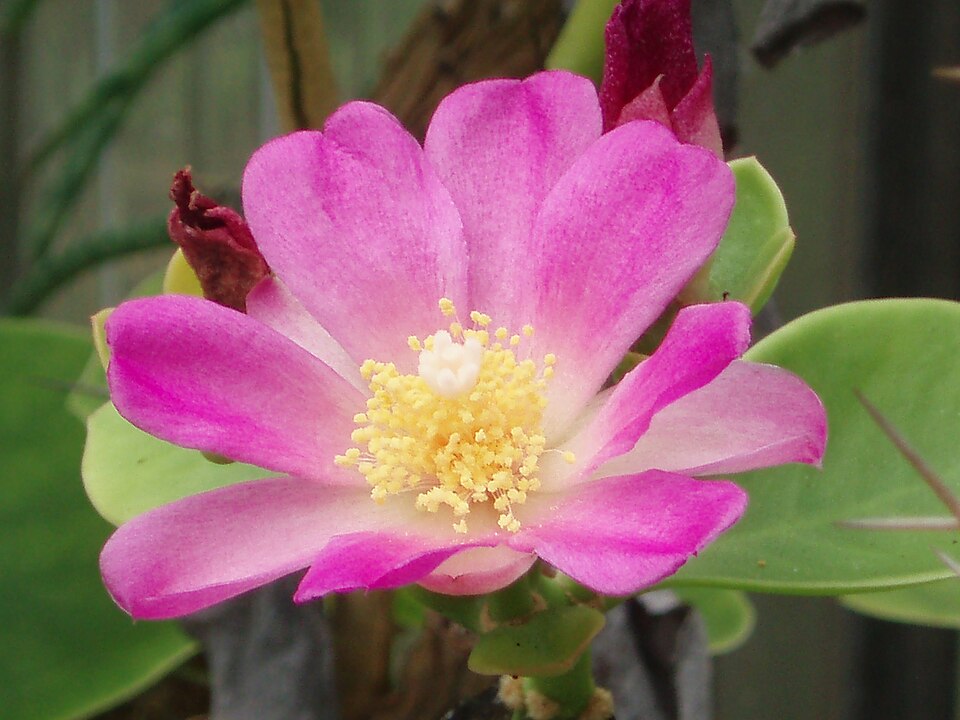
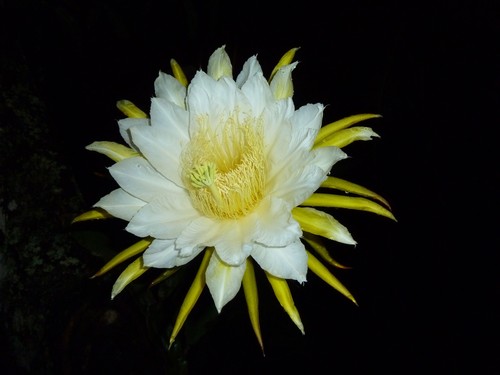
A large vine-like cactus. It is a woody climber. It can be 20 m tall. It has hooked spines on the stems. There are 2 forms of spines. The vine can be 9 m long and 5-8 cm wide. It is dark green. The leaves are fleshy. The leaves are oblong or sword shaped. Leaves are shed in the dry period. The flowers are 4 cm across. They are white but become cream or pink with age. They are waxy and lemon scented. The fruit are small and yellow with acid pulp. They are about 2 cm across. The flesh is white. The fruit are edible.
Edible Uses
The small yellow fruits have a citrus-like flavor and are eaten fresh or cooked, stewed, or made into jam or preserves. The young leaves are used as a cooked vegetable. The seeds are also edible.
Traditional Uses
The fruit is used fresh or cooked. They have a citrus like flavour. They can be stewed or made into jam or preserves. The young leaves are used as a vegetable.
Medicinal Uses
The leaves are rich in mucilage. They are valued for their emollient nature and are crushed then applied on inflammations and tumours. The fruit is antisyphilitic and expectorant.
Distribution
It is a tropical plant. It suits a hot tropical lowland climate. Melbourne Botanical Gardens. It does best in climates with a wet and dry period. It has moderate salt tolerance. It needs a temperature between 10-30°C. It does well in a greenhouse with night temperatures of 20°C and day temperatures of 37°C. It needs a well-drained soil. It suits hardiness zones 9-12.
Where It Grows
Africa, Asia, Antilles, Australia, Barbados, Bermuda, Brazil*, Caribbean, Central Africa, Central America*, China, Colombia, Congo DR, Costa Rica, Cuba, Dominica, East Africa, Eswatini, Guadeloupe, Guiana, Guianas, Guyana, Hawaii, Hispaniola, India, Indochina, Indonesia, Israel, Jamaica, Malaysia, Martinique, Mediterranean, Mexico, Middle East, Mozambique, Myanmar, Nicaragua, North America, Pacific, Panama, Paraguay, Philippines, Puerto Rico, SE Asia, South Africa, Southern Africa, South America, St Lucia, St Vincent & Grenadines, Suriname, Swaziland, USA, Venezuela, Vietnam, West Indies*,
Cultivation
It can be grown from cuttings. It can also be grown from seeds. It can be used for hedges.
Propagation
Seed - fresh seed can be slow to germinate, it is best to sow seed that is between several months to 2 years old and this should germinate after a few days. Even when five years old, seed can have a 50% germination rate. Easily grown from cuttings of half-ripe wood, taken during the dry season.
Other Uses
Often used as a rootstock on which to graft other less vigorous cacti. We have no specific description of the wood for this species, but the general description for the wood from Pereskia species (sensu lato) is as follows:-The wood is yellow, without difference between softwood and heartwood. The texture is medium, soft grain, straight fibre, with no characteristic odour or taste, The flowers are a good source of nectar for bees.
Other Information
It is a cultivated food plant.
Notes
There are about 16-20 Pereskia species. They have leaves.
Nutrition
| Part | Moisture | kJ | kcal | Protein | Vit A | Vit C | Iron | Zinc |
|---|---|---|---|---|---|---|---|---|
| Fruit | 91.4 | 134 | 32 | 1 | — | — | — | — |
| Leaves | — | — | — | — | 2 | — | — | — |
Synonyms
Also Known As
Barbados cherry, Blade apple cactus, Bugambilia blanca, Came-de-pobre, Camelia blanca, Dieplong nhon, Grosellero, Guamacho, Hortensia de bejuco, Jasmin de uvas, Leafy cactus, Lemon vine, Mahaga-kywe-yay-kya, Ora-pro-nobis, Ramo de novia, Rose cactus, Surinam gooseberry, Tsumya, West Indian gooseberry
References (46)
- Ambasta, S.P. (Ed.), 2000, The Useful Plants of India. CSIR India. p 440
- Andersohn, G., 1983, Cacti and Succulents. EP Publishing. p 238
- Anderson, E.F., 2001, The Cactus Family, Timber Press. p 58, 567
- Brack, P., et al, 2020, Frutas nativas do Rio Grande do Sul, Brasil: riqueza e potencial alimentício. Native fruits of Rio Grande do Sul, Brazil: richness and potential as food. Rodriguésia 71: e03102018.
- Brickell, C. (Ed.), 1999, The Royal Horticultural Society A-Z Encyclopedia of Garden Plants. Convent Garden Books. p 722
Show all 46 references Hide references
- Burkill, I.H., 1966, A Dictionary of the Economic Products of the Malay Peninsula. Ministry of Agriculture and Cooperatives, Kuala Lumpur, Malaysia. Vol 2 (I-Z) p 1712
- Chapman, P and Martin, M., 1989, Exotic Cacti, HP Books p 44
- Coronel, R.E., 1982, Fruit Collections in the Philippines. IBPGR Newsletter p 10
- Cundall, P., (ed.), 2004, Gardening Australia: flora: the gardener's bible. ABC Books. p 1010
- Facciola, S., 1998, Cornucopia 2: a Source Book of Edible Plants. Kampong Publications, p 66
- Flora of Australia, Volume 4, Phytolaccaceae to Chenopodiaceae, Australian Government Publishing Service, Canberra (1984) p 64
- Food Composition Tables for use in East Asia FAO http://www.fao.org/infoods/directory No. 826
- Grandtner, M. M., 2008, World Dictionary of Trees. Wood and Forest Science Department. Laval University, Quebec, Qc Canada. (Internet database http://www.wdt.qc.ca)
- Grandtner, M. M. & Chevrette, J., 2013, Dictionary of Trees, Volume 2: South America: Nomenclature, Taxonomy and Ecology. Academic Press p 489
- Gard. dict. ed. 8: Pereskia. 1768
- Hedrick, U.P., 1919, (Ed.), Sturtevant's edible plants of the world. p 471
- Hermandez Bermejo, J.E., and Leon, J. (Eds.), 1994, Neglected Crops. 1492 from a different perspective. FAO Plant Production and Protection Series No 26. FAO, Rome. p 15
- Hibbert, M., 2002, The Aussie Plant Finder 2002, Florilegium. p 229
- http://www.botanic-gardens-ljubljana.com/en/plants
- http://www.ntbg.org/plants/plant details.php
- Hunter, D., et al, 2019, The potential of neglected and underutilized species for improving diets and nutrition. Planta (2019) 250:709-729
- Kermath, B. M., et al, 2014, Food Plants in the Americas: A survey of the domesticated, cultivated and wild plants used for Human food in North, Central and South America and the Caribbean. On line draft. p 629
- Kinupp, V. F., 2007, Plantas alimenticias nao-convencionais da regiao metropolitana de Porto Alegre, RS, Brazil p 71
- Kiple, K.F. & Ornelas, K.C., (eds), 2000, The Cambridge World History of Food. CUP p 1727
- Lazarides, M. & Hince, B., 1993, Handbook of Economic Plants of Australia, CSIRO. p 185
- Llamas, K.A., 2003, Tropical Flowering Plants. Timber Press. p 166
- Lopez-Diago, D. & Garcia, N., 2021, Wild edible fruits of Colombia. Biota ColomBiana 22 (2) p 34
- Martin, F.W. & Ruberte, R.M., 1979, Edible Leaves of the Tropics. Antillian College Press, Mayaguez, Puerto Rico. p 180
- Martin, F. W., et al, 1987, Perennial Edible Fruits of the Tropics. USDA Handbook 642 p 22
- Morley, B. & Everard, B., 1970, Wild Flowers of the World. Ebury press. Plate 175
- Morton, Julia F., 1987, Fruits of Warm Climates. Creative Resources Systems, Inc. . p. 349
- Ochse, J.J. et al, 1931, Vegetables of the Dutch East Indies. Asher reprint. p 90
- Omawale, 1973, Guyana's edible plants. guyana University, Georgetown p 4
- Pham-Hoang Ho, 1999, An Illustrated Flora of Vietnam. Nha Xuat Ban Tre. p 722
- Recher, P, 2001, Fruit Spirit Botanical Gardens Plant Index. www.nrg.com.au/~recher/ seedlist.html p 3
- Roa, J. A. G. & Boada, D. S. G., 2018, Fundación para el Fortalecimiento de la Fruticultura y Plantas Alimenticias no Convencionales en Colombia.
- Britton, N. L. & Rose, J. N., 1919, The Cactaceae. Descriptions and Illustrations of Plants of the Cactus Family. Volume 1 Carnegie Institution of Washington. p 30 (As Pereskia pereskia)
- Ruiters-Welcome, A. K., 2019, Food plants of southern Africa. Ph.D. thesis. Univ. of Johannesburg p 41
- Segura, S. et al, 2018, The edible fruit species in Mexico. Genet Resour Crop Evol (2018) 65:1767–1793
- Swaziland's Flora Database http://www.sntc.org.sz/flora
- Taylor, N. P., 2000, Taxonomy and phytogeography of the Cactaceae of eastern Brazil. PhD thesis. The Open University. p 7
- van Roosmalen, M.G.M., 1985, Fruits of the Guianan Flora. Utrecht Univ. & Wageningen Univ. p 67
- Welcome, A. K. & Van Wyk, B.-E., 2019, An inventory and analysis of the food plants of southern Africa. South African Journal of Botany 122 (2019) 136–179
- Wiersema, J. H. & Leon, B., 2013, World Economic Plants. A Standard Reference CRC Press. 2nd Ed. p 508
- World Checklist of Useful Plant Species 2020. Royal Botanic Gardens, Kew
- www.colecionandofrutas.org