Celtis caucasica
Willd.
Caucasian hackberry
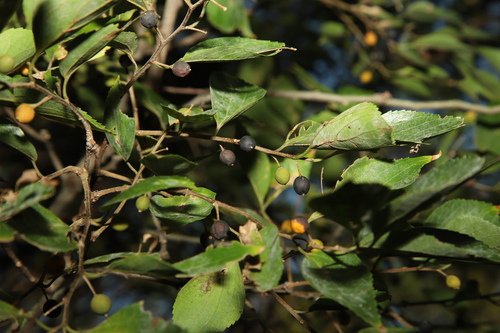
iNaturalist· cc-by-nc
(c) Наталья Бешко, some rights reserved (CC BY-NC), uploaded by Наталья Бешко
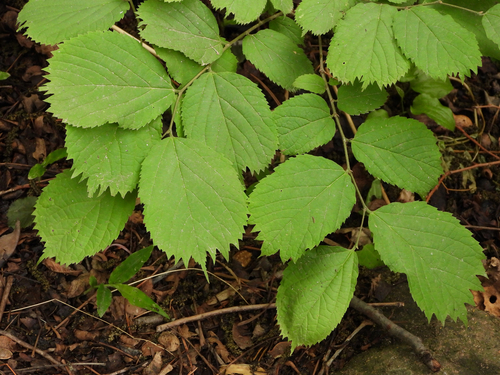
iNaturalist· cc-by-nc
(c) MRN, some rights reserved (CC BY-NC)
Summary
Source: WikipediaCeltis caucasica, the Caucasian hackberry or Caucasian nettle tree, is a species of flowering plant in the family Cannabaceae. It is native to the Caucasus region, Central Asia, and on to the western Himalaya. Hardy to USDA zone 5b, it tolerates poor soils, drought, and nearby paving, and can be used as street tree. It is a nitrogen-fixer, in symbiosis with the mycorrhizal fungi Funneliformis mosseae and Rhizophagus intraradices.
Description
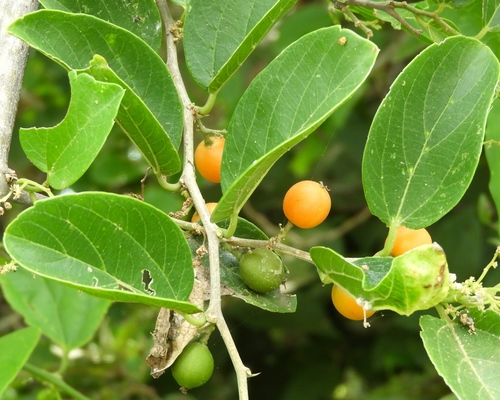
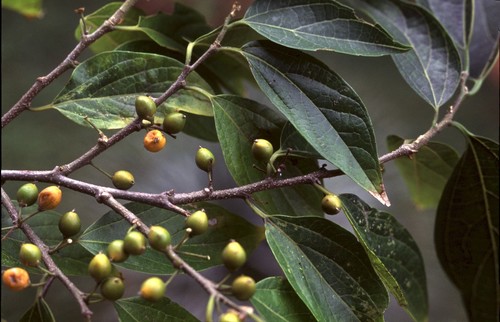
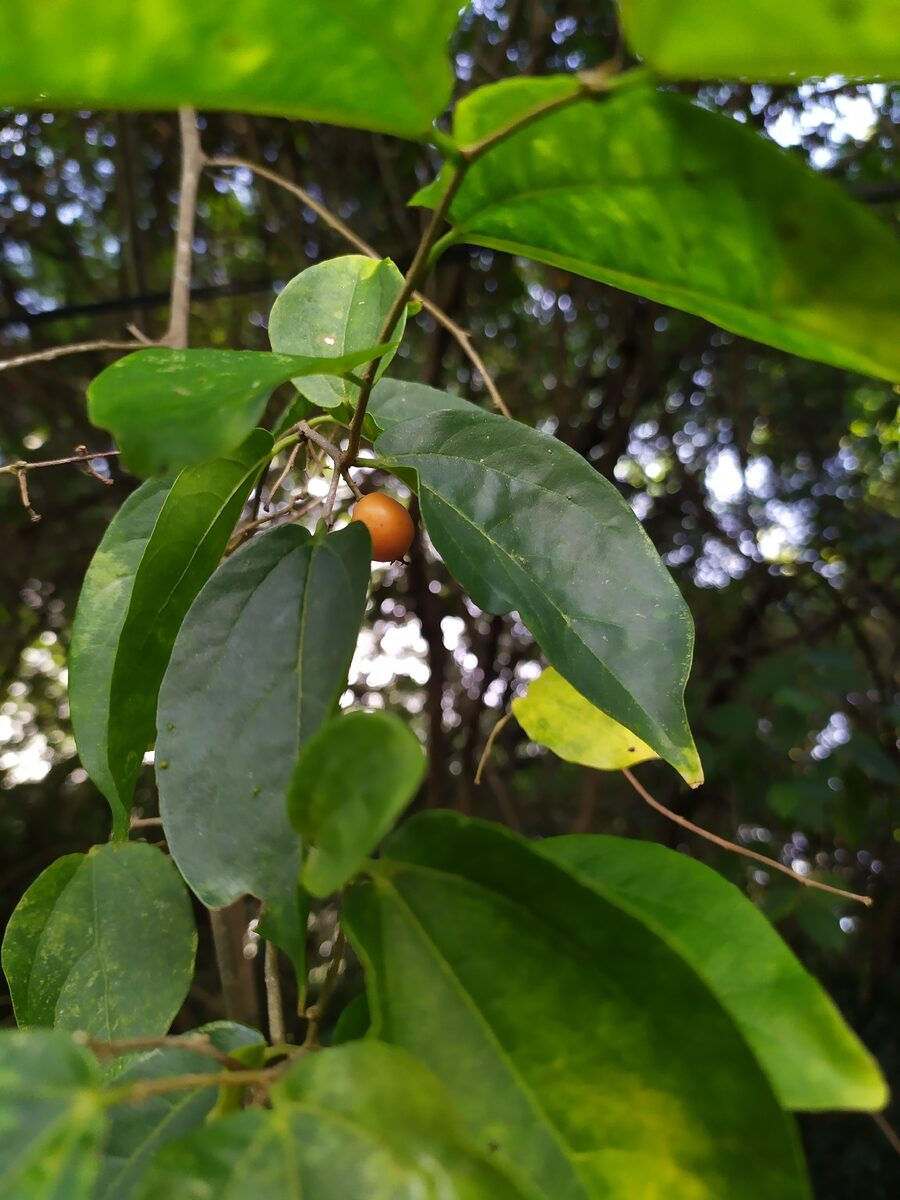
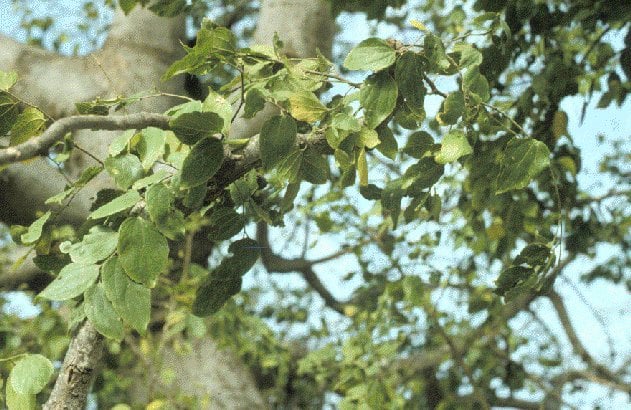
A tree. It loses its leaves during the year. It grow 15 m high. The branches are slender and hang downwards. The young shoots are hairy. The leaves are 4-10 cm long by 2-5 cm wide. The base is unequal and it tapers to the tip. The flowers are small and pale green. The fruit is fleshy and 7 mm across. They are reddish-brown.
Edible Uses
The fruit is eaten raw and has a mealy, pleasant flavour. Each fruit is about 4–5mm in diameter with thin, dry, sweet flesh and a slight astringency. Although trees in Britain often produce large crops, the amount of edible flesh on each fruit is so small that harvesting is scarcely worthwhile.
Traditional Uses
The fruit are eaten raw.
This uses section is brief — help expand it
Medicinal Uses
None known
Distribution
It is a temperate plant.
Where It Grows
Afghanistan, Asia, Balkans, Bulgaria, Caucasus, Central Asia, Europe, Georgia, Himalayas, India, Iran, Iraq, Middle East, Nepal, Pakistan, Tajikistan, Turkey, Türkiye,
Cultivation
Succeeds in any reasonably good soil, preferring a good fertile well-drained loamy soil. Succeeds on dry gravels and on sandy soils. Established plants are very drought resistant. Trees prefer hotter summers and more sunlight than are normally experienced in Britain, they often do not fully ripen their wood when growing in this country and they are then very subject to die-back in winter. Trees can be very long-lived, perhaps to 1000 years. This species is closely allied to C. australis but it is much hardier and is more likely to thrive in Britain than most other species in this genus. A tree at Kew in September 1989 was 12 metres tall though it was not bearing fruit. Coppices well. Plants in this genus are notably resistant to honey fungus.
Propagation
Sow seed as soon as ripe in a cold frame for best results. Stored seed should receive 2–3 months of cold stratification before sowing in February or March in a greenhouse. Germination is generally good, though stored seed may take 12 months or longer to germinate, and seed can be stored for up to 5 years. Prick seedlings into individual pots as soon as they are large enough to handle. Seedling leaves often show white patches lacking chlorophyll, which is normal; older plants produce fully green leaves. Grow seedlings in a cold frame through their first winter and plant out the following late spring or early summer, with protection from cold during their first winter outdoors. Can also be propagated by cuttings.
Other Uses
The wood is very tough, elastic, durable, and of high quality. It also makes an excellent fuel.
Notes
There are 70-100 Celtis species. They are mostly in the tropics. There are 8-10 species in tropical America. Also put in the family Ulmaceae.
Synonyms
Also Known As
Boboo, But karan, Dadoo, Dig dig, Gernuso, Gingires, Meyoon, Taghagam Tav
References (9)
- Ambasta S.P. (Ed.), 2000, The Useful Plants of India. CSIR India. p 114
- Amin, M. et al, 2023, Edible wild plant species used by different linguistic groups of Kohistan Upper Khyber Pakhtunkhwa (KP), Pakistan. Journal of Ethnobiology and Ethnomedicine 19:6 p 8
- Demir, I. & Ayaz, N., 2022, Wild edible plants contributing to the traditional foods of Mardin (Turkey) Province. Indian Journal of Traditional Knowledge Vol 21(3), July 2022, pp 569-582 (As Celtis australis subsp. caucasica)
- Flora of Pakistan. www.eFloras.org
- Glowinski, L., 1999, The Complete Book of Fruit Growing in Australia. Lothian. p 182
Show all 9 references Hide references
- Khan, A. H., et al, 2023, Traditional foraging for ecological transition? Wild food ethnobotany among three ethnic groups in the highlands of the eastern Hindukush, North Pakistan. Journal of Ethnobiology and Ethnomedicine 19:9
- Plants for a Future database, The Field, Penpol, Lostwithiel, Cornwall, PL22 0NG, UK. http://www.scs.leeds.ac.uk/pfaf/
- Postman, J. D., et al, 2012, Recent NPGS Coordinated Expeditions in the Trans-Caucasus Region to Collect Wild Relatives of Temperate Fruit and Nut Crops. In Acta Horticulturae Number 948 p 191-198
- Sp. pl. 4(2):994. 1806