Celtis ehrenbergiana
(Klotzsch) Liebm.
Spiny hackberry
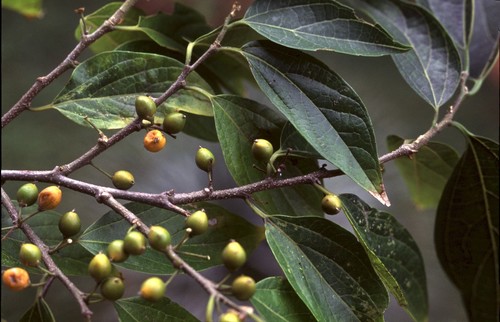
iNaturalist· cc-by
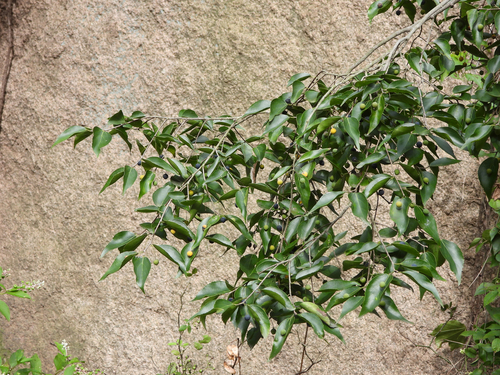
(c) Francisco Farriols Sarabia, some rights reserved (CC BY)
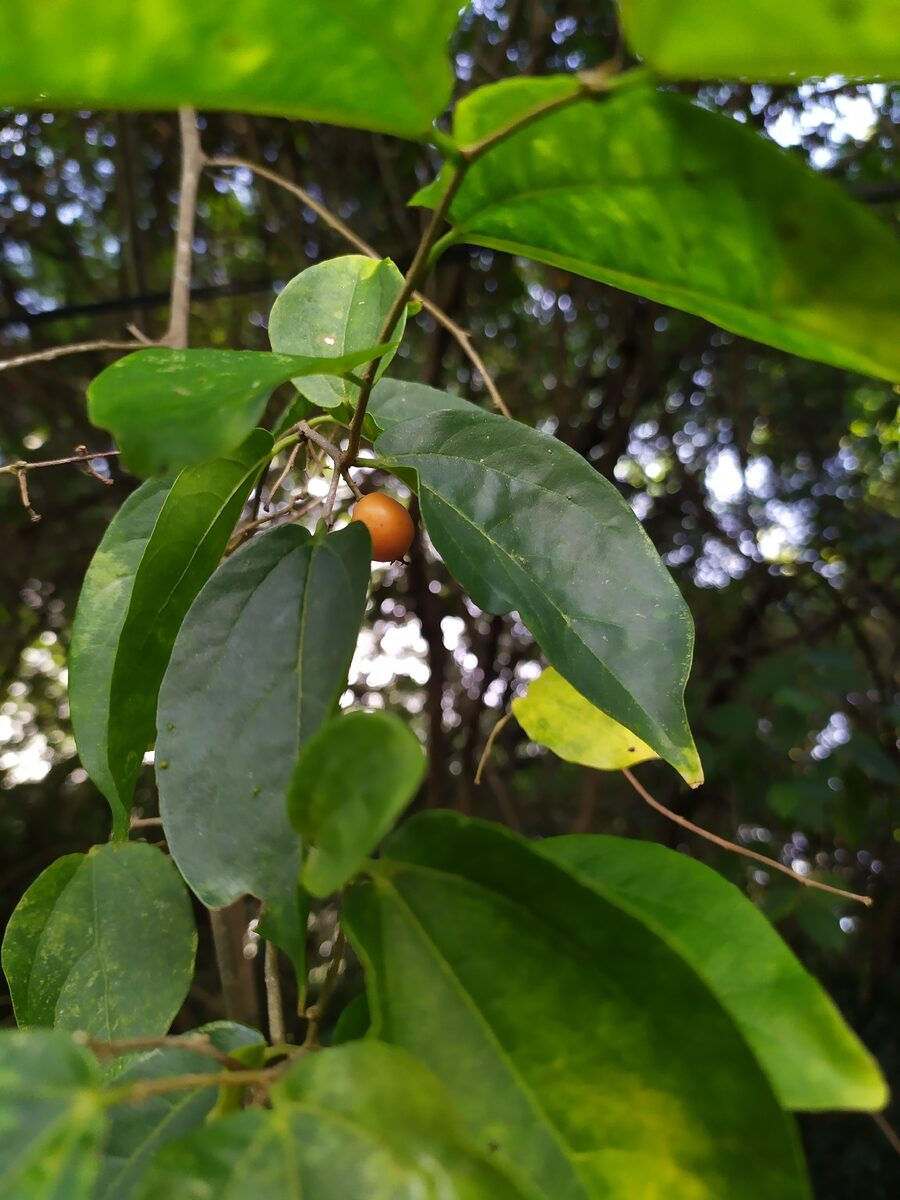
iNaturalist· cc-by-nc
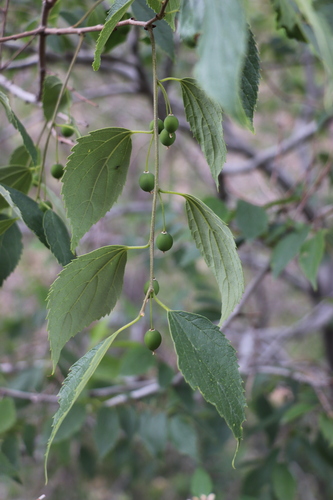
(c) obduliamota, some rights reserved (CC BY-NC)
iNaturalist· cc-by-nc
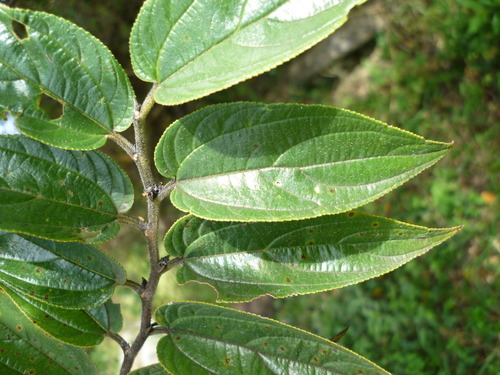
(c) obduliamota, some rights reserved (CC BY-NC)
Summary
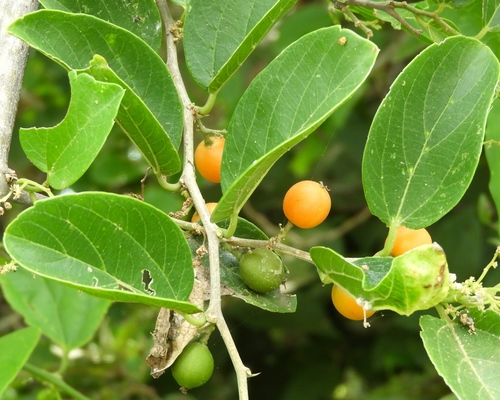
Source: WikipediaCeltis ehrenbergiana, called the desert hackberry or spiny hackberry, is a plant species that has long been called C. pallida by many authors, including in the "Flora of North America" database. It is native to Arizona, Florida, New Mexico and Texas, and to Latin America as far south as central Argentina. It grows in dry locations such as deserts, brushlands, canyons, mesas and grasslands. Celtis ehrenbergiana is the only US species of the genus with thorns. In the US, it is a shrub or small tree up to 3 m (10 feet) tall, with thorns on the branches, although it can grow taller in the tropics. Leaves are small for the genus, less than 3 cm (1.2 inches) long and 2 cm (0.8 inches) wide. Flowers are born in cymes of 3–5 flowers. Drupes are orange, yellow or red, juicy, egg-shaped, about 7 mm in diameter, and edible by humans and wildlife.
Description
A tree. It grows 4-12 m tall. It has spines in pairs near the leaves. The leaves are simple and alternate. The leaves are broadly oval and heart shaped at the base with some teeth towards the top end. The fruit are orange.
Edible Uses
The fruit is eaten fresh and used to make a drink. The leaves are also edible.
Traditional Uses
The fruit are eaten fresh. They are also used for a drink.
This uses section is brief — help expand it
Medicinal Uses
An infusion of the leaves is used in the treatment of indigestion.
Distribution
It is a subtropical plant. In Argentina it grows between sea level to 2,600 m above sea level.
Where It Grows
Argentina, Bolivia, Brazil*, Haiti, Mexico, North America, Paraguay, Puerto Rico, South America, Uruguay, USA, West Indies,
Cultivation
A plant of the subtropics and tropics, found at elevations between 300 - 1,700 metres in the tropics. Prefers a sunny position. It is apparently tolerant of a wide range of soil and moisture conditions. A fast-growing tree.
Propagation
Seed - best sown as soon as it is ripe in a sunny position in a nursery seedbed. Germination rates are usually low, with the seed sprouting within a few weeks. Seedlings grow away quickly..
Other Uses
A brown dye is obtained from the roots. The heartwood and sapwood are not clearly demarcated. The wood is spiral-grained, heavy, with moderate natural durability. Of small dimensions, which limit its usefulness. It is sometimes used for small items in cabinet making. A fast-growing, natural pioneer species within its native range, where it is probably suitable for use in reforestation projects.
Notes
Also put in the family Ulmaceae.
Synonyms
Also Known As
Acebuche, Baimoro, Capul, Garabato, Garambullo, Granjeno, Huasteco, Satasche, Tala, Tala arbusto, Tala churqui, Tala gateador, Tala trepa dora, Taleira, Taleira-do-pampa, Yasy, Yoas
References (12)
- Brack, P., et al, 2020, Frutas nativas do Rio Grande do Sul, Brasil: riqueza e potencial alimentício. Native fruits of Rio Grande do Sul, Brazil: richness and potential as food. Rodriguésia 71: e03102018.
- Ferns, Useful Tropical plants
- Grandtner, M. M., 2008, World Dictionary of Trees. Wood and Forest Science Department. Laval University, Quebec, Qc Canada. (Internet database http://www.WDT.QC.ca)
- Grandtner, M. M. & Chevrette, J., 2013, Dictionary of Trees, Volume 2: South America: Nomenclature, Taxonomy and Ecology. Academic Press p 117
- https://www.fireflyforest.com/flowers/category/edible-plants/ Edible Plants – Southeastern Arizona Wildflowers and Plants
Show all 12 references Hide references
- Malezas Comestibles del Cono Sur, INTA, 2009, Buernos Aires
- Palmieri, V. S., et al, 2018, Aproximaciones etnobotánicas de las especies y prácticas de frutos nativos comestibles de la Actualidad. Aportes para la interpretación del pasado prehispánico de cerro colorado (Córdoba, Argentina). Bol. Soc. Argent. Bot. 53 (1): 115-133
- Palmeiri, V. S., & Geisa, M. G., 2019, Las plantas comestibles empleadas por las comunidades comechingonas de San Marcos Sierras (Córdoba, Argentina). Primeras aproximaciones. Bol. Soc. Argent. Bot. 54: 295-309.
- Segura, S., et al, 2018, The edible fruit species in Mexico. Genet Resour Crop Evol (2018) 65:1767–1793
- Toledo, B A. et al, 2007, Knowledge and Use of Edible and Medicinal Plants in Two Populations from the Chaco Forest, Cordoba Province, Argentina. Journal of Ethnobiology 27(2): 218-232
- Toledo, B. A. et al, 2009, Ethnobotanical knowledge in rural communities of Cordoba (Argentina): the importance of cultural and biogeographical factors. Journal of Ethnobiology and Ethnomedicine. 9:22
- www.colecionandofrutas.org