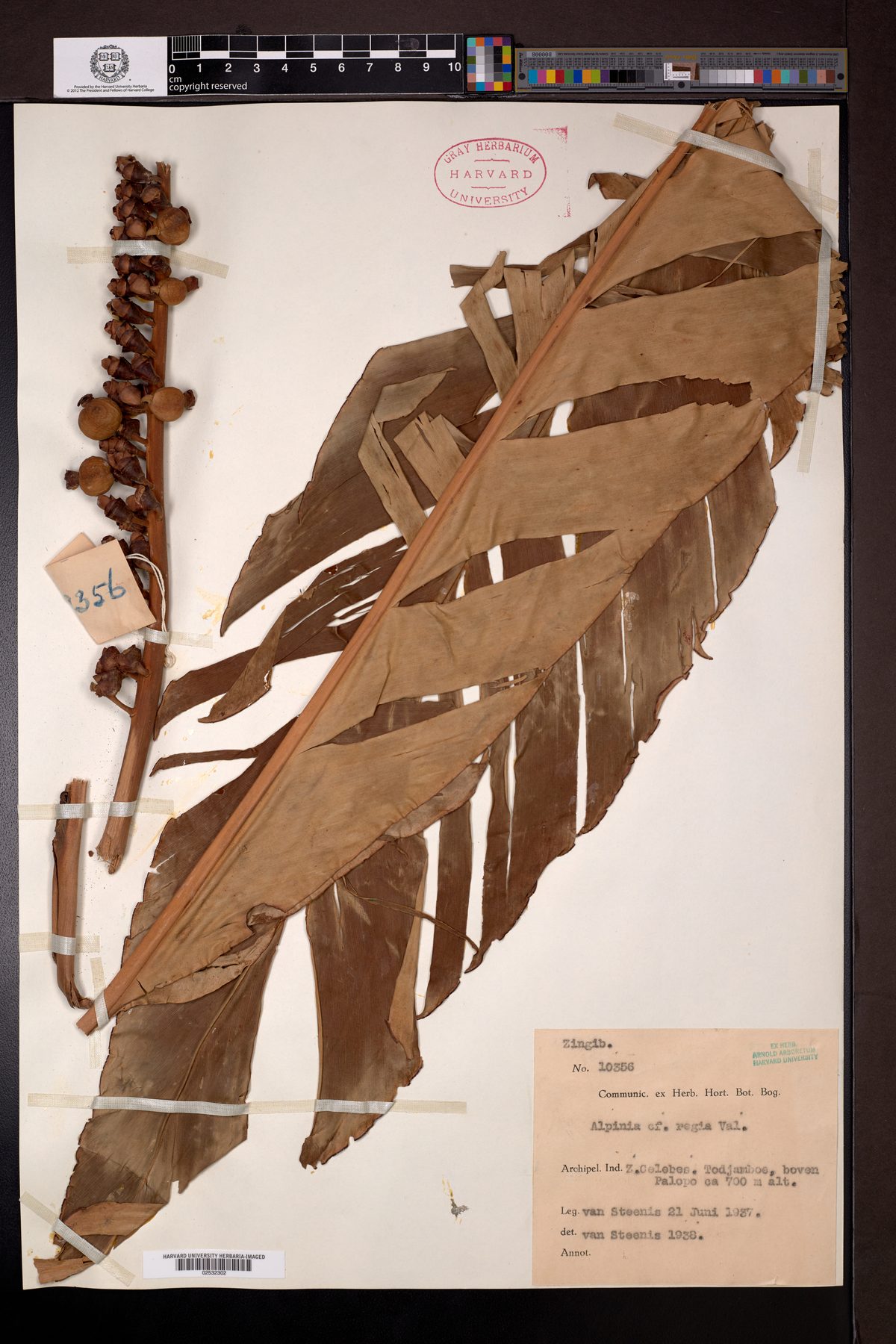
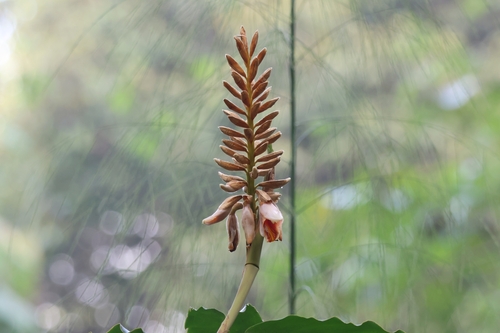
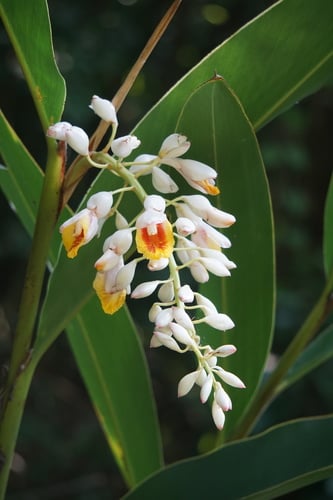
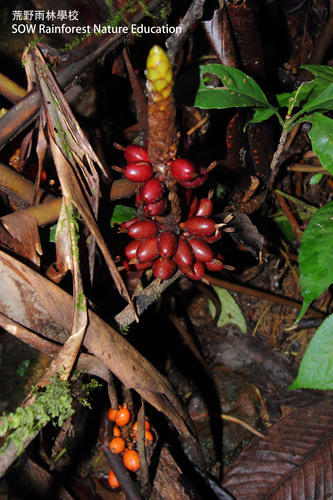
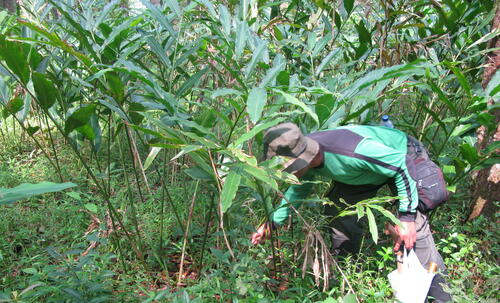
Etlingera hemisphaerica
(Blume) R. M. Sm.
Helani tulip ginger
iNaturalist· cc0
no rights reserved, uploaded by georgiasteel
iNaturalist· cc-by-nc
(c) coqwallon, some rights reserved (CC BY-NC)
Summary
Source: WikipediaEtlingera hemisphaerica is a monocotyledonous plant species that was first described by Carl Ludwig von Blume, and got its current name by Rosemary Margaret Smith. Etlingera hemisphaerica is part of the genus Etlingera and the family Zingiberaceae. No subspecies are listed in the Catalog of Life.
Description
A ginger family herb. It keeps growing from year to year. It has tillers or runners. It has an aroma. The rhizomes are creeping and up to 1 m long. The rhizome or underground stem is robust and branched. The false stems are erect and dark green and grouped closely together. They are thickened at the base and grow 3-7 m tall. They are 2-3 cm thick. There are 15-25 leaves. They are alternate and narrow. The lower ones are smaller than the higher ones. They are bronze green above and dark green underneath. They are 15-75 cm long by 5-15 cm wide. The leaf stalk has a furrow. The flowering shoots grow from the rootstock. The flowers are in a round head with a flattened top. The flower stalks are 35-100 cm long by 1-1.5 cm wide. They have bracts along them. There are many flowers in a crowded head. The flowers are 4-7 cm long. The fruit are angular or rounded and greenish yellow. They are 2-3 cm across.
Edible Uses
The flowers are used as a condiment or flavouring, the flowering shoots are eaten, the half-ripe fruit are used, and the young shoots are eaten raw or cooked.
Traditional Uses
The flowers are used as a condiment or flavouring. The flowering shoots are eaten. The half ripe fruit are also used. The young shoots are eaten raw or cooked.
Distribution
It is a tropical plant. It grows in primary and secondary forests up to 1,300 m above sea level. It needs a rich soil and humus. It is best in a slightly shaded location. In Cairns BG.
Where It Grows
Asia, Australia, Indonesia*, SE Asia, Thailand,
Cultivation
Plants can be grown from seeds or by division of the rhizome.
Propagation
Seed - Division of the rhizomes.
Other Uses
The stems and leaves have been recommended as a source of pulp for making paper.
Synonyms
Also Known As
Honje hedjo, Honje hutan, Ondje, Wild torch ginger
References (8)
- Burkill, I.H., 1966, A Dictionary of the Economic Products of the Malay Peninsula. Ministry of Agriculture and Cooperatives, Kuala Lumpur, Malaysia. Vol 2 (I-Z) p 1731 (As Phaeomeria atropurpurea)
- Martin, F.W. & Ruberte, R.M., 1979, Edible Leaves of the Tropics. Antillian College Press, Mayaguez, Puerto Rico. p 225 (As Phaeomeria atropurpurea)
- Ochse, J. J. et al, 1931, Vegetables of the Dutch East Indies. Asher reprint. p 754 (As Phaeomeria atropurpurea)
- Seidemann J., 2005, World Spice Plants. Economic Usage, Botany, Taxonomy. Springer. p 148
- Sukarya, D. G., (Ed.) 2013, 3,500 Plant Species of the Botanic Gardens of Indonesia. LIPI p 1108
Show all 8 references Hide references
- Terra, G.J.A., 1973, Tropical Vegetables. Communication 54e Royal Tropical Institute, Amsterdam, p 65 (As Phaeomeria atropurpurea)
- Ulian, T., et al, 2020, Unlocking plant resources to support food security and promote sustainable agriculture. Plants, People, Planet. 2020;2:421–445.
- World Checklist of Useful Plant Species 2020. Royal Botanic Gardens, Kew