Matricaria chamomilla
L.
Chamomile
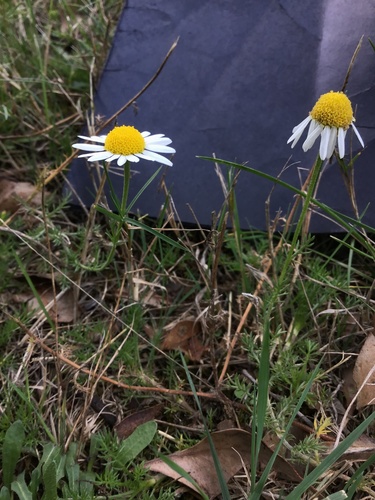
iNaturalist· cc-by-nc
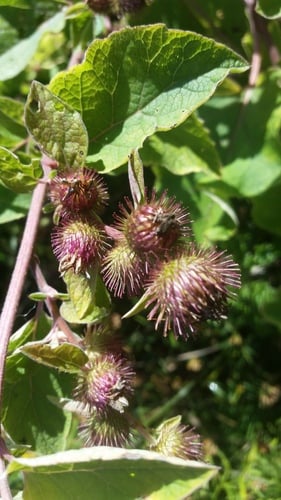
(c) anaxvp, some rights reserved (CC BY-NC), uploaded by anaxvp
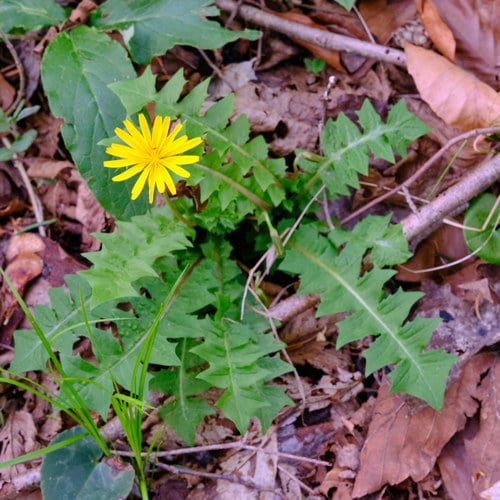
iNaturalist· cc-by-nc
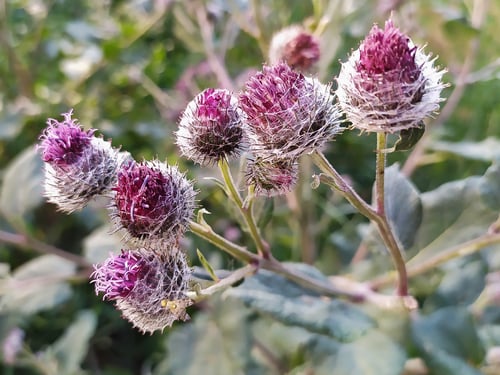
(c) odenwaelder, some rights reserved (CC BY-NC)
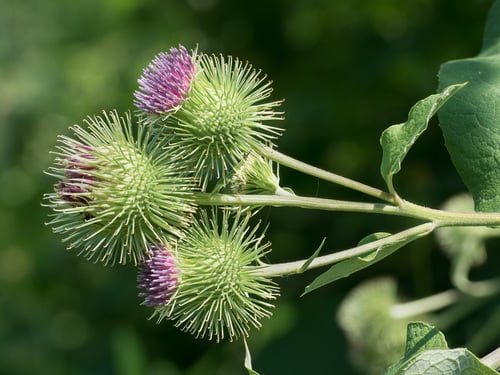
iNaturalist· cc-by-nc
(c) Jeremy Collison, some rights reserved (CC BY-NC), uploaded by Jeremy Collison
Summary
Source: WikipediaMatricaria chamomilla (synonym: Matricaria recutita), commonly known as chamomile (also spelled camomile), German chamomile, Hungarian chamomile (kamilla), wild chamomile, blue chamomile, or scented mayweed, is an annual plant of the composite family Asteraceae. Commonly, the name M. recutita is applied to the herbal product chamomile, although other species are also used as chamomile. The plant is commonly used to make a tea. M. chamomilla, historically used in various ancient cultures and commonly promoted today for a range of conditions, shows limited reliable evidence for effectiveness, may have mild side effects or drug interactions, and should be used with caution—especially around allergies, estrogen-sensitive conditions, and during pregnancy.
Description
A herb. It can grow each year from seeds or last for a few years. The stems are 30-40 cm tall. The lower leaves do not have stalks and oblong or sword shaped and 3-4 cm long by 2 cm wide. They are divided into segments. The flower heads are 1-2 cm across and white and yellow.
Edible Uses
The flowers are dried and brewed into tea, or eaten raw and added to salads, casseroles, and stir fries. The leaves are also dried for tea.
Traditional Uses
The flowers are used to make a nutritional drink. They are dried and used for a tea drink. They are also eaten raw and added to salads and used in casseroles and stir fries. The leaves are dried for tea drinks.
Medicinal Uses
Chamomile is commonly used to make a tea. German chamomile is used in herbal medicine. The flowers contain between 0.3 and 1.5% of the essential oil. It is extracted by distillation, mostly out of fresh flower buds and flower stalks. Bisabolol accounts for up to 33% of the oil's content. More than 120 chemical constituents have been identified in chamomile flower, most of them found in the essential oil. Chemical constituents of the essential oil include bisabolol, farnesene, chamazulene, apigenin, quercetin, patuletin, luteolin, and coumarin.
Known Hazards
It shows limited reliable evidence for effectiveness, may have mild side effects or drug interactions, and should be used with caution—especially around allergies, estrogen-sensitive conditions, and during pregnancy. Chamomile, a relative of ragweed, can cause allergy symptoms and can cross-react with ragweed pollen in individuals with ragweed allergies. Contact dermatitis may occur when touching the plant. When consuming the tea, there is potential for drug interactions with anticoagulants.
Distribution
It is a temperate plant. It grows in fields and forests between 1,800-3,300 m above sea level. In Argentina it grows from sea level to 1,000 m above sea level. In Sichuan.
Where It Grows
Afghanistan, Albania, Algeria, Argentina, Asia, Australia, Austria, Balkans, Belarus, Belgium, Bolivia, Britain, Bulgaria, Canada, Canary Is., Caucasus, Central America, Central Asia, China, Colombia, Costa Rica, Crete, Cuba, Cyprus, Czech Republic, Denmark, Dominican Republic, Ecuador, Egypt, El Salvador, Estonia, Ethiopia, Europe*, Finland, France, Georgia, Germany, Greece, Greenland, Guatemala, Honduras, Hungary, India, Indonesia, Iran, Iraq, Ireland, Italy, Kazakhstan, Korea, Kyrgyzstan, Korea, Latvia, Lebanon, Lithuania, Macedonia, Mali, Manchuria, Mediterranean, Mexico, Mongolia, Morocco, Myanmar, Nepal, Netherlands, Nicaragua, North America, Norway, Pakistan, Palestine, Paraguay, Peru, Poland, Portugal, Romania, Russia, Scandinavia, Serbia, Siberia, Sicily, Sinai, Slovakia, Slovenia, South America, Spain, Syria, Sweden, Switzerland, Tajikistan, Tasmania, Tunisia, Turkey, Türkiye, Ukraine, Uruguay, Uzbekistan, Vietnam, Xinjiang, Yugoslavia,
Cultivation
It can be grown by seeds sown directly or put in a nursery and transplanted. Because the seeds are very small they can be mixed with sand before sowing. Sowing 4-6 cm deep is suitable. A spacing of 20-30 cm is suitable.
Propagation
Seed - sow in situ. Germination should take place within 5 - 10 days
Other Uses
An infusion of the flowers is used as a hair shampoo, especially for fair hair. It is also used as a liquid feed and general plant tonic, effective against a number of plant diseases. The flowers are also an ingredient of 'Quick Return' herbal compost activator. The whole plant is very aromatic and was formerly used as a strewing herb. The whole plant is insect repellent. An essential oil obtained from the whole plant is used sparingly as a flavouring; also in perfumes, where it imparts pleasing and warm tonalities; as well as in shampoos, hair dyes and other cosmetics. Freshly distilled essential oil is blue, but exposed to light and air it gradually changes to green and finally brown. It has a strong characteristic odour and a bitter aromatic flavour. The constituents of the oil include sesquiterpenes, flavonoids and azulenes. Yellow to gold dyes are obtained from the flowers.
Other Information
It is widely cultivated.
Notes
It is rich in Vitamin A and C.
Synonyms
Also Known As
Babacya, Ciceki mast, Gvirila, Hermanek pravy, Kamille, Kamillean, Kamomili, Kummelid, Manzanilla, Papatya, Ramonki, Ramunek, Ramunukei, Romashka, Romashka aptechnaia, Rum'janok, Scented mayweed
References (31)
- Benvenuti, S. & Mazzoncini, M., 2021, The Biodiversity of Edible Flowers: Discovering New Tastes and New Health Benefits. Frontiers in Plant Science Article 569499.
- Blanco-Salas, J., et al, 2019, Wild Plants Potentially Used in Human Food in the Protected Area “Sierra Grande de Hornachos” of Extremadura (Spain). Sustainability 2019, 11, 456
- Bussman, R. W., et al, 2016, A comparative ethnobotany of Khevsureti, Samtskhe-Javakheti, Tusheti, Svaneti, and Racha-Lechkhumi, Republic of Georgia (Sakartvelo), Caucasus. Journal of Ethnobiology and Ethnomedicine (2016) 12:4
- Bussman, R. W., et al, 2021, Unity in diversity—food plants and fungi of Sakartvelo (Republic of Georgia), Caucasus. Journal of Ethnobiology and Ethnomedicine (2021) 17:72 p 6
- Cerne, M., 1992, Wild Plants from Slovenia used as Vegetables. Acta Horticulturae 318
Show all 31 references Hide references
- Ertug, F, Yenen Bitkiler. Resimli Türkiye Florası -I- Flora of Turkey - Ethnobotany supplement
- Dogan, Y., et al, 2004, The Use of Wild Edible Plants in Western and Central Anatolia (Turkey). Economic Botany 58(4) pp. 684-690
- Girard, N. J., 2020, Sustainable Foraging of Wild Edible Plants in Norway. A Biocultural Approach. M. Sc. thesis Norwegian University. p 129
- Hancer, C. K., et al, 2020, Traditional Knowledge of Wild Edible Plants of Biga (Çanakkale), Turkey. Acta Societatis Botanicorum Poloniae / 2020 / Volume 89 / Issue 1 / Article 8914
- Kalle, R. & Soukand, R., 2012, Historical ethnobotanical review of wild edible plants of Estonia (1770s-1960s) Acta Societatis Botanicorum Poloniae 81(4):271-281
- Kapelle, M., et al, 2000, Useful plants within a Campesino Community in a Costa Rican Montane Cloud Forest. Mountain Research and Development, 20(2): 162-171.
- Kaya, O. M., et al, 2020, An ethnobotanical research in Sanhurfa central district and attached Villages (Turkey). Indian Journal of Traditional Knowledge. Vol. 19(1) pp 7-23
- Kermath, B. M., et al, 2014, Food Plants in the Americas: A survey of the domesticated, cultivated and wild plants used for Human food in North, Central and South America and the Caribbean. On line draft. p 213 (As Chamomilla)
- Kew Plants of the World Online
- Kolosova, V., et al, 2020, Foraging in Boreal Forest: Wild Food Plants of the Republic of Karelia, NW Russia. Foods 2020, 9, 1015; p 8
- Lim, T. K., Edible Medicinal and Non-Medicinal Plants Volume 7 Flowers
- Luczaj, L., 2012, Ethnobotanical review of wild edible plants of Slovakia. Acta Societatis Botanicorum Poloniae 81(4):245-255 (As Chamomilla recucita)
- Łuczaj, L., et al, 2013, Wild edible plants of Belarus: from Rostafiński’s questionnaire of 1883 to the present. Journal of Ethnobiology and Ethnomedicine 2013, 9:21 (As Chamomilla recucita)
- Luczaj, L., et al, 2015, Wild food plants and fungi used by Ukrainians in the western part of the Maramureş region in Romania. Acta Soc Bot Pol 84(3):339–346
- Pasta, S., et al, 2020, An Updated Checklist of the Sicilian Native Edible Plants: Preserving the Traditional Ecological Knowledge of Century-Old Agro-Pastoral Landscapes. Frontiers in Plant Science. Volume 11|Article 388
- Pieroni, A. & Soukand, R., 2017, Are Borders more Important than Geographical Distance? The Wild Food Ethnobotany of the Boykos and its Overlap with that of the Bukovinian Hutsuls in Western Ukraine. Journal of Ethnobiology 37(2): 326–345
- Pieroni, A. & Soukand, R., 2017, The disappearing wild food and medicinal plant knowledge in a few mountain villages of North-Eastern Albania. Journal of Applied Botany and Food Quality 90, 58 - 67
- Prakofjewa, J., et al, 2023, Boundaries Are Blurred: Wild Food Plant Knowledge Circulation across the Polish-Lithuanian-Belarusian Borderland. Biology 2023, 12, 571.
- Pruse, B., et al, 2021, Active Wild Food Practices among Culturally Diverse Groups in the 21st Century across Latgale, Latvia. Biology 2021, 10, 551.
- Rajendra, K.C., 2014. Prominent Non-Wood Forest Products of Te- rai and Siwalik Regions in Nepal. Food and Agriculture Organization, Kathmandu, Nepal. p 53
- Rexhepi, B., et al, 2018, Ethnobotanical Study of Wild Edible Plants in Pelagonia Region (Southwestern Macedonia) International Journal of Advances in Science Engineering and Technology, Vol. 6 (1) p 57
- Schunko, C., et al, 2012, Intracultural variation of knowledge about wild plant uses in the Biosphere Reserve Grosses Walsertal (Austria). Journal or Ethnobiology and Ethnomedicine, 8:23
- Shikov, A. N. et al, 2017, Traditional and Current Food Use of Wild Plants Listed in the Russian Pharmacopoeia. Frontiers in Pharmacology. Vol. 8 Article 841
- Simkova, K. et al, 2014, Ethnobotanical review of wild edible plants used in the Czech Republic. Journal of Applied Botany and Food Quality 88, 49-67
- Wiersema, J. H. & Leon, B., 2013, World Economic Plants. A Standard Reference CRC Press. 2nd Ed. p 435
- World Checklist of Useful Plant Species 2020. Royal Botanic Gardens, Kew