Acrostichum danaeifolium
Langsd. & Fischer
Giant fern, Giant leather-fern
iNaturalist· cc-by-nc
(c) Kim and Peter Connolly, some rights reserved (CC BY-NC), uploaded by Kim and Peter Connolly
iNaturalist· cc-by-nc
(c) Teri, some rights reserved (CC BY-NC), uploaded by Teri
iNaturalist· cc-by-nc-sa
(c) Mary Keim, some rights reserved (CC BY-NC-SA)
Summary
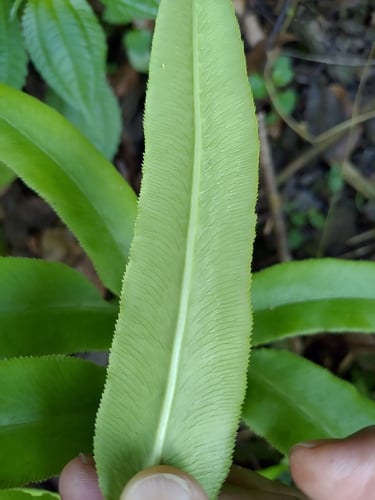
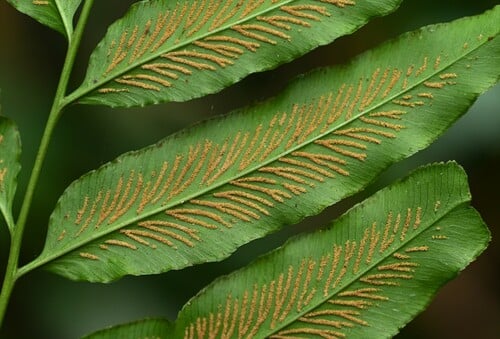
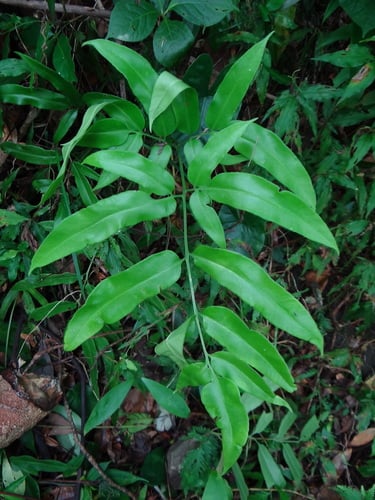
Source: WikipediaAcrostichum danaeifolium, called helecho mangle, interior leather fern or giant leather fern, is a massive fern in the family Pteridaceae which is found throughout the Neotropics. The fronds are up to 3 m (9.8 ft) long with pinnate leaflets up to 30 cm (12 in) long. Spores are distributed uniformly on the back side of the fronds. It prefers wet soils.
Description
A fern. The fronds can be 2-4 m long. The fronds have 20-60 pairs of leaflets.
This description is brief — help expand it
Edible Uses
The young buds and fiddleheads are eaten as a vegetable.
Traditional Uses
The young buds are eaten as a vegetable.
This uses section is brief — help expand it
Medicinal Uses
An infusion of the plant is drunk and also rubbed on the body as a treatment for high fevers.L
Distribution
It is a tropical plant. In Argentina it grows from sea level and up to 100 m above sea level. It grows in brackish and freshwater marshes.
Where It Grows
Argentina, Brazil, Central America, North America, Paraguay, Puerto Rico, South America, St. Kitts and Nevis, USA, Virgin islands, West Indies,
Cultivation
Acrostichum danaeifolium requires a humid atmosphere and a frost-free climate. Requires a moderately sunny position and a moist soil that does not dry out. Succeeds in saline soils. Young plants can tolerate a change between saline and non-saline conditions, but older plants become accustomed to either saline or non-saline and are unlikely to survive a change. This species can invade and take over in disturbed mangrove systems, and is then difficult to eradicate.
Notes
Also put in the family Adiantaceae.
Synonyms
Also Known As
Helecho, Inland leather fern
References (2)
- Kermath, B. M., et al, 2014, Food Plants in the Americas: A survey of the domesticated, cultivated and wild plants used for Human food in North, Central and South America and the Caribbean. On line draft. p 20
- Morton, 1968,