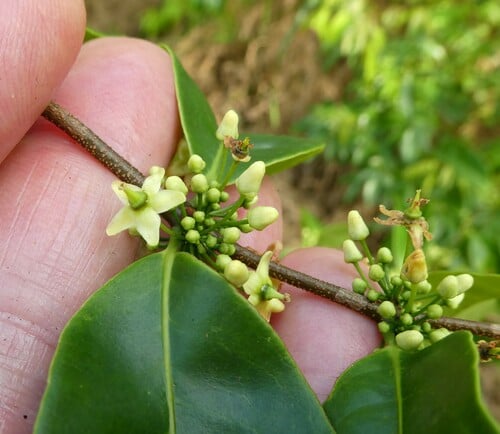
Celastrus scandens
Linn.
American bittersweet, Climbing bittersweet
iNaturalist· cc-by-nc-sa
(c) Rob Curtis, some rights reserved (CC BY-NC-SA), uploaded by Rob Curtis
iNaturalist· cc-by-nc
(c) Gray Catanzaro, some rights reserved (CC BY-NC)
Summary
Source: WikipediaCelastrus scandens, commonly called American bittersweet, is a species of bittersweet that blooms mostly in June and is commonly found on rich, well-drained soils of woodlands.
Description
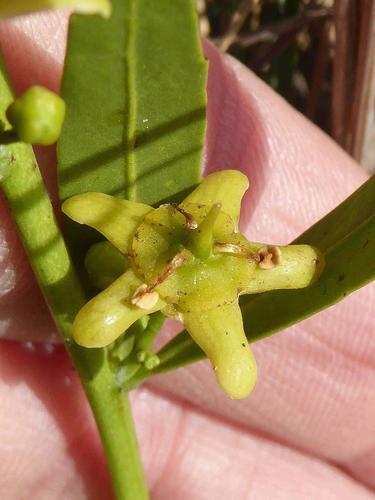
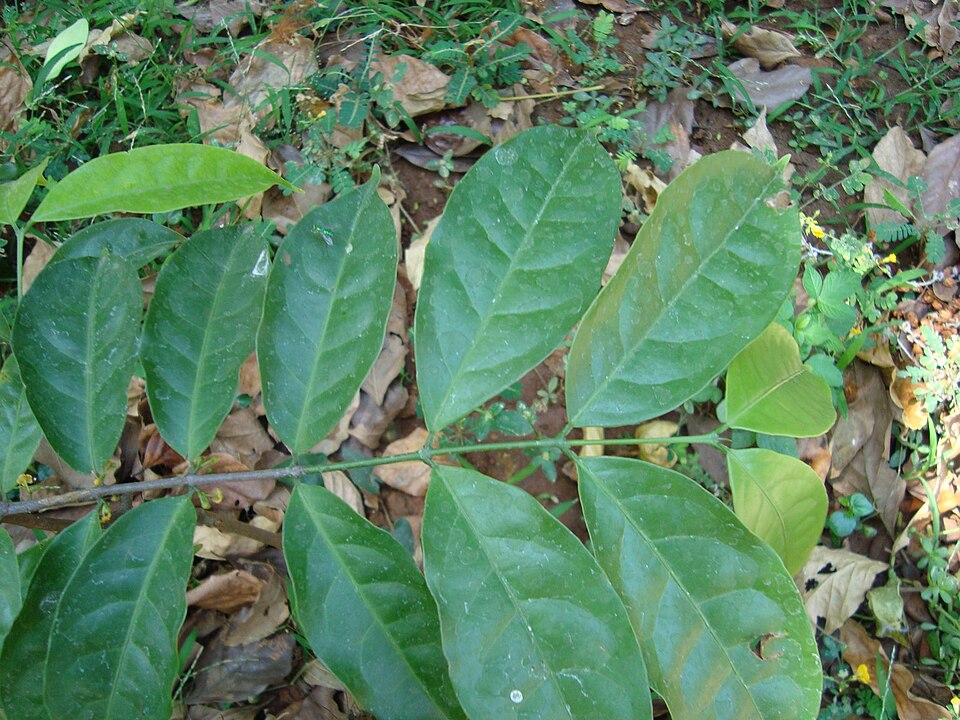
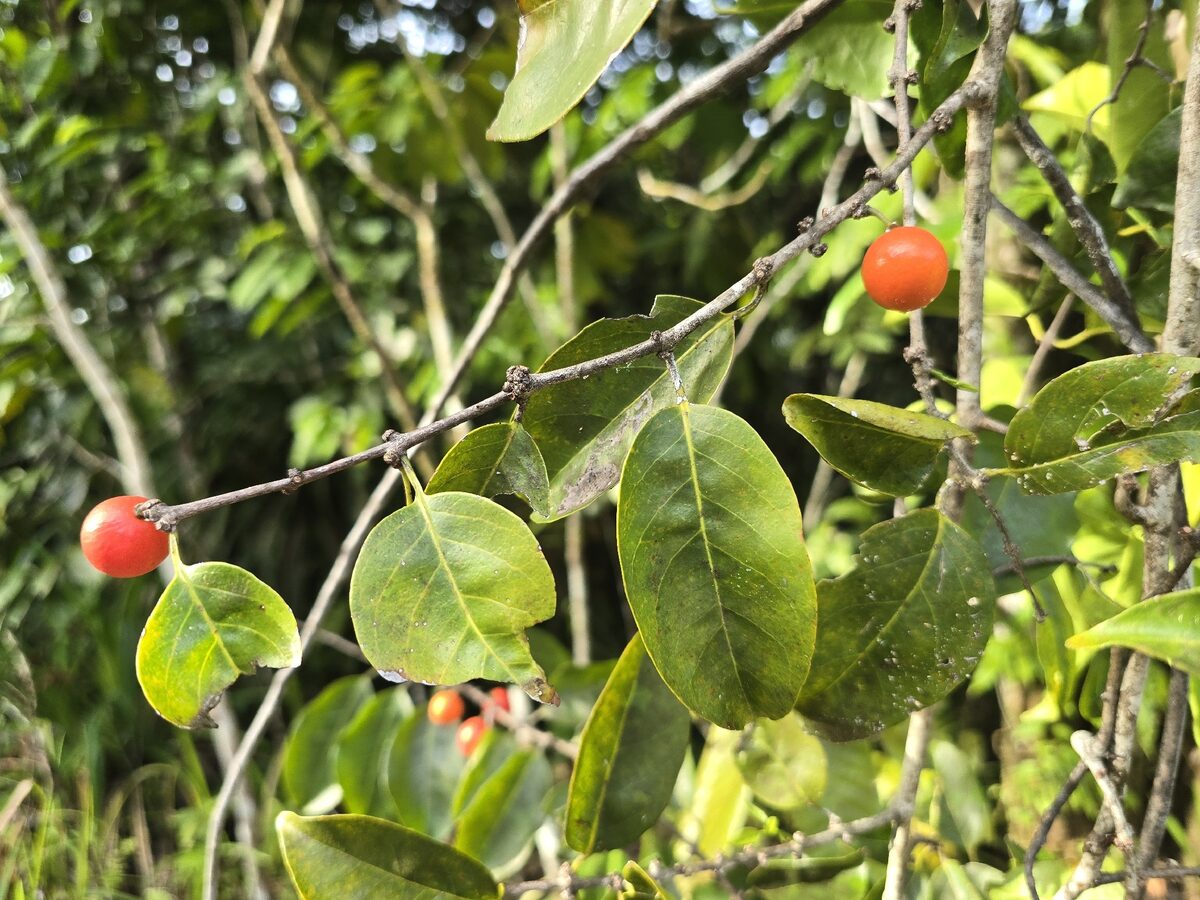
A woody vine. It climbs 6 m high. The leaves are 10 cm long. They have teeth along the edge. The leaves are oblong and taper to a point. Male and female plants are separate. The flowers are greenish. The fruit are yellow. They are pea sized and contain scarlet seeds. It only fruits in a continental climate.
Edible Uses
The bark and twigs must be cooked before eating. The thickish bark is sweet and palatable after boiling. Another account specifies that it is the inner bark that is used, and describes it as a starvation food eaten only when other foods are scarce. Some caution is advised in using this plant as there are suggestions of toxicity.
Traditional Uses
CAUTION: The fruit and seed are toxic. The twigs and inner bark are eaten. The poison is removed by boiling.
This uses section is brief — help expand it
Medicinal Uses
Climbing bittersweet was used medicinally by a number of native North American Indian tribes but is scarcely used in modern herbalism. The root is diaphoretic, diuretic, and emetic, and serves as a folk remedy for chronic liver and skin ailments including skin cancer, rheumatism, leucorrhoea, dysentery, and suppressed menses. A strong compound infusion, usually combined with raspberry leaf tea, has been used to reduce the pain of childbirth. A poultice of boiled root has been applied to obstinate sores and skin eruptions. The bark is used externally as an ointment on burns, scrapes, and skin eruptions, and bark extracts are thought to be cardioactive. Many plants in this genus contain compounds of interest for their antitumour activity.
Known Hazards
Some toxicity suggested; caution advised in use.
Distribution
It is a temperate plant. It is frost hardy. It suits hardiness zones 3-9.
Where It Grows
Australia, Britain, Canada*, Europe, North America, USA,
Cultivation
Prefers a deep loamy soil. Dislikes chalky soils. Succeeds in full or partial shade. Requires a humus-rich soil if it is to be at its best. A rampant climber, it requires ample space and is best grown into an old tree. It climbs by means of twining and also by prickles on the young stems. Plants do not normally require pruning. The foliage of some wild plants is variegated. There are some named forms, selected for their ornamental value. A good bee plant. Plants in this genus are notably resistant to honey fungus. Plants are usually dioecious, in which case male and female plants must be grown if seed is required. This species seldom fruits freely in Britain.
Propagation
Gather seed when ripe, store in dry sand, and sow in February in a warm greenhouse. Three months of cold stratification improves germination rates. Remove the flesh of the fruit before sowing as it inhibits germination. Germination rates are generally good. Prick seedlings into individual pots when large enough to handle and grow on in a greenhouse through at least their first winter. Plant out in late spring or early summer after the last expected frosts. Layering in August using the current season's growth takes 12 months. Root cuttings 6mm thick and 25mm long, taken in December, should be planted horizontally in pots in a frame.
Other Uses
None known.
Other Information
It is a famine food.
Notes
There are about 30 Celastrus species.
Also Known As
Climbing bittersweet, False bittersweet, Staff vine, Waxwork
References (13)
- Beckstrom-Sternberg, Stephen M., and James A. Duke. "The Foodplant Database." http://probe.nalusda.gov:8300/cgi-bin/browse/foodplantdb.(ACEDB version 4.0 - data version July 1994)
- Brickell, C. (Ed.), 1999, The Royal Horticultural Society A-Z Encyclopedia of Garden Plants. Convent Garden Books. p 242
- Cundall, P., (ed.), 2004, Gardening Australia: flora: the gardener's bible. ABC Books. p 351
- Etherington, K., & Imwold, D., (Eds), 2001, Botanica's Trees & Shrubs. The illustrated A-Z of over 8500 trees and shrubs. Random House, Australia. p 196
- Etkin, N.L. (Ed.), 1994, Eating on the Wild Side, Univ. of Arizona. p 73
Show all 13 references Hide references
- Hedrick, U.P., 1919, (Ed.), Sturtevant's edible plants of the world. p 177
- Joyce, D., 1998, The Garden Plant Selector. Ryland, Peters and Small. p 177
- Kermath, B. M., et al, 2014, Food Plants in the Americas: A survey of the domesticated, cultivated and wild plants used for Human food in North, Central and South America and the Caribbean. On line draft. p 204
- Lord, E.E., & Willis, J.H., 1999, Shrubs and Trees for Australian gardens. Lothian. p 329
- MacKinnon, A., et al, 2009, Edible & Medicinal Plants of Canada. Lone Pine. p 134
- Sp. pl. 1:196. 1753 (type species)
- Toupal, R. S. & Hollenback, K., 2009, An Ethnobotany of Indiana Dunes National Lakeshore: Plant Uses of the Ojibwa People. Bureau of Applied Research in Anthropology. University of Arizona
- USDA plants