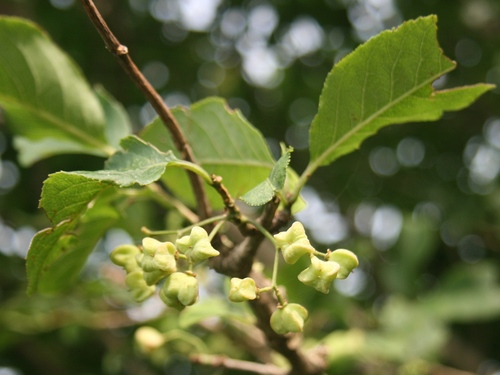
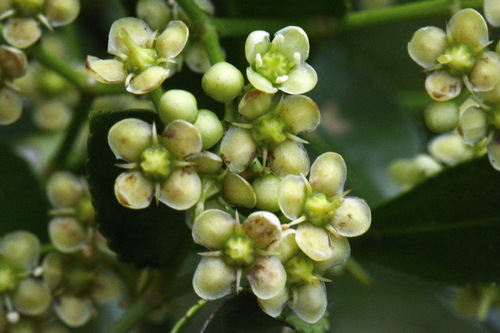
Euonymus europaeus
L.
Spindle tree
wikimedia· cc-by
Wikimedia Commons - Robert Flogaus-Faust
wikimedia· cc-by
Wikimedia Commons - Robert Flogaus-Faust
Summary
Source: WikipediaEuonymus europaeus is a deciduous shrub growing to 6 m tall, hardy to UK zone 3. Flowers bloom May to June with seeds ripening September to November. The hermaphrodite plant is insect-pollinated and thrives in light sandy, medium loamy, and heavy clay soils with mildly acidic to basic pH, tolerating very alkaline conditions. It grows in semi-shade or full sun and prefers well-drained soil, adapting to dry or moist conditions.
Description
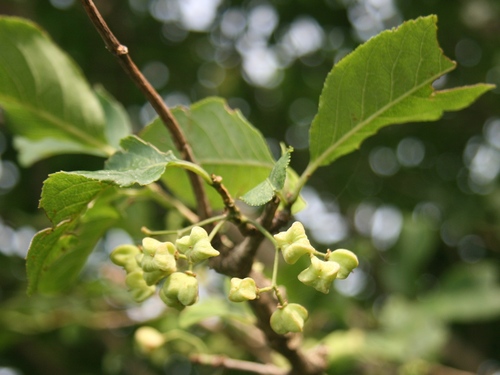
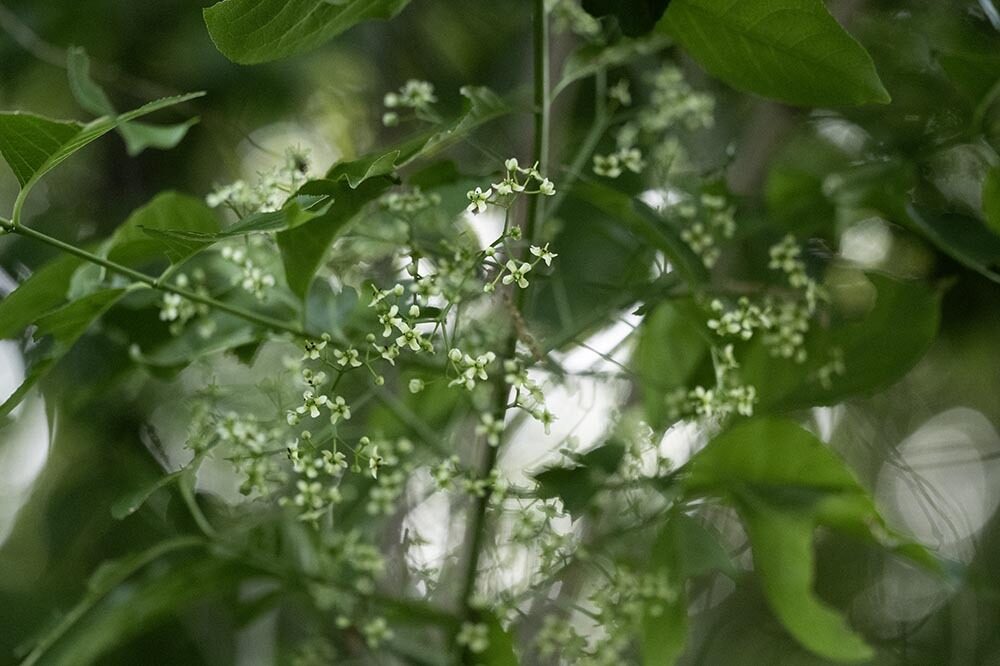
A shrub that loses its leaves during the year. It grows 2-8 m high and spreads 1.2-3 m wide. The bark is smooth and grey. The leaves are narrowly oval and pointed. They are 3-13 cm long. The flowers are small and green. They are in clusters in the axils of leaves. The fruit is a 4 lobed capsule.
Edible Uses
An edible yellow dye comes from the fruit and seed, with pink from the fruit case and orange from the seed. The plant may yield manna, though details are scarce. Caution is advised as many Euonymus species are poisonous.
Traditional Uses
The fruit and seeds are the source of a yellow dye used for colouring butter. It also produces an edible manna. CAUTION: All parts are harmful if eaten.
Medicinal Uses
The bark is alterative, cholagogue, hepatic, laxative, stimulant, and tonic. Root bark is typically used; stem bark substitutes are sometimes employed. Small doses stimulate appetite; larger doses irritate the intestines. The bark especially treats liver disorders accompanying or following fevers. Seeds are strongly emetic and purgative. Fresh leaves and dried fruit and seeds are used externally to treat scabies, lice (head, body, or pubic), ticks, and skin parasites.
Known Hazards
Poisonous. No further details.
Distribution
It is a temperate plant.
Where It Grows
Asia, Australia, Caucasus, Central Asia, Europe, Georgia, Italy, Mediterranean, San Marino, Slovenia, Tajikistan, Tasmania,
Cultivation
An easily grown plant, it thrives in almost any soil, including chalk, and is particularly suited to dry shaded areas. Prefers a well-drained loamy soil. If cultivated for its latex it is best grown in a dry open position. A very cold-hardy plant, tolerating temperatures down to about -25°c. A very ornamental plant, there are many named varieties. This species is often damaged by caterpillars during the flowering season. It is a favoured home for blackfly, so should not be grown near broad beans. In garden design, as well as the above-ground architecture of a plant, root structure considerations help in choosing plants that work together for their optimal soil requirements including nutrients and water.
Propagation
Sow fresh seed immediately in a cold frame. Stored seed needs 8–12 weeks warm stratification followed by 8–16 weeks cold stratification before sowing in a cold frame. Once seedlings are manageable, transplant into individual pots and maintain in the greenhouse through their first winter. Plant outdoors in late spring or early summer after final frosts. Alternatively, sow stored seed in an outdoor seedbed in early spring, growing seedlings two years in the bed before permanent planting. Half-ripe wood cuttings, 5–8 cm long at a node or with a heel, taken July/August in a frame root very easily. Mature wood cuttings taken November in a frame also succeed. Layering in July/August takes 14 months.
Other Uses
The whole plant yields volatile oil for soap making; oil may also be extracted from seeds. A good yellow dye from the fleshy seed coating turns green with alum but both colors fade readily. Baked and powdered berries remove lice and function as insecticide. Roots yield up to 4% gutta-percha, a non-elastic rubber for electrical insulation and plastic production. Wood is very hard, easily split, fine-grained, and non-durable, used for spindles, skewers, knitting needles, toothpicks, and carving. High-quality charcoal from the wood is valued by artists.
Also Known As
Navadna trdoleska
References (6)
- Baker, M. L. & de Salas, M. F., 2012, A Census of the Vascular Plants of Tasmania. (On line)
- Brown, D., 2002, The Royal Horticultural Society encyclopedia of Herbs and their uses. DK Books. p 208
- Facciola, S., 1998, Cornucopia 2: a Source Book of Edible Plants. Kampong Publications, p 75
- Postman, J. D., et al, 2012, Recent NPGS Coordinated Expeditions in the Trans-Caucasus Region to Collect Wild Relatives of Temperate Fruit and Nut Crops. In Acta Horticulturae Number 948 p 191-198
- Ryan, S., 2008, Dicksonia. Rare Plants Manual. Hyland House. p 25
Show all 6 references Hide references
- Sp. pl. 1:197. 1753