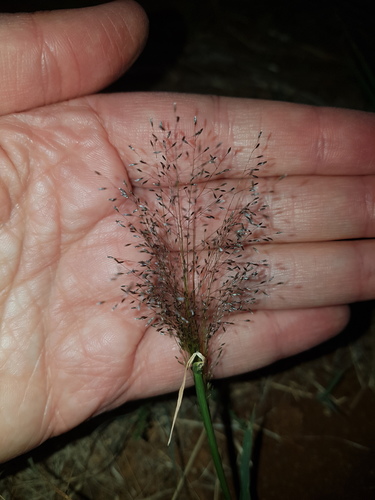
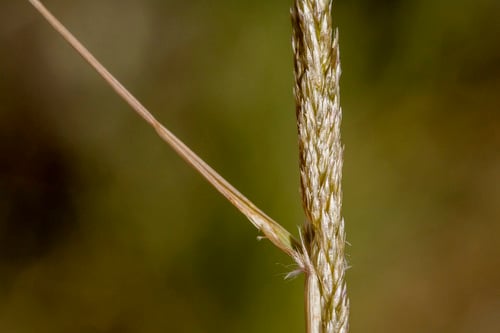
Bambusa longispiculata
Gamble
Mitenga
iNaturalist· cc-by-nc
(c) bowuzhizhi, some rights reserved (CC BY-NC)
wikimedia· cc-by-sa
Sajetpa at Malayalam Wikipedia (via Wikimedia Commons)
Summary
Source: WikipediaBambusa longispiculata, or Mahal bamboo, is a species of clumping bamboo native to Bangladesh and Myanmar, but widely grown in many other countries including Australia. Growing in wide and open clumps, it makes an excellent shelter for waterfowl. It is not suited for harvesting and is very suitable for soil stabilization on dam faces. It can grow up to a height of 10 m, and a thickness of 5 cm.
Description
A bamboo. It grows 8-12 m tall. The culms are 4-5 cm across. They are flexible at the base and droop slightly at the tip. There are several branches at each node. The leaf baldes are 9-15 cm long by 1-2 cm wide.
Edible Uses
Shoots are edible.
Distribution
It is a tropical plant. In Brisbane Botanical gardens.
Where It Grows
Asia, Australia, Bangladesh, China, India, Indochina, Laos, Myanmar, Northeastern India, SE Asia, Thailand,
Cultivation
A plant of the tropics, where it is found at elevations up to 1,000 metres. It grows best in areas where annual daytime temperatures are within the range 22 - 28°c, but can tolerate 9 - 35°c. It prefers a mean annual rainfall in the range 2,300 - 3,000mm, but tolerates 700 - 4,500mm. Succeeds in full sun and dappled shade. Grows best in heavier soils. Prefers a pH in the range 5 - 6, tolerating 4.5 - 7.5. Bamboos have an interesting method of growth. Each plant produces a number of new stems annually - these stems grow to their maximum height in their first year of growth, subsequent growth in the stem being limited to the production of new side branches and leaves. In the case of some mature tropical species the new stem could be as much as 30 metres tall, with daily increases in height of 30cm or more during their peak growth time. This makes them some of the fastest-growing species in the world. Bamboos in general are usually monocarpic, living for many years before flowering, then flowering and seeding profusely for a period of 1 - 3 years before usually dying.
Propagation
Seed - surface sow in containers as soon as it is ripe, preferably at a temperature around 20°c. Do not allow the compost to dry out. Germination usually takes place fairly quickly so long as the seed is of good quality, though it can take 3 - 6 months. Prick out the seedlings into containers when they are large enough to handle and grow on in a lightly shaded place until large enough to plant out. Plants only flower at intervals of many years and so seed is rarely available. Division as new growth commences. Take divisions with at least three canes in the clump, trying to cause as little root disturbance to the main plant as possible. Grow them on in light shade in pots of a high fertility sandy medium. Mist the foliage regularly until plants are established. Plant them out into their permanent positions when a good root system has developed, which can take a year or more. Plants can be propagated vegetatively by rhizome, culm and branch cuttings. The propagules are raised in a nursery and after they have produced roots and developed rhizomes they are planted out in the field during the rainy season in pits filled with a mixture of compost and soil.
Other Uses
The canes are used for scaffolding.
Also Known As
Bansh, Ta-bin-daing-wa, Thaikwa
References (2)
- Hossain, U. & Rahman, A., 2018, Study and quantitative analysis of wild vegetable floral diversity available in Barisal district, Bangladesh. Asian J. Med. Biol. Res. 2018, 4 (4), 362-371
- Luczaj, L., et al, 2021, Wild food plants and fungi sold in the markets of Luang Prabang, Lao PDR. Journal of Ethnobiology and Ethnomedicine (2021) 17:6