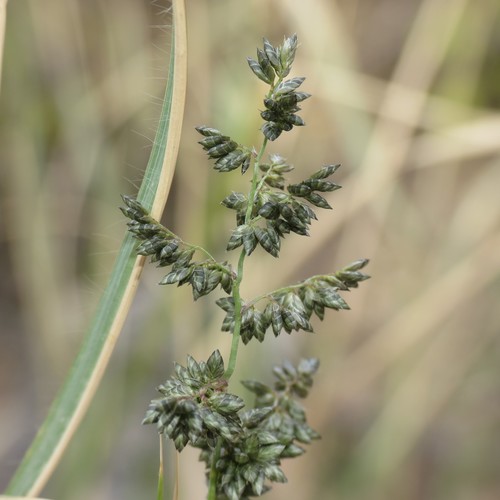
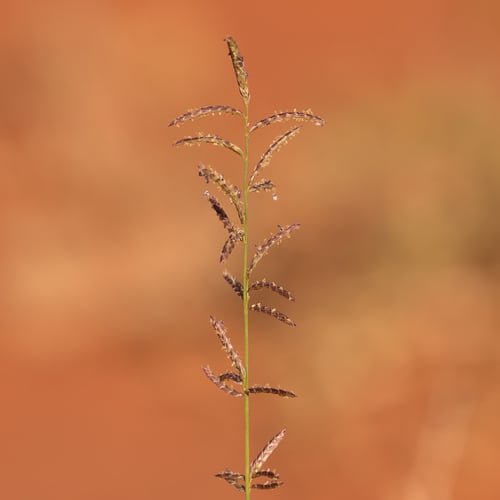
Tripsacum dactyloides
(L.) L.
Sesame grass, Buffalo grass, Eastern gama grass
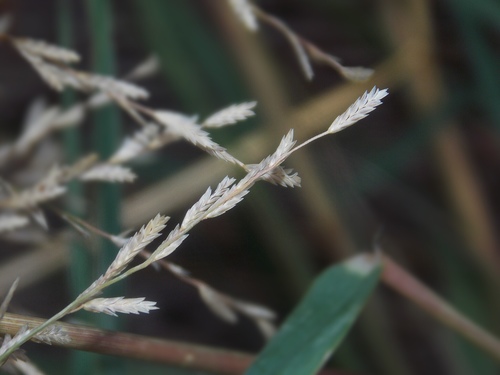
iNaturalist· cc-by
(c) samlutfy, some rights reserved (CC BY), uploaded by samlutfy
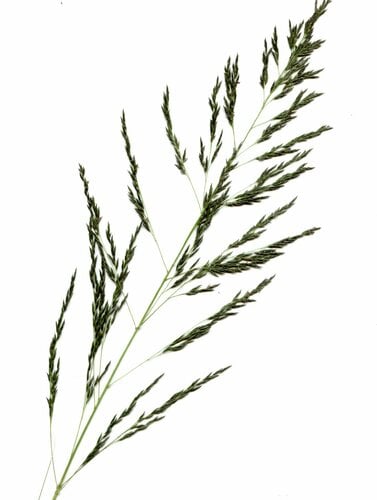
iNaturalist· cc-by-nc
(c) Mac H. Alford, some rights reserved (CC BY-NC)
Summary
Source: WikipediaTripsacum dactyloides, commonly called eastern gamagrass, or Fakahatchee grass, is a warm-season, sod-forming bunch grass. It is widespread in the Western Hemisphere, native from the eastern United States to northern South America. Its natural habitat is in sunny moist areas, such as along watercourses and in wet prairies. In some areas, it has adapted well to disturbed conditions. Eastern gamagrass is a widely cultivated for its use as forage.
Description
Perennial grass growing 2.5 m tall by 1 m wide at a medium rate. Hardy to UK zone 7 and frost-hardy. Flowers August to September. Monoecious, wind-pollinated. Tolerates light sandy, medium loamy, and heavy clay soils across mildly acidic to basic pH. Requires full sun and prefers moist soil.
Edible Uses
The seed is eaten cooked or ground into flour. When popped, it is almost indistinguishable from strawberry popcorn. The seeds contain about 27% protein — roughly three times the protein found in corn and twice that of wheat — and are also about twice as high in the amino acid methionine as corn.
Traditional Uses
The seeds are used for food. They can be popped.
This uses section is brief — help expand it
Medicinal Uses
None known
Distribution
It is a warm temperate plant. It suits hardiness zones 3-9.
Where It Grows
Bahamas*, Central America*, Cuba, Dominican Republic, Guiana, Guianas, Guyana, Haiti, Mexico*, North America*, South America*, Suriname, USA, West Indies,
Cultivation
A very easily grown plant, it succeeds in ordinary garden soil. A fairly hardy plant, it withstands severe frost in S. England and seems to be perfectly hardy in Cambridge Botanical gardens. This species is currently (1992) under development as a potential perennial grain crop. The seed has a very high protein content and this can be sacrificed to some extent in order to try and improve overall yields (these are quite low at present). Closely related to Tripsacum floridanum. Bi-generic hybrids with Zea spp are known to occur.
Propagation
Sow seed in spring in a greenhouse, only just covering it. Germination should occur within 2 weeks. When large enough to handle, prick seedlings out into individual pots and plant out into permanent positions in summer. Divide in spring; larger divisions can go directly into permanent positions. Smaller divisions are best potted up and grown on in light shade in a greenhouse or cold frame until well established, then planted out in summer or the following spring.
Other Uses
None known Special Uses Food Forest
Notes
The seeds are 27% protein. They have twice the amount of amino acid methionine as corn.
Synonyms
References (7)
- Davies, C. L., Waugh, D. L. & Lefroy, E. C., 2005, Perenial Grain Crops for High Water Use. The case of Microlaena stipoides. RIRDC Publication No. 05/024
- Facciola, S., 1998, Cornucopia 2: a Source Book of Edible Plants. Kampong Publications, p 181
- Hedrick, U.P., 1919, (Ed.), Sturtevant's edible plants of the world. p 656
- Kermath, B. M., et al, 2014, Food Plants in the Americas: A survey of the domesticated, cultivated and wild plants used for Human food in North, Central and South America and the Caribbean. On line draft. p 879
- Plants for a Future database, The Field, Penpol, Lostwithiel, Cornwall, PL22 0NG, UK. http://www.scs.leeds.ac.uk/pfaf/
Show all 7 references Hide references
- Plants of Haiti Smithsonian Institute http://botany.si.edu/antilles/West Indies
- Syst. nat. ed. 10, 2:1261. 1759