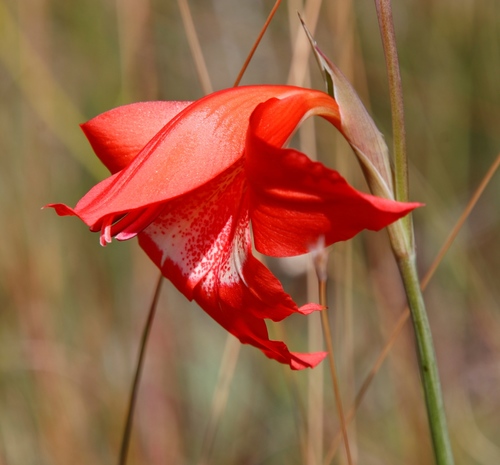
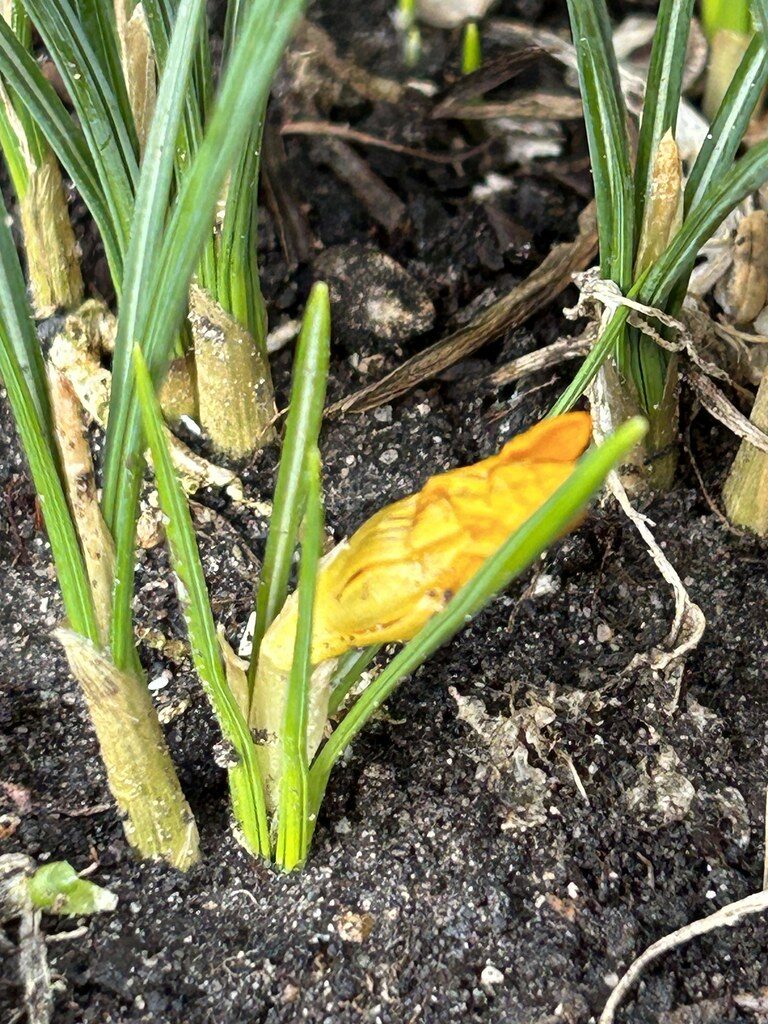
Babiana nana
(Andrews) Spreng.
Klip uintjie
iNaturalist· cc-by-nc
(c) mikemittelmeyer, some rights reserved (CC BY-NC)
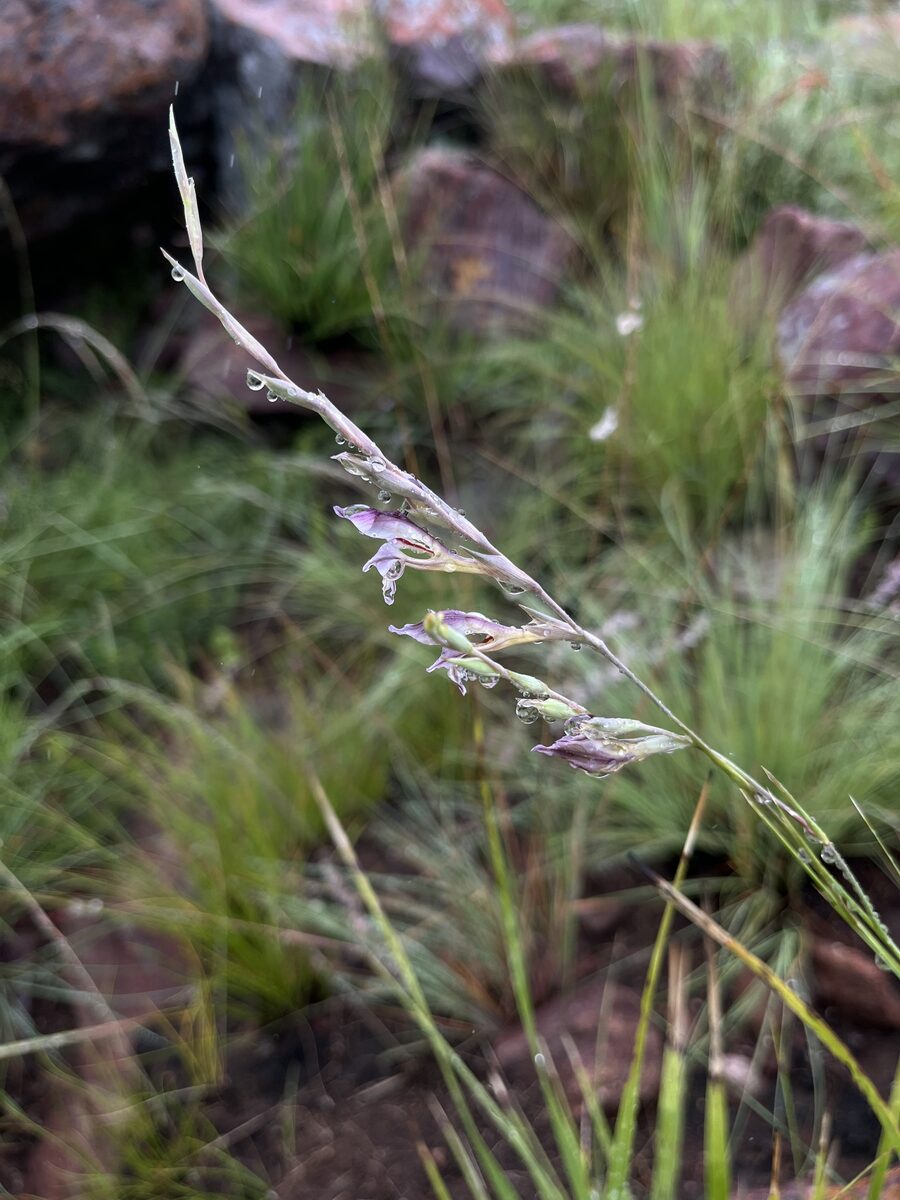
iNaturalist· cc-by-nc-sa
(c) Gareth Williams, some rights reserved (CC BY-NC-SA), uploaded by Gareth Williams
Summary
Source: WikipediaBabiana nana is a species of geophyte of 6–15 cm (2.4–5.9 in) high that is assigned to the family Iridaceae. It has leaves that consist of a sheath and a blade that are at an angle with each other. The leaf blades are oval to almost line-shaped and have a left and right surface, rather than an upper and lower surface. The leaf blades are moderately pleated and covered in dense, soft hairs. The inflorescence contains two to six blue to violet or pale pink flowers adorned with white markings on the lower lip, and with three stamens crowding under the upper lip. Flowering occurs from late August to the end of September. The flowers emit a smell reminiscent of roses or violets.
Description
A subtropical herb of the Iridaceae family with bulbs and corms, growing in rocky or stony locations.
This description is brief — help expand it
Edible Uses
The bulb and corm are eaten as snacks and can also be cooked as vegetables.
Traditional Uses
The bulb or corm is eaten as a snack and also cooked as a vegetable.
This uses section is brief — help expand it
Distribution
It is a subtropical plant. It grows in rocky or stony locations.
Where It Grows
Africa, South Africa*, Southern Africa,
Notes
Possibly only eaten by baboons.
Synonyms
References (2)
- Ruiters-Welcome, A. K., 2019, Food plants of southern Africa. Ph.D. thesis. Univ. of Johannesburg p 66
- Welcome, A. K. & Van Wyk, B.-E., 2019, An inventory and analysis of the food plants of southern Africa. South African Journal of Botany 122 (2019) 136–179