Casuarina decaisneana
F. Muell.
Desert Oak
Casuarinaceae Edible: Seeds
iNaturalist· cc-by
(c) Tim Hammer, some rights reserved (CC BY)
iNaturalist· cc-by-nc
(c) marcycad, some rights reserved (CC BY-NC)
iNaturalist· cc-by-nc-sa
(c) Arthur Chapman, some rights reserved (CC BY-NC-SA)
Description
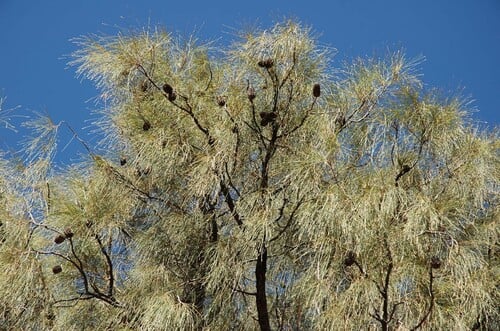
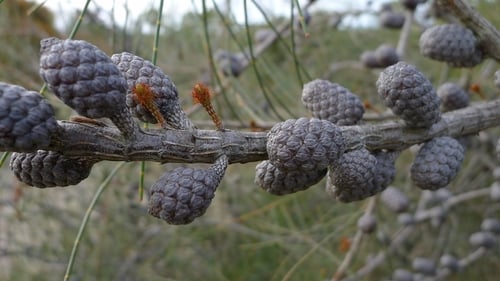
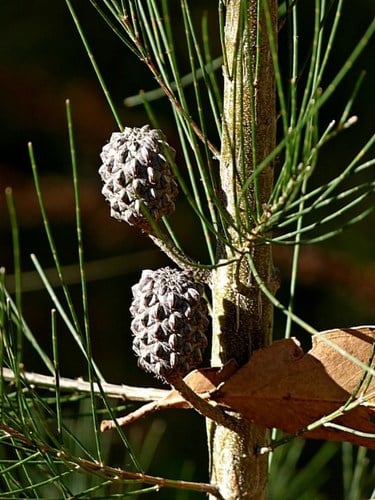
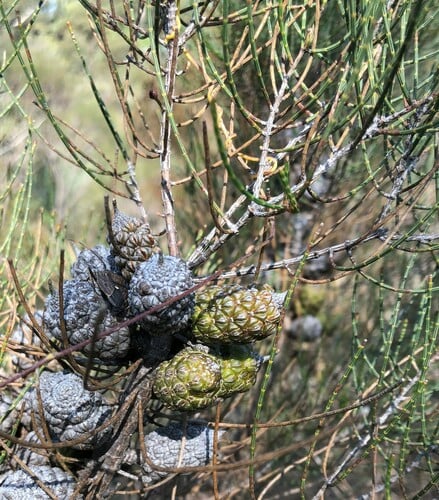
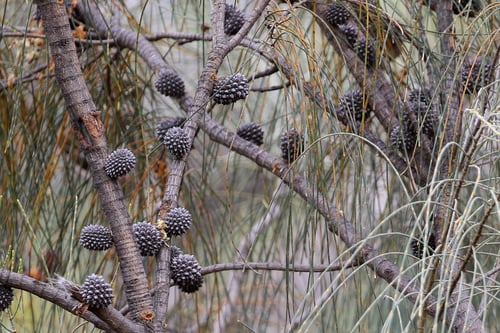
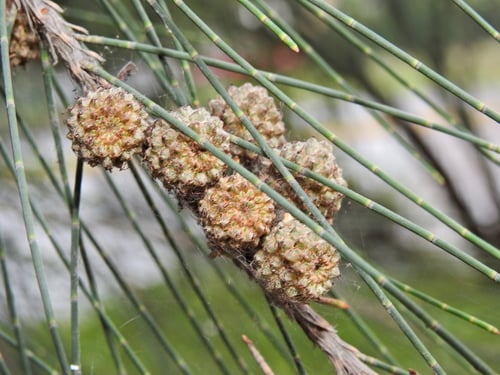
A medium to large tree. It grows 6-15 m high and spreads 3-12 m wide. The leaves are fine and hang down. The male flowers are in slender spikes. The seed cones are large. They are 3-7 cm long and 2.5 cm wide. They are woody.
Edible Uses
The seeds are edible.
Distribution
It suits arid and semi arid regions. It grows in the hottest and most arid areas in Australia. It needs well drained soil. It can grow in dry soil and in full sunlight. It is frost hardy.
Where It Grows
Australia*,
Cultivation
Plants are grown from seed.
Notes
There are about 17 Casuarina species.
Synonyms
Now Allocasuarina decaisneana
References (5)
- Greig, D., 1996, Flowering Natives for Home Gardens. Angus & Robertson. p 112
- Lawrence, R. 1969, Aboriginal Habitat and Economy. ANU Dept. Geog. Occas. Paper No. 6.
- Leiper, G & Houser, J., Mutooroo. Plant Use by Australian Aboriginal People. Assembly press, Queensland.
- Molyneux, B & Forrester, S., 1997, The Austraflora A-Z of Australian Plants. Reed. p 65
- Morley, B.D., & Toelken, H.R., (Eds), 1983, Flowering Plants in Australia. Rigby. p 67