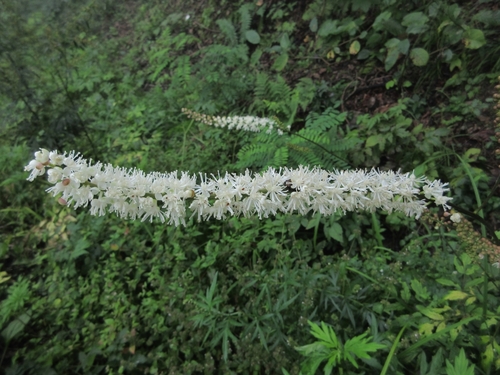
Aquilegia brevistyla
Hook.
iNaturalist· cc-by-nc
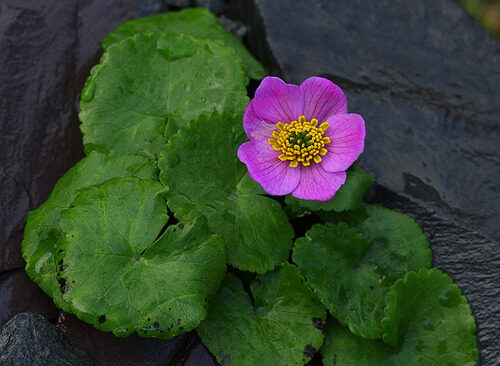
(c) Andy Fyon, some rights reserved (CC BY-NC), uploaded by Andy Fyon
iNaturalist· cc-by-nc
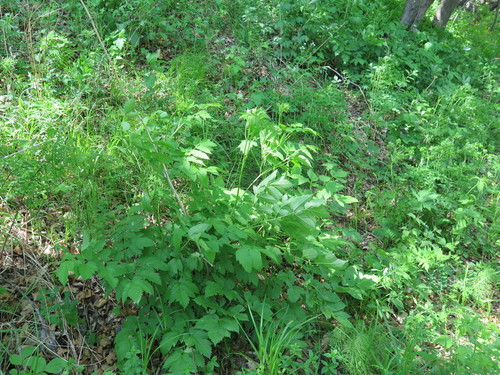
(c) Susan Elliott, some rights reserved (CC BY-NC), uploaded by Susan Elliott
iNaturalist· cc-by-nc
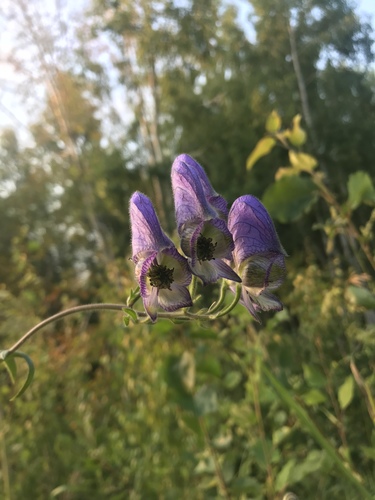
(c) Everett Fee, some rights reserved (CC BY-NC), uploaded by Everett Fee
Summary
Source: WikipediaAquilegia brevistyla is a species of flowering plant in the buttercup family known by the common name smallflower columbine. It is native to northern North America, where it has a disjunct distribution. Most of its range extends from Alaska through much of Canada, and it also occurs in a few areas in the contiguous United States, such as the Black Hills of South Dakota and central Montana. It is most common in eastern Alaska, Yukon, the southern Northwest Territories, and northern parts of Alberta, Manitoba, and Saskatchewan. This species is a rhizomatous perennial herb with stems up to 80 centimeters tall. The leaves are compound, divided into wavy-edged leaflets. Basal leaves are borne on long petioles. Leaves higher on the stem have much shorter petioles. The nodding flowers are small for a columbine species. The sepals are up to 2.5 centimeters long, reflexed, and blue to lavender in color. The spurs are up to a centimeter long. The petals are white or light yellow and up to a centimeter long. The fruits are follicles up to 2.5 centimeters long. Flowering occurs in May through July or August. This plant is often found in moist habitat types, but it can occur in drier areas. It is often associated with limestone and other types of calcareous substrate. It may also occur on granite soils. It grows in coniferous forests, woods, meadows, and riverbanks. In the northern part of its range it usually grows in coniferous forest habitat. In the Black Hills area it can be found alongside Picea glauca, Pinus ponderosa, and Populus tremuloides. It usually grows in the understory, but occasionally it may be found in more open habitat. The plant is often associated with various mosses, such as feather moss, Hylocomium splendens. It may grow in moss carpets. This plant is threatened by habitat loss in parts of its range, even in remote areas. Some occurrences in the southern parts of its range are threatened by recreational activities, such as off-road vehicle use. Grazing is a threat in some areas.
Description
A hardy perennial reaching 0.9 m tall, suitable for zone 2. Blooms June to August with hermaphrodite flowers pollinated by bees. Grows in light sandy and medium loamy well-drained soils. Tolerates mildly acid, neutral, and basic pH. Adapts to semi-shade or full sun and prefers moist conditions.
Edible Uses
Edible Parts: Flowers Edible Uses: Flowers - raw. Sweet and delightful, they make a very attractive addition to mixed salads and can also be used as a thirst-quenching munch in the garden.
Traditional Uses
The flowers are eaten raw. They can be added to salads.
This uses section is brief — help expand it
Medicinal Uses
Antispasmodic Diaphoretic Parasiticide Parasiticide Resolvent Salve Antispasmodic, diaphoretic, parasiticide, resolvent and salve.
Known Hazards
Although no records of toxicity have been seen for this species, it belongs to a family that contains a number of mildly toxic species. It is therefore wise to exercise some caution. The flowers are probably perfectly safe to eat.
Distribution
It grows in open woodlands from 800-3,500 m above sea level. It can grow in a range of well-drained soils. It can tolerate light shade. It is best in moist soil. It suits hardiness zone 2.
Where It Grows
Alaska, North America, USA,
Cultivation
Succeeds in ordinary garden soil, preferring a moist but not wet soil and a sunny position. Intolerant of heavy clay. Most species are short-lived, dying out after 2 - 3 years, though they usually produce seed prolifically. However, they are very apt to hybridize with other members of the genus and so it becomes difficult to keep a species true to type if more than one is grown in the garden. Plants seem to be immune to the predations of rabbits. A greedy plant, inhibiting the growth of nearby plants, especially legumes.
Propagation
Seed - best sown as soon as it is ripe in a cold frame. The seed can be slow to germinate. Stored seed can be sown in late winter in a cold frame. When large enough to handle, prick the seedlings out into individual pots and grow them on in a cold frame for their first winter. Plant out in late spring or early summer. Division in spring.
Other Uses
Parasiticide Parasiticide The seed is used as a parasiticide to rid the hair of lice. Special Uses
Synonyms
References (1)
- Plants for a Future database, The Field, Penpol, Lostwithiel, Cornwall, PL22 0NG, UK. http://www.pfaf.org