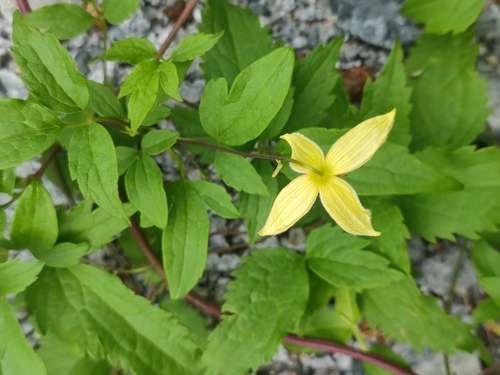
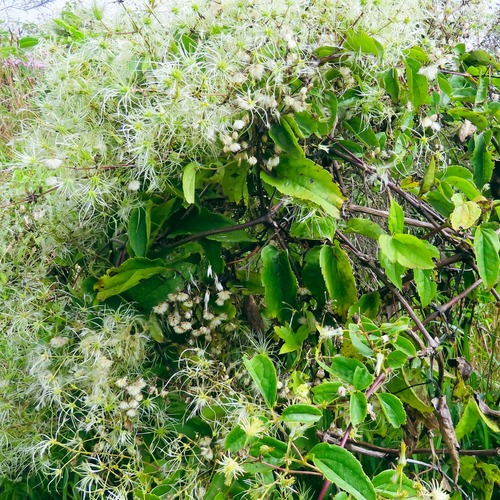
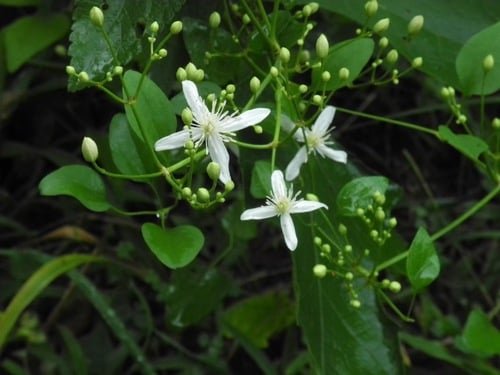
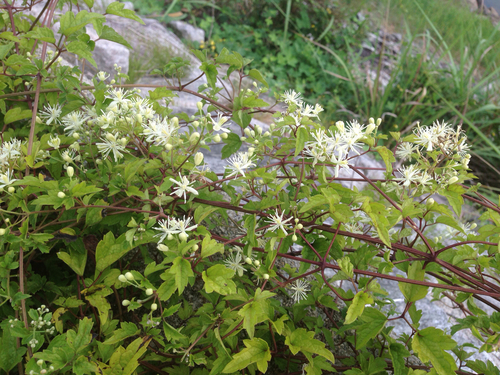
Anemone narcissiflora
L.
Narcissus Anemone, Narcissus-flower Thimbleweed
iNaturalist· cc-by-nc
(c) Boris Bolshakov, some rights reserved (CC BY-NC)
iNaturalist· cc-by-nc
(c) Boris Bolshakov, some rights reserved (CC BY-NC)
iNaturalist· cc-by-nc
(c) Vyacheslav Luzanov, some rights reserved (CC BY-NC)
Summary
Source: WikipediaA perennial growing 60 cm tall and spreading 50 cm wide. Hermaphroditic flowers bloom in May with seeds maturing June to July. Tolerates semi-shade to full sun and grows in sandy, loamy, or clay soils with preference for good drainage and moist conditions across various pH ranges. Hardy to UK zone 3.
Description
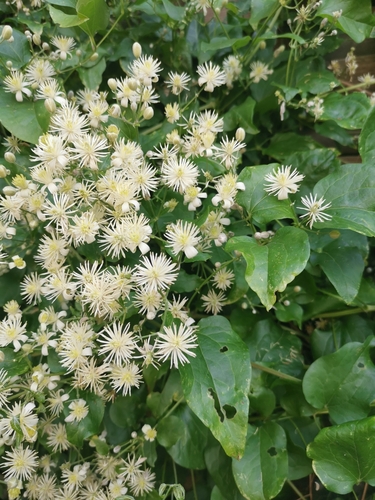
A small herb. It grows 50 cm high. There are 4-9 leaves. The leaves are in 3 sections and 5 sided or round. They are 3-7 cm long by 4-12 cm wide. The flowers are white and in clusters.
Edible Uses
Both the leaves and roots of Anemone narcissiflora have been used as food, though some caution is advised regarding toxicity. Leaves can be eaten raw or cooked; they were traditionally beaten together with other salad greens and oil to a creamy consistency, then frozen into a kind of ice cream. The upper ends of the root have also been eaten raw.
Traditional Uses
CAUTION: This plant is normally considered very poisonous. The leaves are eaten raw, fermented or in oil.
This uses section is brief — help expand it
Medicinal Uses
The plant has been used as an antihaemorrhagic to help stop bleeding.
Known Hazards
Although no specific mention has been seen for this species, many members of this genus contain protoanemonin, an irritating acrid oil that is an enzymatic breakdown product of the glycoside ranunculin. While protoanemonin can cause severe topical and gastrointestinal irritation, it is unstable and changes into harmless anemonin when plants are dried or heated.
Distribution
It grows in cold temperate and Arctic zones. In northern China it grows between 1,800-4,000 m above sea level. In Yunnan.
Where It Grows
Afghanistan, Asia, Australia, Central Asia, China, Europe, Kazakhstan, Korea, Mongolia, North America, North Korea, Pakistan, Russia, Siberia, Tajikistan, USA,
Cultivation
Succeeds in ordinary garden soil but prefers a rich sandy loam and full sun. Succeeds in full sun or part shade. Plants succeed in maritime gardens. Hardy to about -20°c. Plants seem to be immune to the predations of rabbits. A greedy plant, inhibiting the growth of nearby plants, especially legumes. A very ornamental and highly polymorphic plant. There are a large number of sub-species.
Propagation
Sow seed in a cold frame as soon as it ripens in summer, surface-sowing or barely covering it and keeping the soil moist. Stored seed should be sown as early as possible in late winter or early spring. Germination typically takes 1–6 months at 15°C. Once seedlings are large enough to handle, prick them out into individual pots and grow on in light shade in the greenhouse for at least their first year before planting out in spring. Division can be done in late summer after the plant dies down, though this plant is very slow to increase.
Other Uses
None known.
Notes
There are about 120 Anemone species.
Synonyms
References (7)
- Bircher, A. G. & Bircher, W. H., 2000, Encyclopedia of Fruit Trees and Edible Flowering Plants in Egypt and the Subtropics. AUC Press. p 28
- Cundall, P., (ed.), 2004, Gardening Australia: flora: the gardener's bible. ABC Books. p 153
- Kiple, K.F. & Ornelas, K.C., (eds), 2000, The Cambridge World History of Food. CUP p 1718
- Plants for a Future database, The Field, Penpol, Lostwithiel, Cornwall, PL22 0NG, UK. http://www.scs.leeds.ac.uk/pfaf/
- Sp. pl. 1:542. 1753, nom. cons. "uarcissifolia"
Show all 7 references Hide references
- Wild edible plants of Himachal Pradesh
- Wilson, S., 1997, Some Plants are Poisonous. Reed. p 15