Asarum shuttleworthii
Britten & Baker f.
Mottle wild ginger, Asarabacca
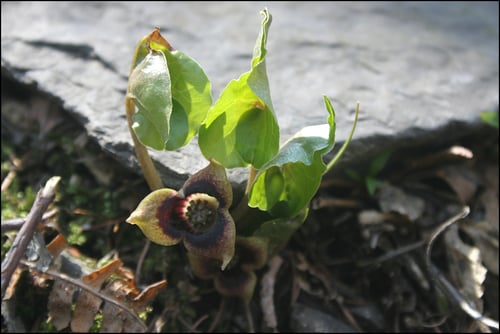
iNaturalist· cc-by-nc
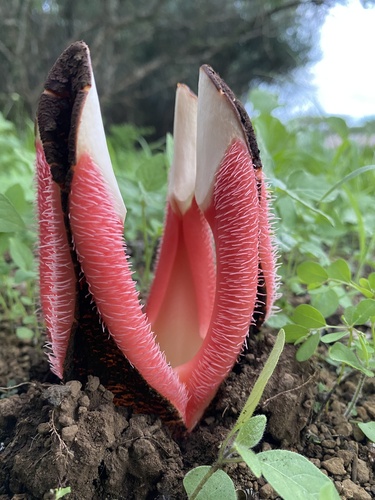
(c) lboggess, some rights reserved (CC BY-NC), uploaded by lboggess
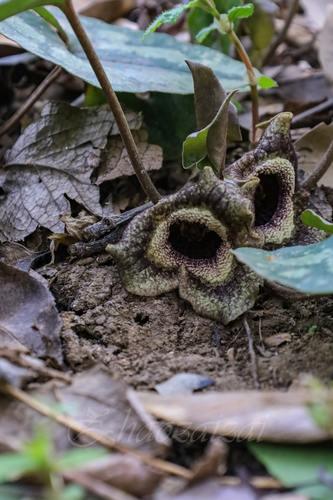
iNaturalist· cc-by-sa
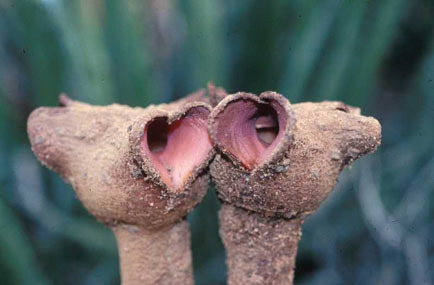
(c) Brian Finzel, some rights reserved (CC BY-SA), uploaded by Brian Finzel
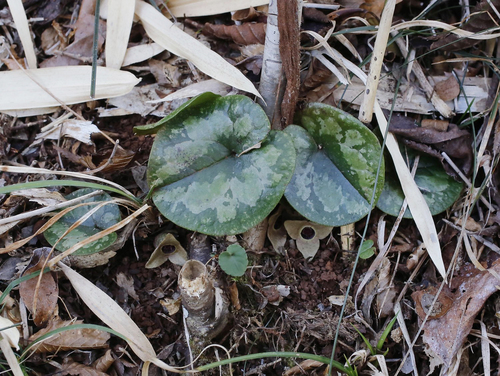
iNaturalist· cc-by-sa
(c) Brian Finzel, some rights reserved (CC BY-SA), uploaded by Brian Finzel
Summary
Source: WikipediaAsarum shuttleworthii, commonly known as Shuttleworth's ginger or the largeflower heartleaf, is a perennial wildflower in the family Aristolochiaceae. It is native to the southeastern United States, primarily found in the Appalachian foothills of Alabama, Georgia, Tennessee, South Carolina, and North Carolina. It is notable for its large, urceolate (urn-shaped) flowers, which emerge under the leaves directly from the rhizome.
Description
A fast-growing evergreen perennial reaching 0.1 m tall by 0.3 m wide. Hardy to UK zone 6. Maintains foliage year-round with flowers appearing in May. Hermaphrodite, fly-pollinated flowers. Adapts to light sandy, medium loamy, and heavy clay soils with good drainage. Tolerates full to semi-shade and prefers mildly acidic to neutral soil that stays moist.
Edible Uses
Edible Parts: Edible Uses: Condiment The following note is for the related A. caudatum, it quite possibly also applies to this species. The root can be used as a ginger substitute. The root has a pungent, aromatic smell like mild pepper and ginger mixed, but more strongly aromatic. It can be harvested all year round, but is best in the autumn. It can also be dried for later use. Leaves are a tea substitute.
Medicinal Uses
None known
Known Hazards
Although no reports of toxicity have been found for this plant, at least 3 other members of this genus have reports that the leaves are toxic. Some caution is therefore advised in the use of this plant.
Distribution
It is a temperate plant. It suits hardiness zones 5-9. In the USA it grows between 400-1,300 m above sea level.
Where It Grows
USA,
Cultivation
Prefers a rich moist neutral to acid soil in woodland or a shady position in the rock garden. Plants are hardy to at least -15°c. The flowers are malodorous and are pollinated by flies. Plants often self-sow when growing in a suitable position. An evergreen.
Propagation
Seed - best sown in a cold frame as soon as it is ripe in the summer. Stored seed will require 3 weeks cold stratification and should be sown in late winter. The seed usually germinates in the spring in 1 - 4 or more weeks at 18°c. When large enough to handle, prick the seedlings out into individual pots and grow them on in light shade in the greenhouse for at least their first winter. Plant them out when large enough in late spring. Division in spring or autumn. Plants are slow to increase. It is best to pot the divisions up and keep them in light shade in the greenhouse until they are growing away strongly.
Other Uses
A useful ground-cover plant for shady positions so long as the soil is not dry, spreading by its roots. Special Uses Food Forest Ground cover Scented Plants
References (1)
- Jackes, D. A., Edible Forest Gardens