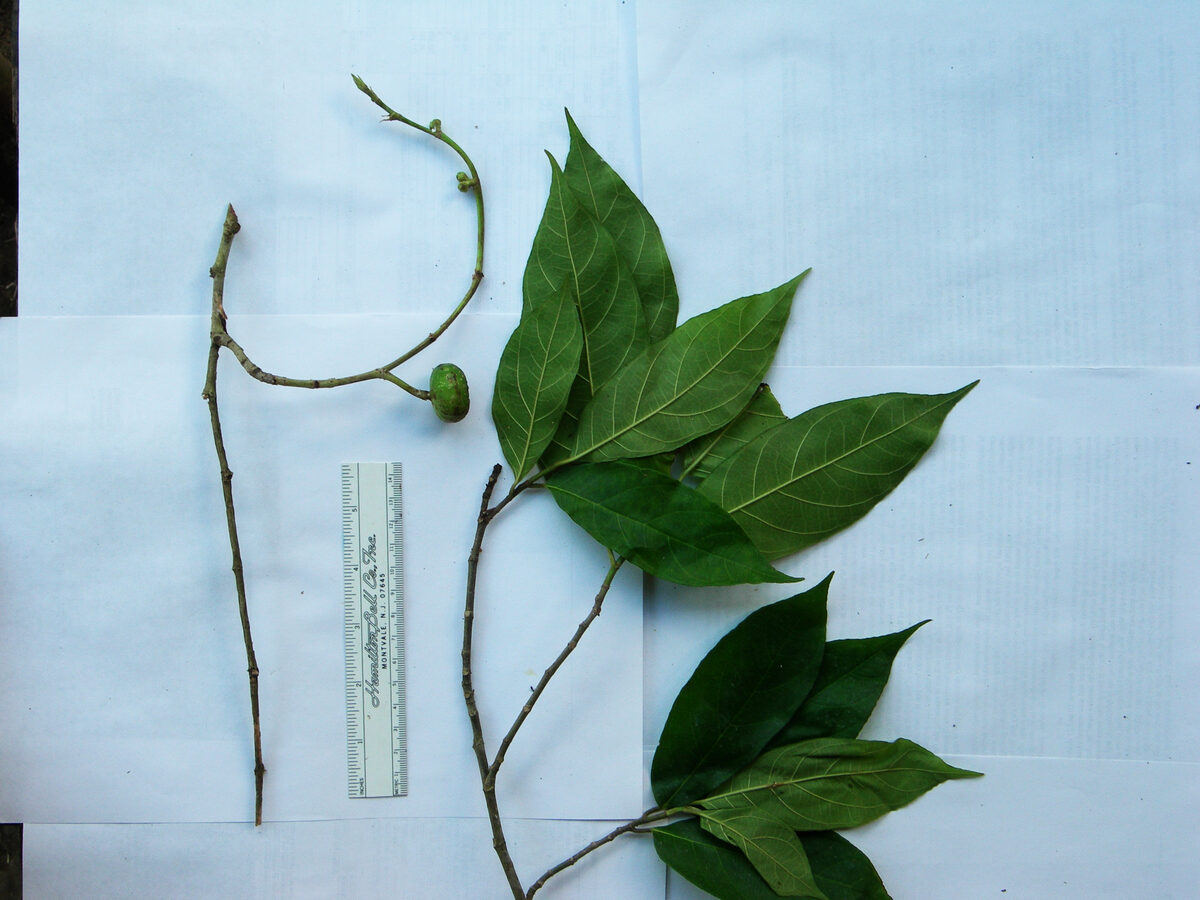
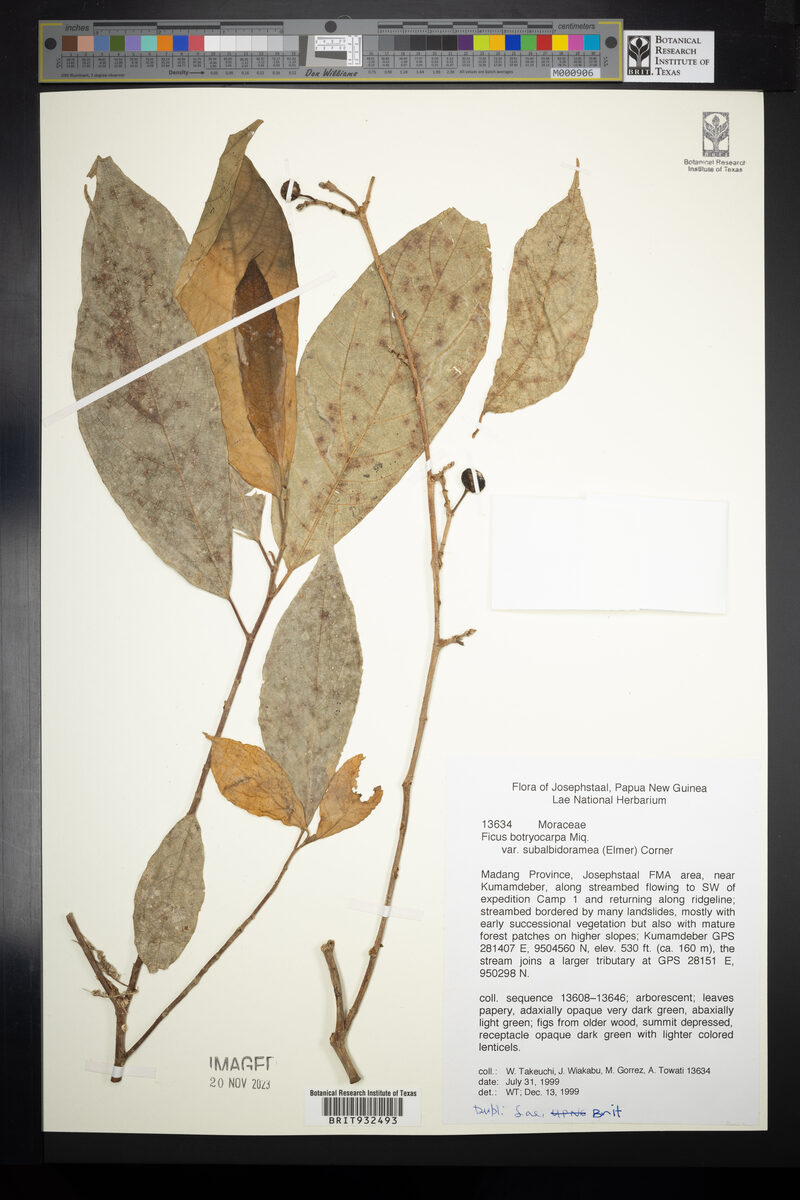
Dorstenia psilurus
Welw.
iNaturalist· cc-by-nc
(c) Bart Wursten, some rights reserved (CC BY-NC), uploaded by Bart Wursten
iNaturalist· cc-by-nc
(c) Bart Wursten, some rights reserved (CC BY-NC)
Description
A slightly woody herb. It grows from a woody rhizome. The leaves are alternate and 7-18 cm long by 3-7 cm wide. The leaf stalks are 2-5 cm long. The flowers are in the axils of the leaves.
Edible Uses
The fruit, roots, and leaves are used as spices.
Distribution
It is a tropical plant. It is often as an understorey shrub in old forests and near damp sites. It can be in savannah and is often near termite mounds. It grows up to 1,760 m above sea level.
Where It Grows
Africa, Cameroon, Central Africa, Congo DR, Madagascar,
Cultivation
It can be grown from seed or cuttings.
Synonyms
Dorstenia bicornis Schweinf.Dorstenia gilletii De Wild.
Dorstenia klaineana Pierre ex Heckel & Schlagd.Dorstenia klainei HeckelDorstenia lukafuensis De Wild.Dorstenia massonii BureauDorstenia psiluroides Engl.Dorstenia scabra Engl.Dorstenia stolzii Engl.Dorstenia tenuifolia Engl.
Also Known As
Kinkama, Kintamba
References (4)
- Bouba, A. A., et al, 2012, Proximate Composition, Mineral and Vitamin Content of Some Wild Plants Used as Spices in Cameroon. Food and Nutrition Sciences 3:423-432.
- Latham, P., 2004, Useful Plants of Bas-Congo province. Salvation Army & DFID p 115
- Pieme, C. A., 2013, Induction of mitrochondrial dependent apoptosis and cell cycle arrest in human promyelocytic leukemia HL-60 cells by an extract from Dorstenia psilurus: a spice from Cameroon. BMC Complementary and Alternative Medicine. 13:223
- Vouleng, I. K., et al, 2012, Antibacterial and antibiotic-potentiation activities of the methanol extract of some Cameroonian spices against Gram-negative multi-drug resistant phenotypes. BMC Research Notes, 5:299