Castanopsis javanica
(Blume) A. DC.
Spiny oak, Java chinkapin tree
iNaturalist· cc-by-nc
(c) aswad andriyanto, some rights reserved (CC BY-NC), uploaded by aswad andriyanto
wikimedia· cc0
Wikimedia Commons - A.de Candolle
wikimedia· cc0
Wikimedia Commons - A.de Candolle
Summary
Source: WikipediaCastanopsis javanica, the Javan chestnut-oak, is a tree in the beech family Fagaceae. The specific epithet javanica is from the Latin, meaning "of Java".
Description
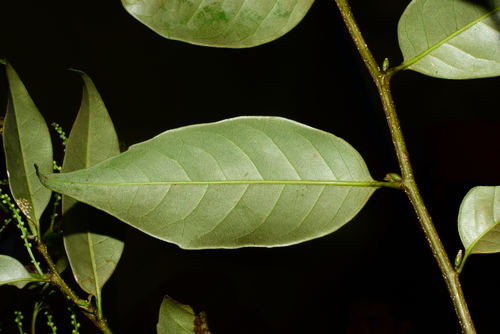
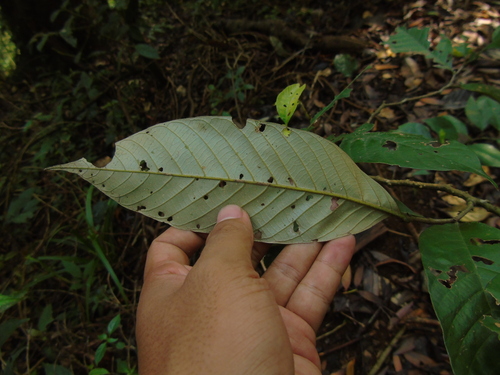
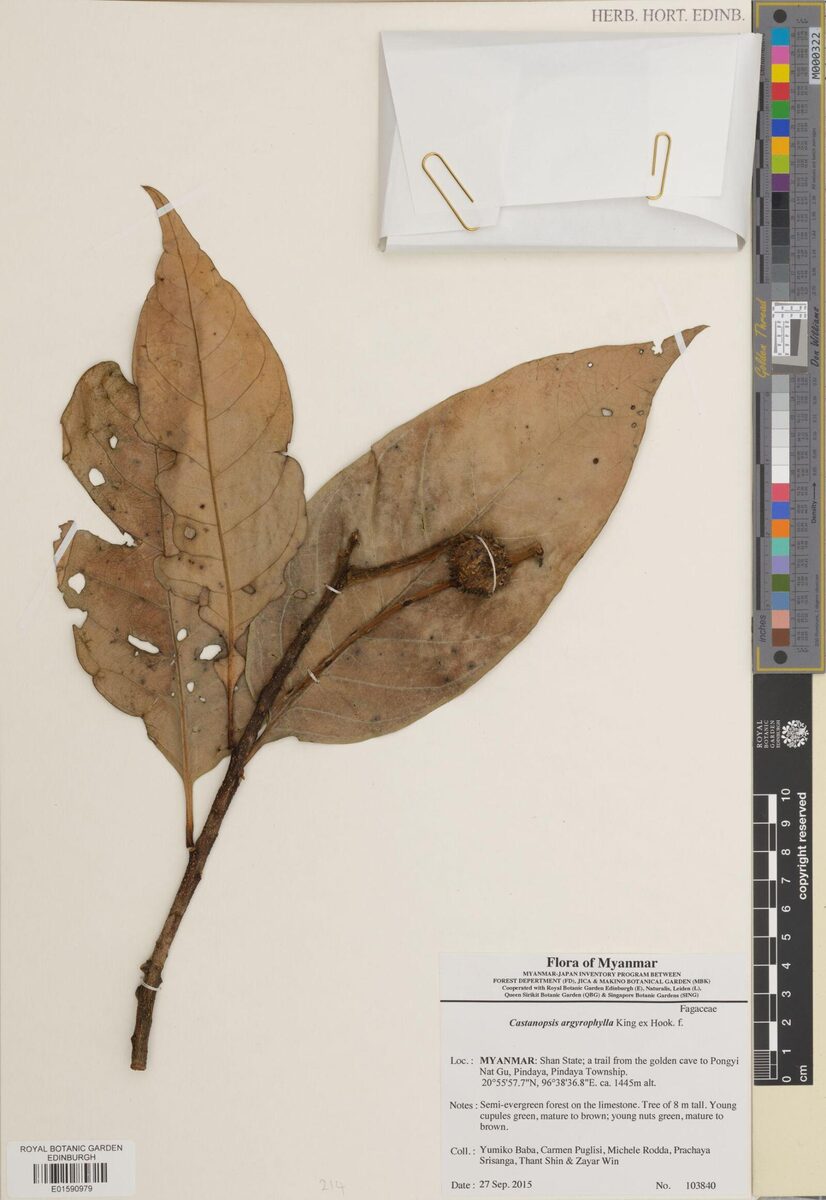
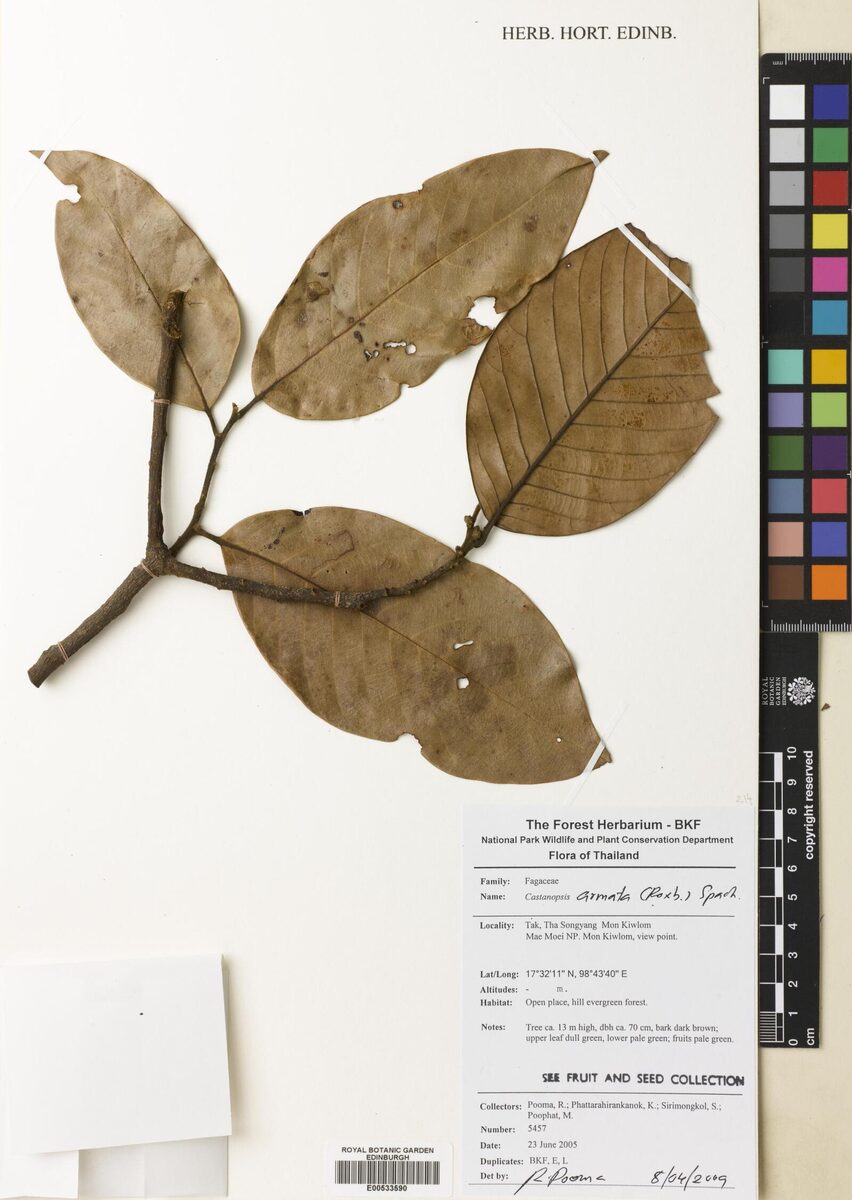
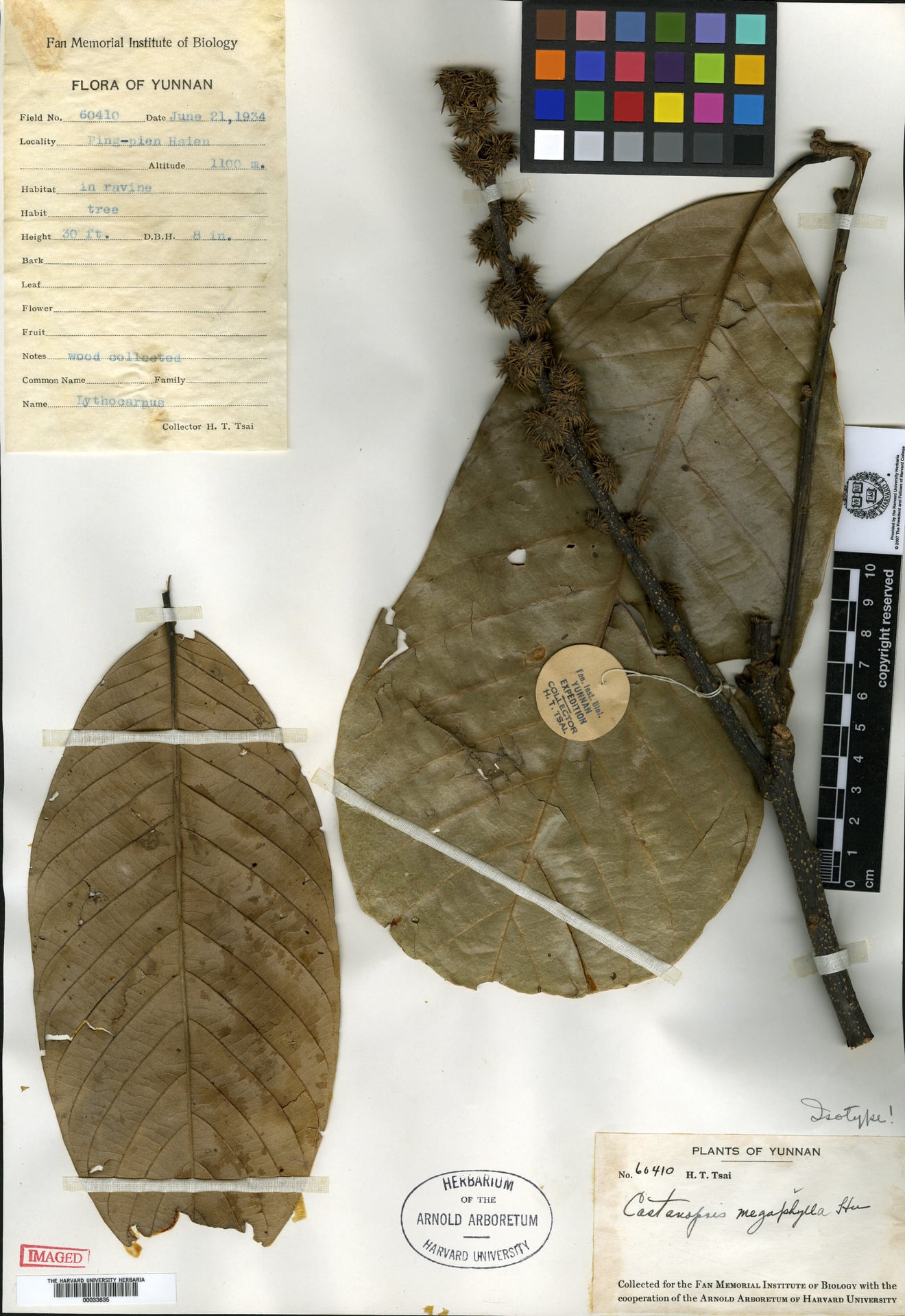
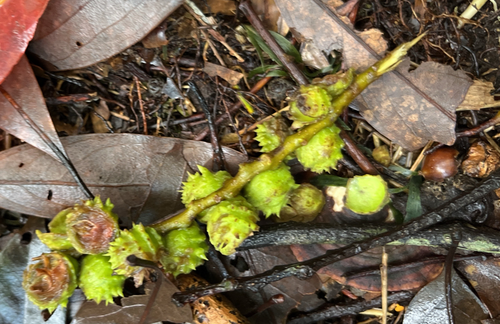
A widely spreading tree up to 23 m tall. The bark is quite rough and yellowish. The leaves are mainly horizontal with re-curved tips. They are rich green on the upper surface and copper brown underneath. The fruit are borne on spikes 15 to 25 cm long carried near the ends of twigs and covered with a prickly envelope.
Edible Uses
The seeds are edible, measuring 10–15mm long and 20–25mm wide, and are contained within a spiny seedcase. No preparation details are recorded.
Traditional Uses
The seed kernels are eaten cooked.
This uses section is brief — help expand it
Medicinal Uses
None known
Distribution
A tropical plant. Found in the forests up to 2000 m altitude throughout the Philippines. In Malaysia it grows up to 1,000 m above sea level.
Where It Grows
Asia, Indonesia, Malaysia, Myanmar, Pacific, Philippines, SE Asia,
Cultivation
PLants can be grown by seed.
Propagation
Seed.
Other Uses
The bark is used for making kegs for storing rice. The wood is fairly heavy and is used as a construction material — including for house building, furniture, poles, and door and window frames. Although the tree tends to be poorly shaped, it produces one of the most durable timbers in its native range and is widely used for house posts.
Notes
There are about 120 Castanopsis species. Many have edible nuts.
Synonyms
Also Known As
Berangan duri, Berangan haji, Gasa, Jara anak, Kalimorot, Ki ruing, Kupat, Palele, Pohon kingkilaban, Tajam tumpul
References (13)
- Castillo, C., 2013, The Archaeobotany of Khao Sam Kaeo and Phu Khao Thong: The Agriculture of Late Prehistoric Southern Thailand. Ph. D. thesis University College, London p 378
- Hariyadi, B., 2008, The Entwined Tree: Traditional Natural Resource Management of Serampas, Jambi, Indonesia. Ph. D thesis. Univ. or Hawaii. p 401
- J. Bot. 1:182. 1863
- Menninger, 1977,
- Milow, P., et al, 2013, Malaysian species of plants with edible fruits or seeds and their evaluation. International Journal of Fruit Science. 14:1, 1-27
Show all 13 references Hide references
- Monsalud, M.R., Tongacan, A.L., Lopez, F.R., & Lagrimas, M.Q., 1966, Edible Wild Plants in Philippine Forests. Philippine Journal of Science. p 469
- Priyadi, H., et al, 2010, Five hundred plant species in Gunung Halimun Salak National Park West Java. A checklist including Sundanese names, distribution and use. CIFOR, FFPRI, SLU p 51
- Reis, S. V. and Lipp, F. L., 1982, New Plant Sources for Drugs and Foods from the New York Botanical Garden herbarium. Harvard. p 38
- Soepadmo, E. and Saw, L. G., 2000, Tree Flora of Sabah and Sarawak. Forestry Malaysia. Volume Three. p 20
- Sukarya, D. G., (Ed.) 2013, 3,500 Plant Species of the Botanic Gardens of Indonesia. LIPI p 184
- Verheij and Coronel, 1991, PROSEA
- Wickens, G.E., 1995, Edible Nuts. FAO Non-wood forest products. FAO, Rome. p 125
- World Checklist of Useful Plant Species 2020. Royal Botanic Gardens, Kew