Castanopsis megacarpa
Gamble
iNaturalist· cc-by-nc-nd
(c) loupok, some rights reserved (CC BY-NC-ND)
iNaturalist· cc-by-nc
(c) Albert Kang, some rights reserved (CC BY-NC)
iNaturalist· cc-by-nc
(c) Akmal Idham, some rights reserved (CC BY-NC)
Summary
Source: WikipediaCastanopsis megacarpa is a tree in the family Fagaceae. The specific epithet megacarpa is from the Greek meaning 'large fruit'.
Description
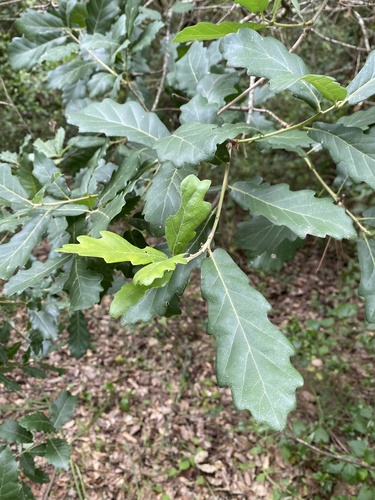
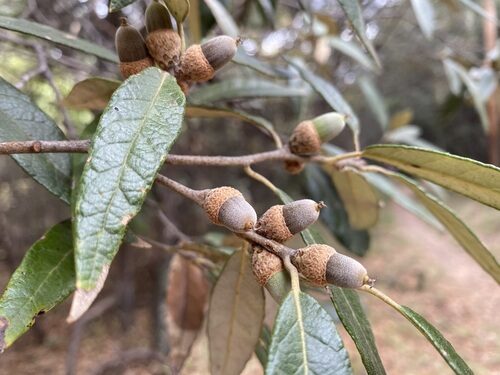
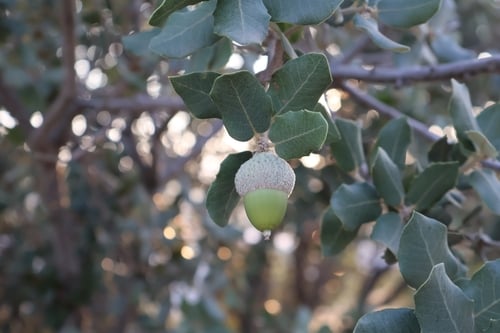
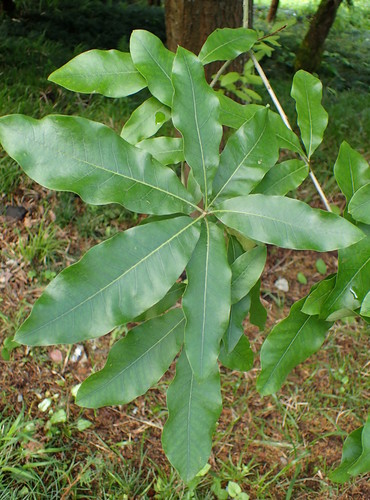
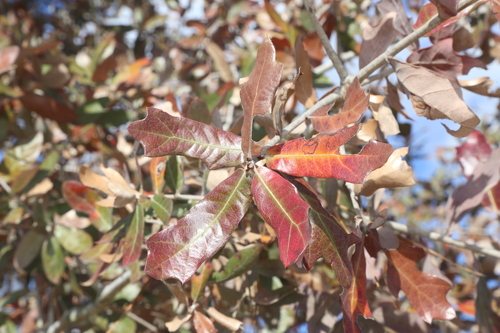
A tree. It grows 36 m high. The trunk is 90 cm across. The bark is smooth but can have shallow cracks. The leaves are thick and leathery. They are smooth and shiny above. There are some brown hairs underneath. The leaves are narrowly oval and 20-24 cm long by 8 cm wide. Male and female flowers are separate. The male flowering stalks are 8-14 cm long and the flowers are in clusters of 3. The female flowering stalks are 9-12 cm long and the flowers occur singly. The fruit cup does not have a stalk and is rounded or oval. It is 5-8 cm high and 3-6 cm wide. It is hairy and spiny. There is one nut in each cup. It is rounded and 3-8 cm long by 3-5 cm wide.
Edible Uses
The ellipsoid or globose seed can be 30 - 75mm long and 30 - 45mm wide with a thick, woody shell; there is one seed per cupule. Although we have no specific information for this species, the seeds of all the species of Castanopsis are more or less edible and most if not all of them will have been used for food in times of shortage, when better foods were not available. The seed is usually cooked before eating, though it can also be eaten raw. It can be eaten whole, though it is more commonly dried, then ground into a powder and used as a thickening in stews etc or mixed with cereals for making bread. The main disadvantage of the seed is that it is often rich in tannins, making it bitter and astringent. These tannins can be largely removed by soaking the seeds in water then throwing the water away. The process should be repeated until the seed no longer tastes bitter.
Distribution
A tropical plant. It grows in the lowlands. It grows up to 1,400 m above sea level.
Where It Grows
Asia, Malaysia, SE Asia, Singapore, Thailand,
Cultivation
Castanopsis species are generally tolerant of a range of soils, preferably well-drained. They succeed in full sun, though young plants generally grow best in dappled woodland shade. This species is often found in the wild in Kerangas forest - a type of moist, heath forest found on acidic, sandy soils that are low in nutrients, especially nitrogen. Trees do not respond well to coppicing.
Propagation
Seed - easy to germinate if sown fresh. Self-sown seedlings can be transplanted.
Other Uses
The bark is a source of tannins and can be used as a dye, to weatherproof fibres etc. The bark is locally used as wall division in long houses. The branches and stems of many Castanopsis species are used as bed logs in mushroom cultivation. The sapwood is white or pale yellow. The timber is used locally for making bowls and other domestic utensils. The wood is a good fuel and can be used to make charcoal.
Notes
There are about 120 Castanopsis species. Many have edible nuts.
Synonyms
Also Known As
Berangan babi, Berangan duri, Berangan gajah, Kertak bilek, Sebilek
References (9)
- Burkill, I.H., 1966, A Dictionary of the Economic Products of the Malay Peninsula. Ministry of Agriculture and Cooperatives, Kuala Lumpur, Malaysia. Vol 1 (A-H) p 495
- Castillo, C., 2013, The Archaeobotany of Khao Sam Kaeo and Phu Khao Thong: The Agriculture of Late Prehistoric Southern Thailand. Ph. D. thesis University College, London p 378
- Menninger, E.A., 1977, Edible Nuts of the World. Horticultural Books. Florida p 16
- Milow, P., et al, 2013, Malaysian species of plants with edible fruits or seeds and their evaluation. International Journal of Fruit Science. 14:1, 1-27
- Saw, L.G., LaFrankie, J. V. Kochummen, K. M., Yap S. K., 1991, Fruit Trees in a Malaysian Rain Forest. Economic Botany, Vol. 45, No. 1, pp. 120-136
Show all 9 references Hide references
- Slik, F., www.asianplant.net
- Soepadmo, E. and Saw, L. G., 2000, Tree Flora of Sabah and Sarawak. Forestry Malaysia. Volume Three. p 22
- Wickens, G.E., 1995, Edible Nuts. FAO Non-wood forest products. FAO, Rome. p 125
- World Checklist of Useful Plant Species 2020. Royal Botanic Gardens, Kew