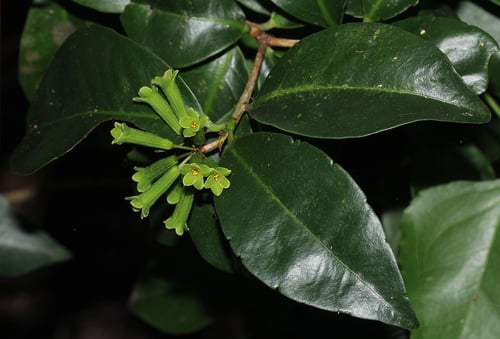
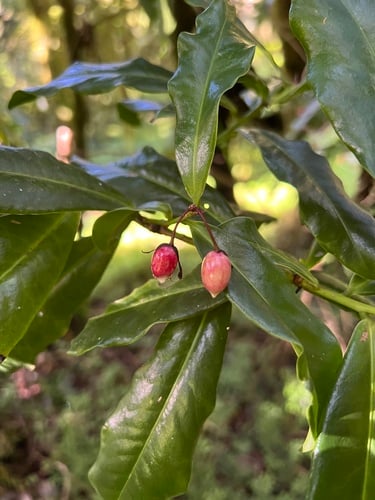
Daphne gnidium
L.
Spurge flax
iNaturalist· cc-by
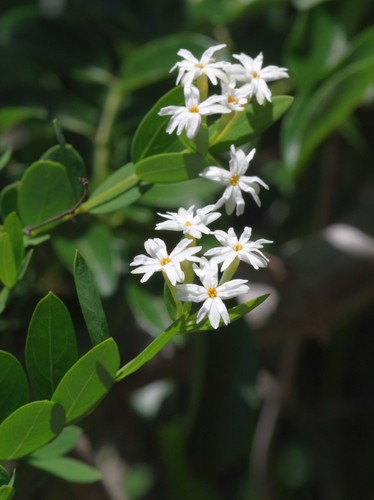
(c) Manuel Martín Vicente, some rights reserved (CC BY)
iNaturalist· cc-by-nc
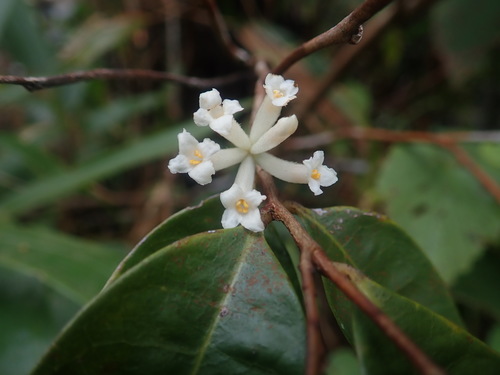
(c) F. Bemmerlein-Lux, some rights reserved (CC BY-NC), uploaded by F. Bemmerlein-Lux
Summary
Source: WikipediaDaphne gnidium, the flax-leaved daphne, is a poisonous evergreen shrub from the northern and western Mediterranean region, with narrow, dense dark-green foliage and white fragrant flowers.
Description
Daphne gnidium is an evergreen shrub growing to 1.5 m (5 feet) with year-round foliage and flowers blooming June to July. Bees, flies, and butterflies pollinate the hermaphroditic flowers. Hardy to UK zone 8, it prefers full sun to semi-shade and tolerates loamy or clay soils with good drainage. It grows in mildly acid to alkaline soils and tolerates both dry and moist conditions.
Edible Uses
None known
Medicinal Uses
The plant contains toxic compounds currently being investigated for anti-leukaemia effects.
Known Hazards
Daphne gnidium contains the toxins mezerein and daphnetoxin. All parts of the plant are considered highly poisonous. Skin contact with the sap can cause dermatitis The chance of death is small yet possible within 6 hours after direct consumption. At least severe anabolic and indigestive reactions are expected, which may also trigger lethal allergic reactions.
Distribution
It is a Mediterranean plant.
Where It Grows
Mediterranean,
Cultivation
Prefers a well-drained but moisture-retentive slightly acid to slightly alkaline soil. A good sandy loam suits most members of the genus. This species is not very hardy in Britain, tolerating temperatures down to about -5°c, it should succeed outdoors in the milder areas of the country. Plants are resentful of root disturbance and should be planted into their permanent positions as soon as possible. The flowers, which are produced in terminal clusters, are sweetly scented.
Propagation
Seed is best sown in a greenhouse as soon as it is ripe, with the pot sealed in a polythene bag to retain moisture. Remove the bag as soon as germination occurs. Seed harvested 'green' — fully developed but before drying on the plant — and sown immediately tends to germinate more reliably. Germination should normally occur by spring, though it may take a further year. Stored seed is more difficult: warm stratify for 8–12 weeks at 20°C, followed by 12–14 weeks at 3°C. Germination may still take a further 12 months or more at 15°C. Prick seedlings into individual pots as soon as they are large enough to handle, grow on in the greenhouse through their first winter, and plant out in spring after the last expected frosts. Cuttings of half-ripe wood can be taken in July/August in a frame. Root cuttings can be taken in December in a greenhouse.
Other Uses
None known Special Uses Scented Plants
Synonyms
References (1)
- INFOODSUpdatedFGU-list.xls