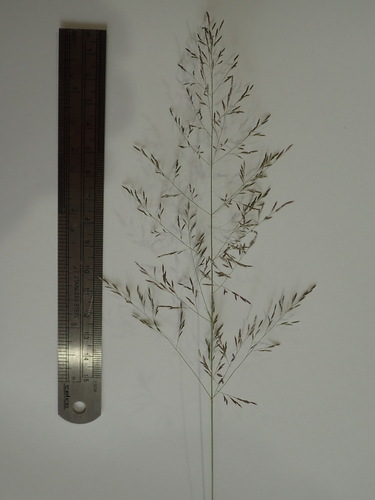
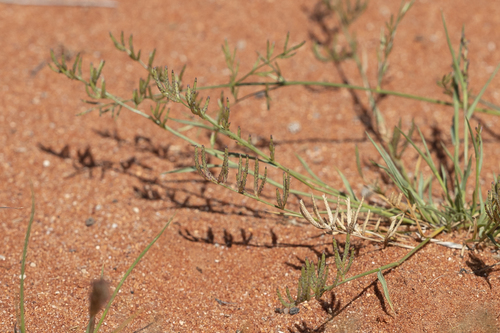
Sorghum purpureosericeum
( A. Rich) Asch. & Schweinf.
Wild sorghum
wikimedia· cc-by
Damon Lisch (via Wikimedia Commons)
Summary
Source: WikipediaSorghum purpureosericeum is a species of plant in the grass family, Poaceae, that occurs in central and eastern Africa, Yemen and India.
Description
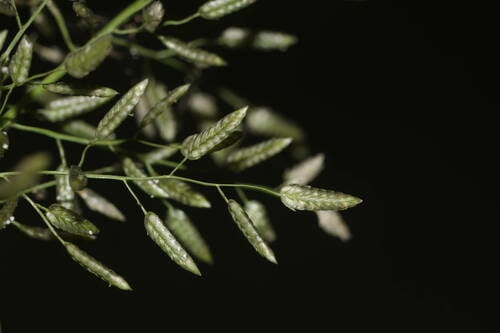
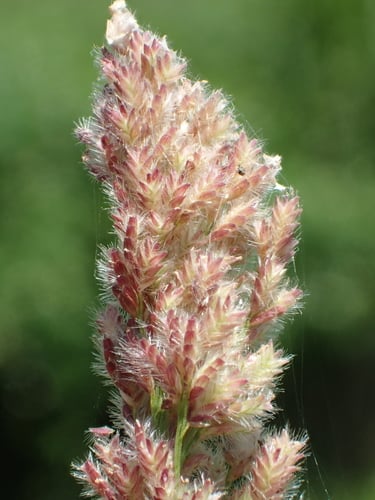
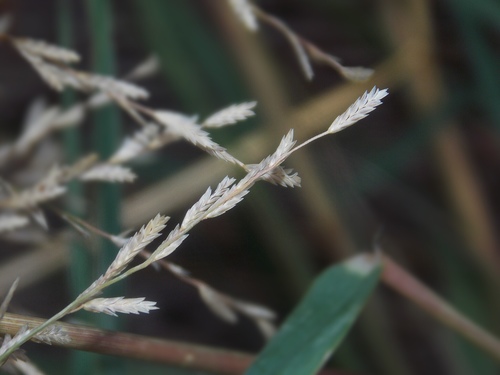
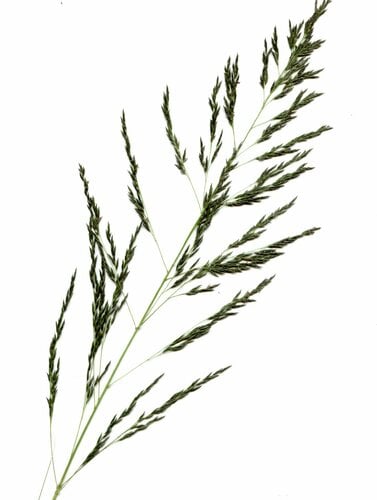
A robust annual millet grass. The stalks are 2 m tall. The nodes have white hairs. The leaf blades are 50 cm long and 1 cm wide. The flowers are branched panicles. The seeds are smaller than rice grains.
Edible Uses
The seeds are eaten as a staple food with a rice-like taste. The seed heads are collected, threshed, winnowed, and then boiled like rice or ground into flour.
Traditional Uses
The seeds are eaten as a staple and taste like rice. The heads are collected and threshed and winnowed and the seed boiled like rice or ground into flour.
Distribution
It is a tropical plant. It grows along rivers and near lakes. In Tanzania it grows between 500-1,500 m above se level in areas with a rainfall between 1,000-1,300 mm.
Where It Grows
Africa, Asia, Burkina Faso, East Africa, Ethiopia, India, Kenya, Mozambique, Somalia, Sudan, Tanzania, Uganda, West Africa,
Cultivation
Plants can be grown from seed.
Other Uses
Brooms are made from the heads. The culms are bundled to make brooms. The stalks can be used for building simple shelters.
Production
Seeds are collected in the dry season.
Synonyms
Also Known As
Mtama mwitu
References (3)
- PROTA
- Ruffo, C. K., Birnie, A. & Tengnas, B., 2002, Edible Wild plants of Tanzania. Technical Handbook No. 27. Regional Land Management Unit. SIDA Nairobi, Kenya. p 628
- World Checklist of Useful Plant Species 2020. Royal Botanic Gardens, Kew