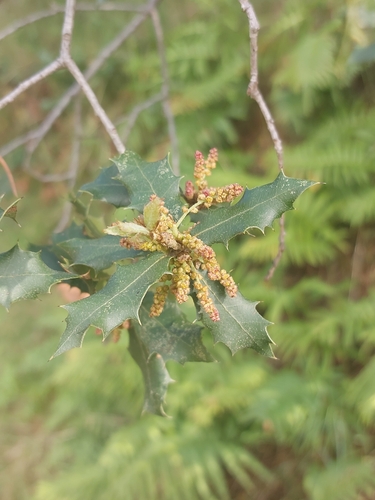
Castanea pumila
(L.) Mill.
Chinquapin, Allegheny chinkapin, Virginia chestnut
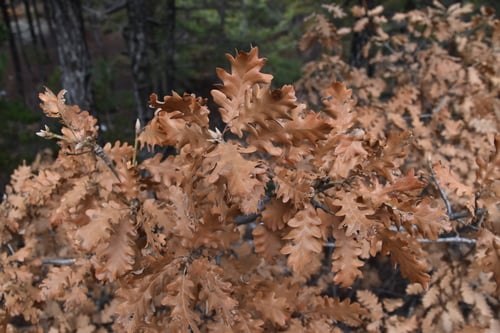
iNaturalist· cc-by-nc
(c) tagided, some rights reserved (CC BY-NC)
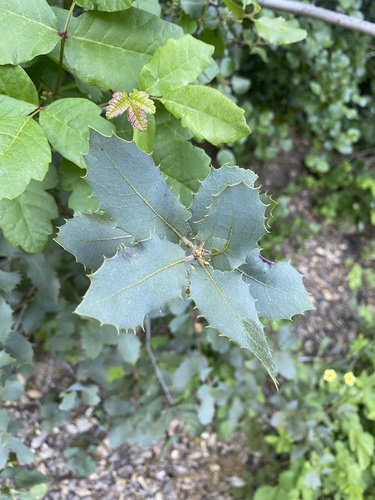
iNaturalist· cc-by-nc
(c) Keith Kutsko, some rights reserved (CC BY-NC), uploaded by Keith Kutsko
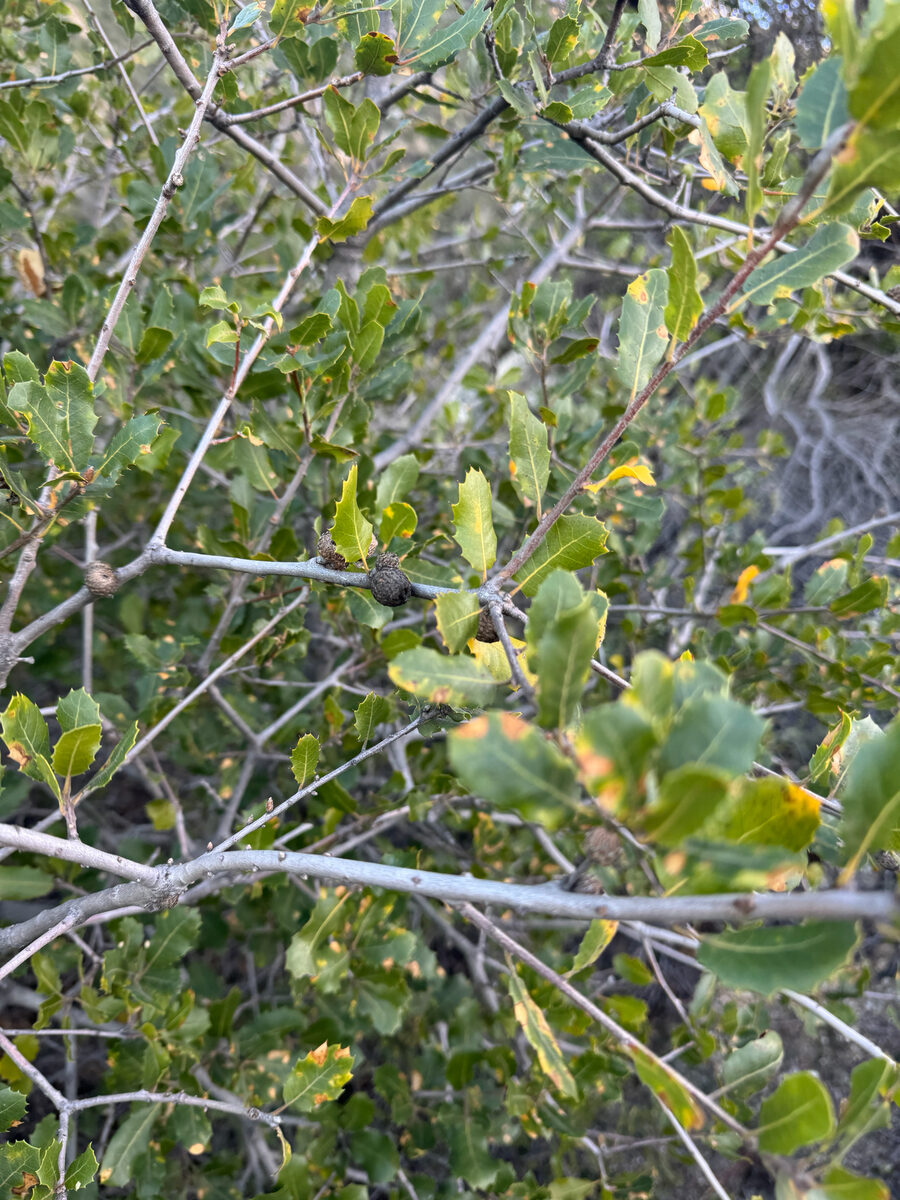
iNaturalist· cc-by-nc
(c) Keith Kutsko, some rights reserved (CC BY-NC), uploaded by Keith Kutsko
Summary
Source: WikipediaCastanea pumila, commonly known as the Allegheny chinquapin, American chinquapin (from the Powhatan) or dwarf chestnut, is a species of chestnut native to the southeastern United States. The native range is from Massachusetts and New York to Maryland and extreme southern New Jersey and southeast Pennsylvania south to central Florida, west to eastern Texas, and north to southern Missouri and Kentucky. The plant's habitat is dry sandy and rocky uplands and ridges mixed with oak and hickory to 1000 m elevation. It grows best on well-drained soils in full sun or partial shade. Allegheny chinquapin is relatively resistant to chestnut blight compared to the closely-related American chestnut.
Description
An evergreen tree. It grows 20-30 m tall. It can be a large suckering shrub. It is often 4.5 m tall and 6 m wide. The bark is red-brown and furrowed into scaly plates. The young shoots are downy. The young leaves are white and furry on the underside. The leaves are 7.5-15 cm long by 3-5 cm wide. They have many straight parallel side veins. There are many very small white male flowers in catkins 10-15 cm long. These are at the base of leaves. There are a few female flowers 3 mm long at the base of smaller catkins. The nuts are inside spiny burrs. The nuts themselves are like round pointed acorns. They are edible.
Edible Uses
The seeds are sweet with a pleasant nutty flavour and are very good eaten raw — superior in flavour to sweet chestnuts (C. sativa). Baking makes them even sweeter with a floury texture, and they serve as an excellent substitute for potatoes or cereals. The seeds are quite small, around 2cm thick — roughly half the size of C. dentata — and each husk usually contains only one seed, rarely two. They are sold in local markets in America. The seeds contain 45% starch and 2.5% protein.
Traditional Uses
The nuts are eaten raw, roasted or ground as flour.
This uses section is brief — help expand it
Medicinal Uses
The leaves contain tannin and have antiperiodic, astringent, and tonic properties. Heating the brittle (or dried) leaves and blowing them onto the patient was a traditional treatment for headaches. An infusion of the leaves has been used as an external wash to treat fevers, chills, and cold sweats.
Distribution
It is a temperate plant. It is very cold tolerant. It grows in many soil types. It grows up to 1300 m altitude in southern USA. It suits hardiness zones 6-9.
Where It Grows
Australia, North America, Ukraine, USA*,
Cultivation
Plants can be grown from seed. Seedlings need transplanting very early.
Propagation
Sow seed as soon as it is ripe, either in a cold frame or in an outdoor seedbed, and protect it from mice and squirrels. The seed has short viability and must not be allowed to dry out. It can be stored moist in a cool place such as the salad compartment of a fridge for a few months, but should be checked regularly for signs of germination. Germination typically occurs in late winter or early spring. Seedlings raised outdoors can be left in situ for one to two years before being moved to permanent positions. Plants grown in pots can go out to permanent positions in summer or autumn, with some cold protection in their first winter. Suckers can be divided in winter and planted straight out into permanent positions.
Other Uses
The bark, leaves, wood, and seed husks all contain tannin. The wood is coarse-grained, hard, strong, light, durable, and easy to split; it weighs 37 lb per cubic foot. It is too small for commercial use but is occasionally employed for fence posts and fuel. The plant — particularly the cultivar 'Golden' — has good potential for revegetating disturbed sites given its wildlife value and adaptability to harsh conditions, though the threat of chestnut blight infection may discourage planners from using it. Its rhizomatous root system also makes it useful for soil erosion control. It grows and fruits well as an understorey beneath pine forest, provided the canopy is fairly open, and functions as an excellent soil-enriching species in that role.
Production
Trees bear in 4 years.
Notes
All Castanea bear edible nuts. There are about 12 Castanea species.
Dangerous Lookalikes
This plant can be confused with the following toxic species. Always verify identification carefully before consuming any wild plant.
Horse Chestnut (Conker)
Aesculus hippocastanum
Solipsist
Chinquapin
Castanea pumila
(c) tagided, some rights reserved (CC BY-NC)
Horse Chestnut (Conker): Round smooth nuts (conkers), bumpy green husk (not very spiny), palmate compound leaves (like a hand).
Chinquapin: Nuts with pointed tassel, very spiny bur casing, simple toothed leaves.
Synonyms
References (21)
- Beckstrom-Sternberg, Stephen M., and James A. Duke. "The Foodplant Database." http://probe.nalusda.gov:8300/cgi-bin/browse/foodplantdb.(ACEDB version 4.0 - data version July 1994)
- Bodkin, F., 1991, Encyclopedia Botanica. Cornstalk publishing, p 224
- Cundall, P., (ed.), 2004, Gardening Australia: flora: the gardener's bible. ABC Books. p 339
- Elias, T.S. & Dykeman P.A., 1990, Edible Wild Plants. A North American Field guide. Sterling, New York p 234
- Esperanca, M. J., 1988. Surviving in the wild. A glance at the wild plants and their uses. Vol. 1. p 30
Show all 21 references Hide references
- Etherington, K., & Imwold, D., (Eds), 2001, Botanica's Trees & Shrubs. The illustrated A-Z of over 8500 trees and shrubs. Random House, Australia. p 188
- Facciola, S., 1998, Cornucopia 2: a Source Book of Edible Plants. Kampong Publications, p 114
- Flowerdew, B., 2000, Complete Fruit Book. Kyle Cathie Ltd., London. p 200
- Gard. dict. ed. 8: Castanea no. 2. 1768
- Gouldstone, S., 1983, Growing your own Food-bearing Plants in Australia. Macmillan p 140
- Grandtner, M. M., 2008, World Dictionary of Trees. Wood and Forest Science Department. Laval University, Quebec, Qc Canada. (Internet database http://www.WDT.QC.ca)
- Hedrick, U.P., 1919, (Ed.), Sturtevant's edible plants of the world. p 175
- Krochmal, A. & Krochmal, C., 1982, Uncultivated Nuts of The United States. United States Department of Agriculture Forest Service. p 14
- Little, E.L., 1980, National Audubon Society Field Guide to North American Trees. Alfred A. Knopf. p 379
- Menninger, E.A., 1977, Edible Nuts of the World. Horticultural Books. Florida p 14
- Plants for a Future database, The Field, Penpol, Lostwithiel, Cornwall, PL22 0NG, UK. http://www.scs.leeds.ac.uk/pfaf/
- Tozer, F., 2007, The Uses of Wild Plants. Green Man Publishing. p 59
- USDA, ARS, National Genetic Resources Program. Germplasm Resources Information Network - (GRIN). [Online Database] National Germplasm Resources Laboratory, Beltsville, Maryland. Available: www.ars-grin.gov/cgi-bin/npgs/html/econ.pl (10 April 2000)
- Wickens, G.E., 1995, Edible Nuts. FAO Non-wood forest products. FAO, Rome. p 122
- Wiersema, J. H. & Leon, B., 2013, World Economic Plants. A Standard Reference CRC Press. 2nd Ed. p 151
- World Checklist of Useful Plant Species 2020. Royal Botanic Gardens, Kew