Castanea sativa
Mill.
European Chestnut, Sweet chestnut, Spanish chestnut
iNaturalist· cc-by-nc
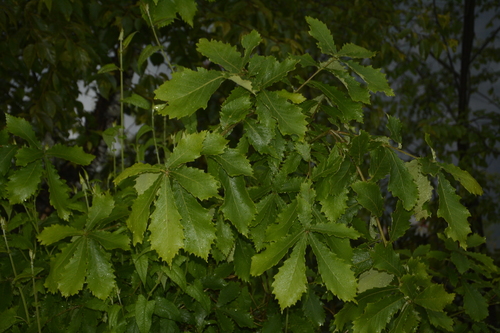
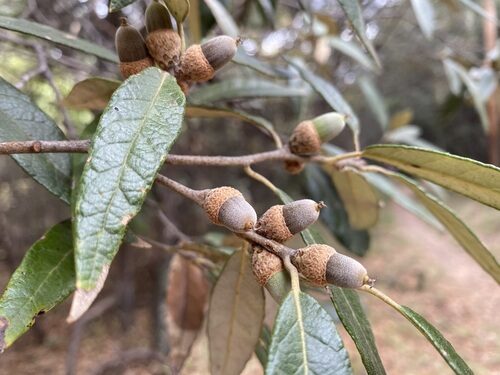
(c) Li Jianong, some rights reserved (CC BY-NC), uploaded by Li Jianong
iNaturalist· cc-by-nc
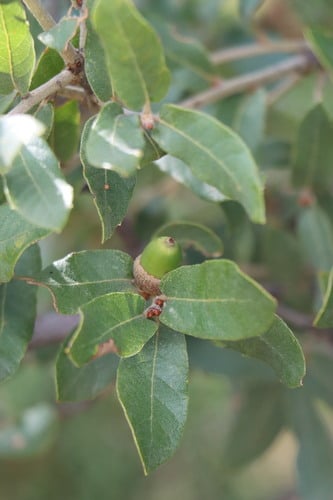
(c) Li Jianong, some rights reserved (CC BY-NC), uploaded by Li Jianong
iNaturalist· cc-by-nc-sa
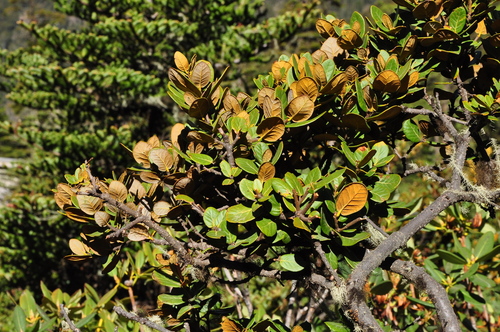
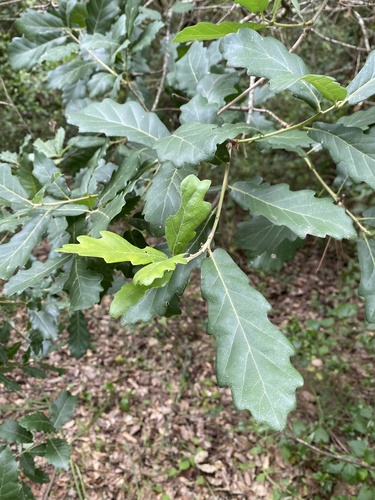
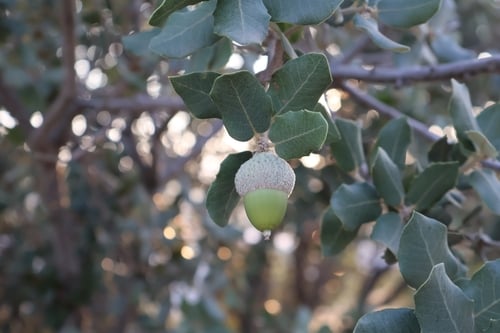
(c) Erdi, some rights reserved (CC BY-NC-SA), uploaded by Erdi
Summary
Source: WikipediaA deciduous tree reaching 30m tall and 15m wide at a medium growth rate, hardy to UK zone 5. Flowers appear in July with seeds ripening by October. Monoecious and bee-pollinated. Attracts wildlife. Tolerates light sandy, medium loamy, and heavy clay soils; prefers well-drained conditions but grows in poor soils. Adapts to mildly acid, neutral, and very acid pH. Requires full sun, tolerates both dry and moist soil, and can withstand drought and maritime exposure.
Description
A large deciduous tree up to 30-40 m high. It spreads to 6-15 m across. The stem is erect and stout. It has spreading branches and a wide rounded crown. The bark is grey-brown. The bark is ridged in a right handed spiral. The large leaves have toothed edges. The leaves are oblong to sword shaped and have prominent veins. The leaves can be 20 cm long. Leaves turn yellow to brown in autumn. Male and female flowers are separate. The male flowers are brownish and hang down like a cat's tail. They are 20 cm long. The female flowers are joined together into a distinctive little tube. Normally male flowers are lower in the current season's shoots while the female (or both sexes) flowers are nearer the end of the shoot. The pollen can have an unpleasant smell. The brown nuts are inside green, spiny coverings. These burrs open to reveal the nut. The outer shell is shiny light brown. It needs to be cut off with a sharp knife. A softer layer appears inside surrounding the nut.
Edible Uses
The seeds can be eaten raw or cooked, though they have a somewhat astringent flavour raw. Baking greatly improves them — the texture becomes floury and the flavour resembles sweet potato. The seeds are rich in carbohydrates and can be dried and ground into a flour for use in breads, puddings, and as a soup thickener. The roasted seed works as a coffee substitute, and a sugar can also be extracted from the seed.
Traditional Uses
The kernel of the nuts is eaten boiled or roasted. They are also slowly dried then ground and made into porridge. The flour can be used for breads, puddings or used to thicken soups. The roasted seeds are used as a coffee substitute. Sugar can be extracted from the nuts.
Medicinal Uses
Sweet chestnut leaves and bark are a good source of tannins, which provide an astringent action useful for treating bleeding and diarrhoea. The leaves and bark are anti-inflammatory, astringent, expectorant, and tonic. They are harvested in June or July and can be used fresh or dried. An infusion has been used to treat fevers and ague, and is particularly valued for relieving convulsive coughs such as whooping cough and other irritable conditions of the respiratory system. The leaves can also be applied in the treatment of rheumatism, lower back pain, and stiff muscles and joints. A decoction makes a useful gargle for sore throats. The plant is used in Bach flower remedies, with the prescribing keywords being 'Extreme mental anguish', 'Hopelessness', and 'Despair'.
Distribution
A Mediterranean climate plant. It can withstand frost. Trees do produce in the highlands of South India so may produce in the highlands of PNG. It requires light to medium, well drained soils. It is drought tender. It is slightly hardier than a peach and has less chilling requirement than a walnut. It is not suited to heat or humidity. In Indonesia it is planted above 1,400 m above sea level. It suits hardiness zones 5-9. Arboretum Tasmania. Hobart Botanical Gardens.
Where It Grows
Africa, Albania, Algeria, Andorra, Armenia, Asia, Australia, Austria, Azerbaijan, Balkans, Bosnia, Brazil, Britain, Bulgaria, Caucasus, Chile, China, Colombia, Cuba, East Africa, Europe*, Falklands, France, Georgia, Greece, Haiti, Himalayas, Hungary, India, Indonesia, Iran, Italy, Jamaica, Japan, Macedonia, Mediterranean, Madagascar, Mediterranean, Mexico, Middle East, Morocco, Myanmar, Netherlands, North Africa, North America, Pacific, Pakistan, Papua New Guinea, PNG, Portugal, Russia, San Marino, SE Asia, Serbia, Sicily, Slovenia, South America, Spain, Switzerland, Tasmania, Tunisia, Turkey, Türkiye, USA, West Indies, Yugoslavia,
Cultivation
Prefers a good well-drained slightly acid loam in a sunny position but it also succeeds in dry soils. Once established, it is very drought tolerant. Plants are very tolerant of highly acid, infertile dry sands. Averse to calcareous soils but succeeds on harder limestones. Tolerates maritime exposure though it is slower growing in such a position. The dormant plant is very cold-hardy in Britain, though the young growth in spring, even on mature plants, is frost-tender. The sweet chestnut is often cultivated for its edible seed in warm temperate zones, there are several named varieties. Both 'Marron de Lyon' and 'Paragon' produce fruits with a single large kernel (rather than 2 - 4 smaller kernels) and so are preferred for commercial production. Castanea sativa x crenata: The hybrid sweet chestnut ‘Marigoule’ is a good choice If you only want to grow one tree as Marigoule is a partly self-fertile cultivar. Sweet chestnuts require a warm dry summer in order to ripen their fruit properly in Britain and even then these seeds are generally inferior in size and quality to seeds grown in continental climates. Most species in this genus are not very well adapted for the cooler maritime climate of Britain, preferring hotter summers, but this species grows well here. An excellent soil-enriching understorey in pine forests. Flowers are produced on wood of the current year's growth and they are very attractive to bees.. Plants are fairly self-sterile. They hybridize freely with other members of this genus. At one time this tree was widely grown in coppiced woodlands for its wood, but the practise of coppicing has fallen into virtual disuse. Trees regrow very quickly after being cut down, producing utilizable timber every 10 years. This species is not often seen in Cornwall though it grows very well there. Trees take 30 years from seed to come into bearing. Plants in this genus are notably resistant to honey fungus. In garden design, as well as the above-ground architecture of a plant, root structure considerations help in choosing plants that work together for their optimal soil requirements including nutrients and water. Thick or swollen - fibrous or tap root.
Propagation
Sow seed as soon as it is ripe, either in a cold frame or in an outdoor seedbed, and protect it from mice and squirrels. The seed has short viability and must not be allowed to dry out. It can be stored moist in a cool place such as the salad compartment of a fridge for a few months, but should be checked regularly for signs of germination. Germination typically occurs in late winter or early spring. Seedlings raised outdoors can be left in situ for one to two years before being moved to permanent positions. Plants grown in pots can go out to permanent positions in summer or autumn, with some cold protection in their first winter.
Other Uses
Tannin is obtained from the bark; the wood, leaves, and seed husks also contain tannin. The husks contain 10–13% tannin; on a 10% moisture basis, the bark contains 6.8% tannin and the wood 13.4%. Ground seed has been used as a source of starch and for whitening linen cloth. A hair shampoo made from the leaves and fruit skins imparts a golden sheen to the hair. The wood is hard, strong, and light; young growth is very durable, though older wood becomes brittle and prone to cracking. It is used for carpentry, turnery, props, basketry, and fence posts, and makes excellent fuel.
Production
This is the fastest growing of the chestnuts. Trees can live for centuries. Seedling trees can bear after 3-10 years. Up to 100 kg of nuts can be produced per year. There is little seasonal fluctuation in nut production. The nuts fall naturally. The nuts need to be partly dried to improve the taste and stop rots. The nuts can be stored in closed boxes, with newspaper to absorb the moisture. If kept cool they will store for 6 months. Kernels can be kept for much longer if cooked and frozen. To do this the nut is placed in boiling water for 2 minutes then peeled and cooled and frozen.
Other Information
Seeds have been introduced into Papua New Guinea for growing trials only. It is commonly used in Europe. It is cultivated. It is sold in local markets.
Notes
All Castanea bear edible nuts. There are about 12 Castanea species.
Dangerous Lookalikes
This plant can be confused with the following toxic species. Always verify identification carefully before consuming any wild plant.
Horse Chestnut (Conker)
Aesculus hippocastanum
Solipsist
European Chestnut
Castanea sativa
(c) Li Jianong, some rights reserved (CC BY-NC), uploaded by Li Jianong
Horse Chestnut (Conker): Round smooth nuts (conkers), bumpy green husk (not very spiny), palmate compound leaves (like a hand).
European Chestnut: Nuts with pointed tassel, very spiny bur casing, simple toothed leaves.
Nutrition
| Part | Moisture | kJ | kcal | Protein | Vit A | Vit C | Iron | Zinc |
|---|---|---|---|---|---|---|---|---|
| Nuts | 51.7 | 720 | 172 | 2 | 0 | 27 | 0.9 | — |
Synonyms
Also Known As
Castagno, Castana, Castano, Chastanhes, Chataignier, Edelkastanie, ErbuGastana, Geszkenye, Geskonye, Italian chestnut, Kapoo, Khanor, Kosten, Mitha, Pravi kostanj, Shaganak, Szelidgesztenye, Thit-e, Ts'abli, Tzabli, Yadliv kesten
References (83)
- Ambasta S.P. (Ed.), 2000, The Useful Plants of India. CSIR India. p 110
- Barreau, A., et al, 2016, How Can We Teach Our Children if We Cannot Access the Forest? Generational Change in Mapuche Knowledge of Wild Edible Plants in Andean Temperate Ecosystems of Chile. Journal of Ethnobiology 36(2): 412–432
- Bianchini, F., Corbetta, F., and Pistoia, M., 1975, Fruits of the Earth. Cassell. p 190
- Blamey, M and Grey-Wilson, C., 2005, Wild flowers of the Mediterranean. A & C Black London. p 31
- Bodkin, F., 1991, Encyclopedia Botanica. Cornstalk publishing, p 224
Show all 83 references Hide references
- Bonet, M. A. & Valles, J., 2002, Use of non-crop food vascular plants in Montseny biosphere reserve (Catalonia, Iberian Peninsula). International Journal of Food Sciences and Nutrition (2002) 53, 225–248
- Bremness, L., 1994, Herbs. Collins Eyewitness Handbooks. Harper Collins. p 43
- Brickell, C. (Ed.), 1999, The Royal Horticultural Society A-Z Encyclopedia of Garden Plants. Convent Garden Books. p 235
- Brouk, B., 1975, Plants Consumed by Man. Academic Press, London. p 212
- Brown, D., 2002, The Royal Horticultural Society encyclopedia of Herbs and their uses. DK Books. p 158
- Bussman, R. W., et al, 2016, A comparative ethnobotany of Khevsureti, Samtskhe-Javakheti, Tusheti, Svaneti, and Racha-Lechkhumi, Republic of Georgia (Sakartvelo), Caucasus. Journal of Ethnobiology and Ethnomedicine (2016) 12:4
- Bussman, R. W., et al, 2021, Unity in diversity—food plants and fungi of Sakartvelo (Republic of Georgia), Caucasus. Journal of Ethnobiology and Ethnomedicine (2021) 17:72 p 9
- Cerne, M., 1992, Wild Plants from Slovenia used as Vegetables. Acta Horticulturae 318.
- Cheifetz, A., (ed), 1999, 500 popular vegetables, herbs, fruits and nuts for Australian Gardeners. Random House p 176
- Coombes, A.J., 2000, Trees. Dorling Kindersley Handbooks. p 150
- Cundall, P., (ed.), 2004, Gardening Australia: flora: the gardener's bible. ABC Books. p 339
- Daly, A. B., 20014, Narrating changing foodways: wild edible plant knowledge and traditional food systems in Mapuche lands of the Andean Temperate Forests, Chile. Masters Thesis Vancouver. p 45
- Denes, A., et al, 2012, Wild plants used for food by Hungarian ethnic groups living in the Carpathian Basin. Acta Societatis Botanicorum Poloniae 81 (4): 381-396
- Dogan, Y. et al, 2013, Wild Edible Plants sold in the Local Markets of Izmir, Turkey. Pak. J. Bot. 45(S1): 177-184
- Ertug, F, Yenen Bitkiler. Resimli Türkiye Florası -I- Flora of Turkey - Ethnobotany supplement
- Etherington, K., & Imwold, D., (Eds), 2001, Botanica's Trees & Shrubs. The illustrated A-Z of over 8500 trees and shrubs. Random House, Australia. p 188
- Facciola, S., 1998, Cornucopia 2: a Source Book of Edible Plants. Kampong Publications, p 114
- FAO, 1995, Edible Nuts. Non Wood Forest Products 5.
- Flowerdew, B., 2000, Complete Fruit Book. Kyle Cathie Ltd., London. p 200
- French, B.R., 1986, Food Plants of Papua New Guinea, A Compendium. Asia Pacific Science Foundation p 184
- Gard. dict. ed. 8: Castanea no. 1. 1768
- Glowinski, L., 1999, The Complete Book of Fruit Growing in Australia. Lothian. p 121
- Gonzalez, J. A., et al, 2011, The consumption of wild and semi-domesticated edible plants in the Arribes del Duero (Salamanca-Zamora, Spain): an analysis of traditional knowledge. Genetic. Resour Crop Evolution 58:991-1006
- Gouldstone, S., 1983, Growing your own Food-bearing Plants in Australia. Macmillan p 139
- Harris, E & J., 1983, Field Guide to the Trees and Shrubs of Britain. Reader's Digest. p 110
- Hedrick, U.P., 1919, (Ed.), Sturtevant's edible plants of the world. p 175
- Heywood, V. H. & Zohary, D.,1995, A Catalogue of the Wild Relatives of Cultivated Plants Native to Europe. Flora Mediterranea 5 - 1995, p 383
- Heywood, V.H., Brummitt, R.K., Culham, A., and Seberg, O. 2007, Flowering Plant Families of the World. Royal Botanical Gardens, Kew. p 148
- Irving, M., 2009, The Forager Handbook, A Guide to the Edible Plants of Britain. Ebury Press p 54
- Janaćković, P. et al, 2019, Traditional knowledge on plant use from Negotin Krajina (Eastern Serbia): An ethnobotanical study. Indian Journal of Traditional Knowledge Vol 18 (1), pp 25-33
- Jardin, C., 1970, List of Foods Used In Africa, FAO Nutrition Information Document Series No 2.p 12
- Lazarides, M. & Hince, B., 1993, Handbook of Economic Plants of Australia, CSIRO. p 51
- Lord, E.E., & Willis, J.H., 1999, Shrubs and Trees for Australian gardens. Lothian. p 49
- Lorenzi, H., Bacher, L., Lacerda, M. & Sartori, S., 2006, Brazilian Fruits & Cultivated Exotics. Sao Paulo, Instituto Plantarum de Estuados da Flora Ltda. p 412
- Lyle, S., 2006, Discovering fruit and nuts. Land Links. p 115
- Mabey, R., 1973, Food for Free. A Guide to the edible wild plants of Britain, Collins. p 31
- Macmillan, H.F. (Revised Barlow, H.S., et al) 1991, Tropical Planting and Gardening. Sixth edition. Malayan Nature Society. Kuala Lumpur. p 313
- Mattalia, G., et al, 2012, Traditional uses of wild food and medicinal plants among Brigasc, Kye ́, and Provenc ̧al communities on the Western Italian Alps. Genet Resour Crop Evol. Springer
- Menendez-Baceta, G., et al, 2012, Wild edible plants traditionally gathered in Gorbeialdea (Biscay, Basque Country) Genetic Resources and Crop Evolution 59:1329-1347
- Menninger, E.A., 1977, Edible Nuts of the World. Horticultural Books. Florida p 14
- Michael, P., 2007, Edible Wild Plants and Herbs. Grub Street. London. p 52
- Miguel, E., et al, 1989, A checklist of the cultivated plants of Cuba. Kulturpflanze 37. 1989, 211-357
- Miskoska-Milevska, E. et al, 2020, Traditional uses of wild edible plants in the Republic of North Macedonia. PHYTOLOGIA BALCANICA 26(1): 155–162, Sofia, 2020 p 158
- Mulherin, J., 1994, Spices and natural flavourings. Tiger Books, London. p 109
- Nanagulyan, S., et al, 2020, Wild plants and fungi sold in the markets of Yerevan (Armenia). Journal of Ethnobiology and Ethnomedicine 16:26
- Nassif, F., & Tanji, A., 2013, Gathered food plants in Morocco: The long forgotten species in Ethnobotanical Research. Life Science Leaflets 3:17-54
- Nebel, S., Pieroni, A. & Heinrich, M., 2006, Ta cho`rta: Wild edible greens used in the Graecanic area in Calabria, Southern Italy. Appetite 47 (2006) 333–342
- Nedelcheva A., 2013, An ethnobotanical study of wild edible plants in Bulgaria. EurAsian Journal of BioSciences 7, 77-94
- Negi, P. S. & Subramani, S. P., 2015, Wild Edible Plant Genetic Resources for Sustainable Food Security and Livelihood of Kinnaur District, Himachal Pradesh, India, International Journal of Conservation Science. 6 (4): 657-668
- Pardo-de-Santayana, M., et al, 2005, The gathering and consumption of wild edible plants in the Campoo (Cantabria, Spain). International Journal of Food Sciences and Nutrition. 56(7): 529-542
- Pardo-de-Santayana, M., et al, 2007, Traditional knowledge of wild edible plants used in the northwest of the Iberian Peninsula (Spain and Portugal): a comparative study. Journal of Ethnobiology and Ethnomedicine 2007, 3:27
- Pasta, S., et al, 2020, An Updated Checklist of the Sicilian Native Edible Plants: Preserving the Traditional Ecological Knowledge of Century-Old Agro-Pastoral Landscapes. Frontiers in Plant Science. Volume 11|Article 388
- Pieroni, A., 1999, Gathered wild food plants in the Upper Valley of the Serchio River (Garfagnana), Central Italy. Economic Botany 53(3) pp 327-341
- Pieroni, A., et al, 2005, Food for two seasons: Culinary uses of non-cultivated local vegetables and mushrooms in a south Italian village. International Journal of Food Sciences and Nutrition, 56(4): 245-272
- Plants for a Future database, The Field, Penpol, Lostwithiel, Cornwall, PL22 0NG, UK. http://www.scs.leeds.ac.uk/pfaf/
- Plants of Haiti Smithsonian Institute http://botany.si.edu/antilles/West Indies
- PROSEA (Plant Resources of South East Asia) handbook, Volume 2, 1991, Edible fruits and nuts.
- Redzic, S. J., 2006, Wild Edible Plants and their Traditional Use in the Human Nutrition in Bosnia-Herzegovina. Ecology of Food and Nutrition, 45:189-232
- Rigat, M et al, 2009, Ethnobotany of Food Plants in the High River Ter Valley (Pyrenees, catalonia, Iberian Peninsula): Non-Crop Food Vascular Plants and Crop Food Plants with medicinal Properties. Ecology of Food and Nutrition, 48:303-327
- Roa, J. A. G. & Boada, D. S. G., 2018, Fundación para el Fortalecimiento de la Fruticultura y Plantas Alimenticias no Convencionales en Colombia.
- Sansanelli, S., et al, 2014, Wild food plants traditionall consumed in the area of Bologna (Emilia Romagna region, Italy). Journal of Ethnobiology and Ethnomedicine 10:69
- Schuler, S., (Ed.), 1977, Simon & Schuster's Guide to Trees. Simon & Schuster. No. 189
- Schunko, C., et al, 2010, Organic farmers use of wild food plants and fungi in a hilly area in Styria (Austria). Journal of Ethnobiology and Ethnomedicine 6:17
- Segura, S., et al, 2018, The edible fruit species in Mexico. Genet Resour Crop Evol (2018) 65:1767–1793
- Sfikas, G., 1984, Trees and shrubs of Greece. Efstathiadis Group. Athens. p 154
- Tardio, J., et al, 2006, Ethnobotanical review of wild edible plants in Spain. Botanical J. Linnean Soc. 152, 27-71
- Tozer, F., 2007, The Uses of Wild Plants. Green Man Publishing. p 57
- Upson, R., & Lewis R., 2014, Updated Vascular Plant Checklist and Atlas for the Falkland Islands. Falklands Conservation and Kew.
- USDA, ARS, National Genetic Resources Program. Germplasm Resources Information Network - (GRIN). [Online Database] National Germplasm Resources Laboratory, Beltsville, Maryland. Available: www.ars-grin.gov/cgi-bin/npgs/html/econ.pl (10 April 2000)
- van Wyk, B., 2005, Food Plants of the World. An illustrated guide. Timber press. p 125
- Verheij, E. W. M. and Coronel, R.E., (Eds.), 1991, Plant Resources of South-East Asia. PROSEA No 2. Edible fruits and nuts. Pudoc Wageningen. p 324
- Vorstenbosch, T., et al, 2017, Famine food of vegetal origin consumed in the Netherlands during World War II. Journal of Ethnobiology and Ethnomedicine (2017) 13:63
- Wickens, G.E., 1995, Edible Nuts. FAO Non-wood forest products. FAO, Rome. p 21, 124
- Wiersema, J. H. & Leon, B., 2013, World Economic Plants. A Standard Reference CRC Press. 2nd Ed. p 151
- World Checklist of Useful Plant Species 2020. Royal Botanic Gardens, Kew
- www.chileflora.com
- Young, J., (Ed.), 2001, Botanica's Pocket Trees and Shrubs. Random House. p 206
- Zeven, A. C. & de West, J. M. J., 1982, Dictionary of cultivated plants and their regions of diversity. Wageningen. p 89