Castanea henryi
(Skan) Rehder. & E.H. Wilson
Zhui li, Conic chestnut
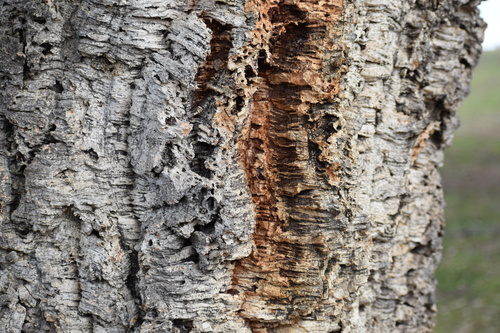
iNaturalist· cc-by
(c) Andrew Conboy, some rights reserved (CC BY), uploaded by Andrew Conboy
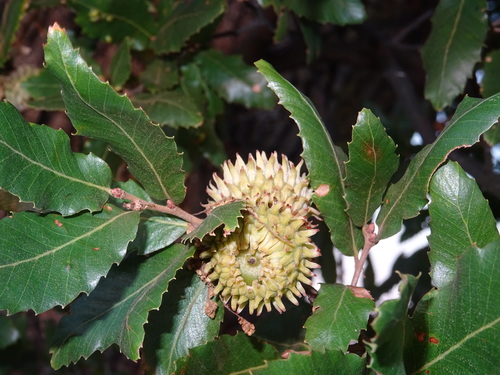
iNaturalist· cc-by
(c) Andrew Conboy, some rights reserved (CC BY), uploaded by Andrew Conboy
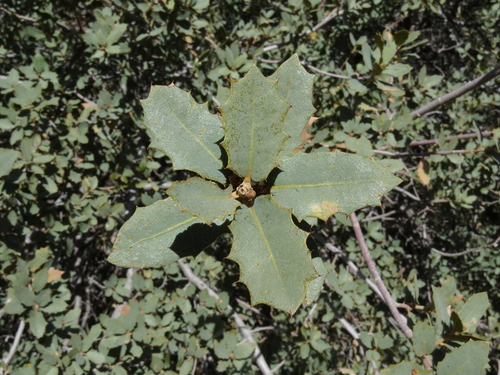
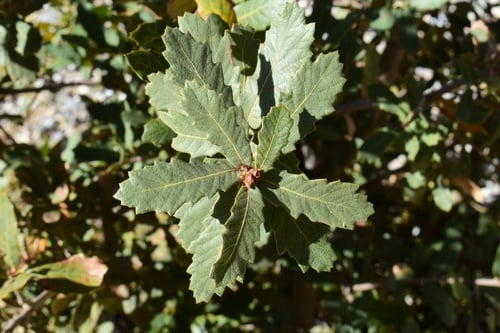
iNaturalist· cc-by-nc
(c) MP Zhou, some rights reserved (CC BY-NC), uploaded by MP Zhou
Summary
Source: WikipediaCastanea henryi, Henry chestnut, Henry's chestnut, or Chinese chinquapin (a name it shares with Castanea seguinii), pearl chestnut, and in Chinese 錐栗 (zhui li), is a species of chestnut native to south-central and southeast China. A tree reaching 30 m, it is a source of good timber, but has smaller nuts than its size might suggest. Like its close relative Castanea mollissima (Chinese chestnut) it is widely cultivated in China, and quite a few varieties have been developed in recent times.
Description
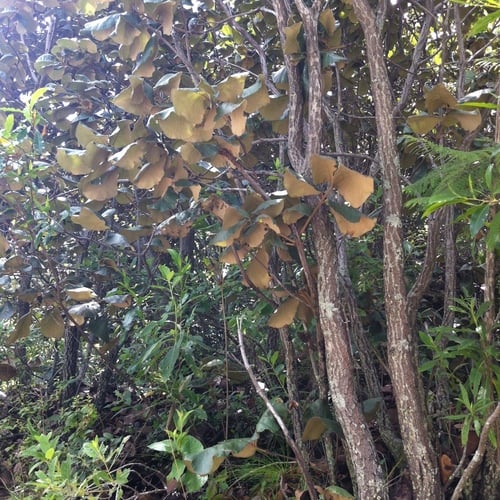
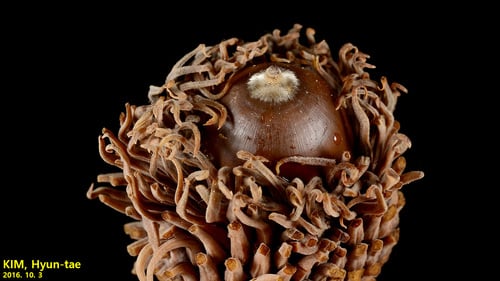
A tree. It grows to 30 m tall. The leaf stalk is 1-2.5 cm long. The leaf blade in oblong and 10-23 cm long. Underneath it is covered with yellowish brown scale like glands. There are fine hairs along the veins. The leaf base is rounded. There are teeth 2-4 mm long around the edge. The leaf tapers to a point. The male flower is 5-16 cm long. There is normally one but sometimes 3 female flowers in a group. The cup is on a short spike. The cup is 2.5-3.5 cm across. This is covered with slightly hairy spine like bracts. There is one nut per cup. It is round and 1.5-2 cm across.
Edible Uses
The seeds are small but said to be of excellent eating quality. Eaten raw, they have a noticeable astringency, particularly if the fleshy inner skin beneath the outer shell is not removed. Cooking — and especially baking — transforms them considerably, bringing out sweetness and a floury texture. At that point they make an excellent food and can be used as a staple in much the same way as potatoes or cereals.
Medicinal Uses
None known.
Distribution
It is a temperate plant. It grows in mixed forest on mountain slopes between 100-1800 m altitude in China.
Where It Grows
Asia, China,
Cultivation
Plants can be grown from seed. Seedlings need transplanting very early.
Propagation
Sow seed as soon as it is ripe, either in a cold frame or in an outdoor seedbed, and protect it from mice and squirrels. The seed has short viability and must not be allowed to dry out. It can be stored moist in a cool place such as the salad compartment of a fridge for a few months, but should be checked regularly for signs of germination. Germination typically occurs in late winter or early spring. Seedlings raised outdoors can be left in situ for one to two years before being moved to permanent positions. Plants grown in pots can go out to permanent positions in summer or autumn, with some cold protection in their first winter.
Other Uses
The bark, leaves, wood, and seed husks all contain tannin. The wood is valued locally for construction.
Other Information
The small nuts have good flavour.
Notes
All Castanea bear edible nuts. There are about 12 Castanea species.
Dangerous Lookalikes
This plant can be confused with the following toxic species. Always verify identification carefully before consuming any wild plant.
Horse Chestnut (Conker)
Aesculus hippocastanum
Solipsist
Zhui li
Castanea henryi
(c) Andrew Conboy, some rights reserved (CC BY), uploaded by Andrew Conboy
Horse Chestnut (Conker): Round smooth nuts (conkers), bumpy green husk (not very spiny), palmate compound leaves (like a hand).
Zhui li: Nuts with pointed tassel, very spiny bur casing, simple toothed leaves.
Synonyms
References (8)
- Altschul, S.V.R., 1973, Drugs and Foods from Little-known Plants. Notes in Harvard University Herbaria. Harvard Univ. Press. Massachusetts. no. 635
- Huang Chengjiu, Zhang Yongtian, Bartholomew, B., Fagaceae, Flora of China.
- Hu, Shiu-ying, 2005, Food Plants of China. The Chinese University Press. p 340
- Plants for a Future database, The Field, Penpol, Lostwithiel, Cornwall, PL22 0NG, UK. http://www.scs.leeds.ac.uk/pfaf/
- C. S. Sargent, Pl. wilson. 3:196. 1916
Show all 8 references Hide references
- Uphof, 1968,
- Usher, 1974,
- Wickens, G.E., 1995, Edible Nuts. FAO Non-wood forest products. FAO, Rome. p 122