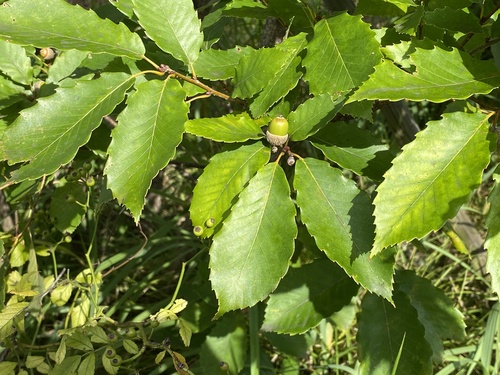
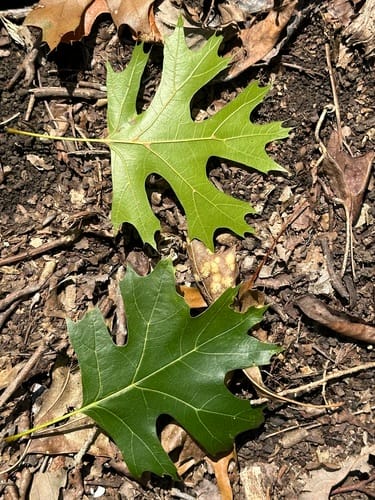
Quercus ithaburensis subsp. macrolepis
Decne, (Kotschy) Hedge & Yalt.
Valonia oak, Palamut
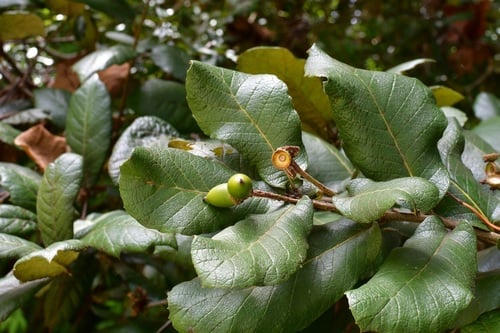
iNaturalist· cc-by-nc
(c) אריה אוהד, some rights reserved (CC BY-NC), uploaded by אריה אוהד
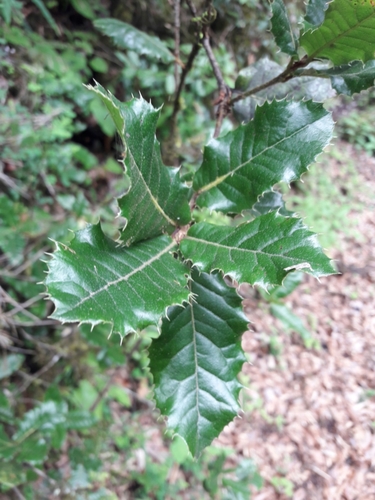
iNaturalist· cc-by-nc-sa
(c) c michael hogan, some rights reserved (CC BY-NC-SA), uploaded by c michael hogan
Summary
Source: WikipediaQuercus ithaburensis subsp. macrolepis, the Valonia oak, is a subspecies of Quercus ithaburensis, a member of the beech family, Fagaceae. It may also be treated as a separate species, Quercus macrolepis.
Description
A tree.
This description is brief — help expand it
Edible Uses
The cups, known as valonia, are used for tanning and dyeing as are the unripe acorns called camata or camatina. The ripe acorns are eaten raw or boiled.
Traditional Uses
The acorns are roasted and eaten. The coating is peeled off.
This uses section is brief — help expand it
Distribution
It is a temperate plant.
Where It Grows
Asia, Europe, Iraq, Middle East, Turkey, Türkiye,
Other Information
They are sold in local markets.
Notes
There are about 600 Quercus species.
Synonyms
Also Known As
Barruu, Dar baroo, Mazi, Mazo, Pelit agaci
References (8)
- Ahmad, S. A. & Askari, A. A., 2015, Ethnobotany of the Hawraman Region of Kurdistan Iraq. Harvard Papers in Botany, Vol. 20, No. 1, 2015, pp. 85–89 (As Quercus aegilops)
- Ertug, F., 2000, An Ethnobotanical Study in Central Anatolia (Turkey). Economic Botany Vol. 54. No. 2. pp. 155-182
- Ertug, F., 2004, Wild Edible Plants of the Bodrum Area. (Mugla, Turkey). Turk. J. Bot. 28 (2004): 161-174
- Ertug, F, Yenen Bitkiler. Resimli Türkiye Florası -I- Flora of Turkey - Ethnobotany supplement
- Galalaey, A. M. K., et al, 2021, Ethnobotanical study of some wild edible plants in Hujran Bason, Kurdistan Region of Iraq. ZANCO Journal of Pure and Applied Sciences. Salahaddin University-Erbil p 27 (As Quercus aegilops)
Show all 8 references Hide references
- Plants for a Future database, The Field, Penpol, Lostwithiel, Cornwall, PL22 0NG, UK. http://www.scs.leeds.ac.uk/pfaf/
- Sulamain, N., et al, 2023, The Importance of Becoming Tamed: Wild Food Plants as Possible Novel Crops in Selected Food-Insecure Regions. Horticulturae 2023,9,171. (As Quercus aegilops)
- Willdenowia 11:42. 1981