Syzygium masukuense
(Baker) R. E. Fr.
Small-fruited waterberry
iNaturalist· cc-by-nc
(c) Troos van der Merwe, some rights reserved (CC BY-NC), uploaded by Troos van der Merwe
iNaturalist· cc-by-nc
(c) Troos van der Merwe, some rights reserved (CC BY-NC)
Description
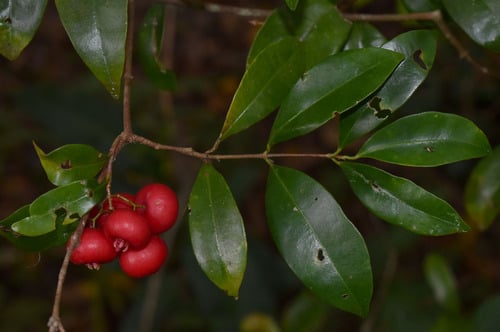
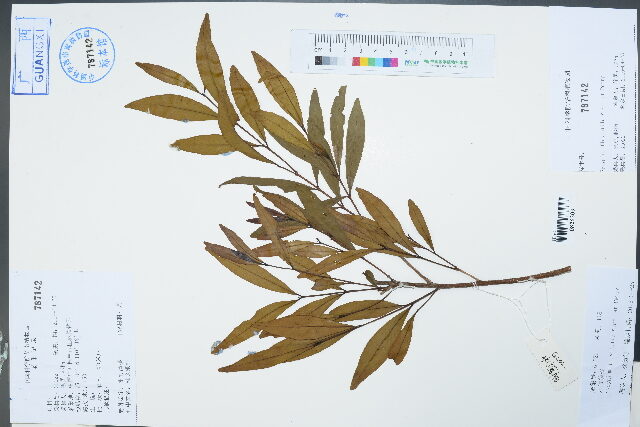
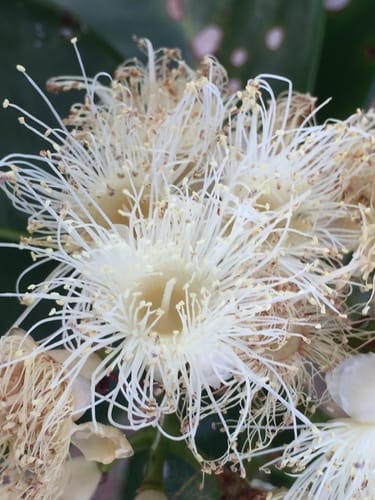
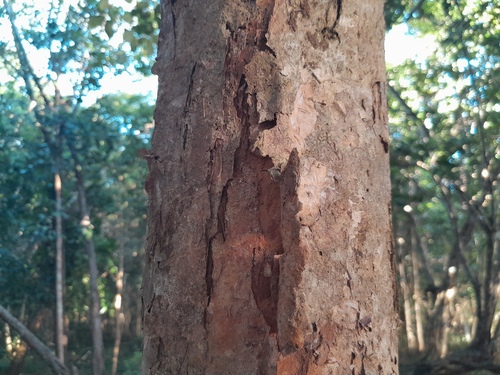
A tree. It grows 15 m tall. The bark is dark grey and scaly. The young stems are angular or winged. The leaves are simple and opposite. The leaf blades are 5-11 cm long by 3-5 cm wide. They are sword shaped and rounded or heart shaped at the base and taper to the tip. The flowers are white and occur as many in groups at the ends of branches or in the axils of leaves. The fruit is oval and fleshy. It is purple.
Edible Uses
The fruit are eaten fresh.
Traditional Uses
The fruit are eaten.
This uses section is brief — help expand it
Distribution
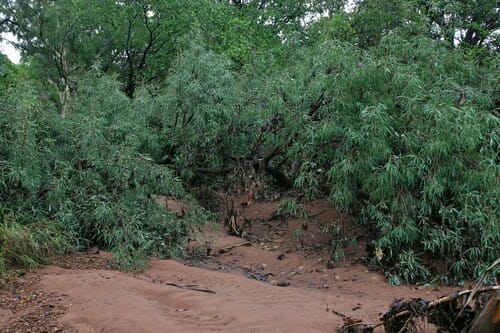
It is a tropical plant. It grows in mountain forests. It grows between 1,700-2,500 m above sea level. It can be in dry areas.
Where It Grows
Africa, East Africa, Malawi, Mozambique, South Africa, Southern Africa, Tanzania, Zimbabwe,
Propagation
Seed - best sown as soon as it is ripe.
Production
In Tanzania fruit are collected from April to June.
Synonyms
Also Known As
Kasyamongo, Msambalawe, Mvengi, Mzambarau-mwitu, Mzuari
References (3)
- Lovett, J. C. et al, Field Guide to the Moist Forest Trees of Tanzania. p 117
- Ruffo, C. K., Birnie, A. & Tengnas, B., 2002, Edible Wild Plants of Tanzania. RELMA p 653
- World Checklist of Useful Plant Species 2020. Royal Botanic Gardens, Kew