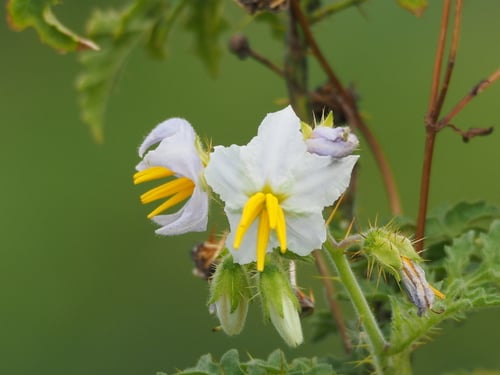
Solanum undatum
Lam.
iNaturalist· cc-by-nc
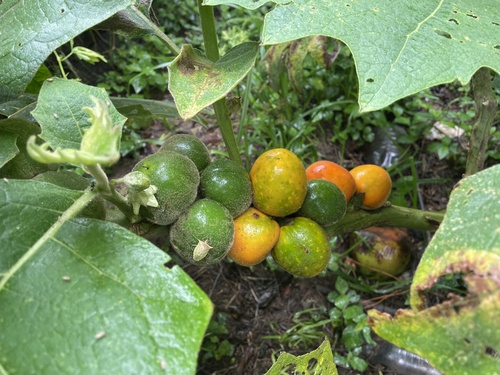
(c) Noopur🍀, some rights reserved (CC BY-NC)
iNaturalist· cc-by
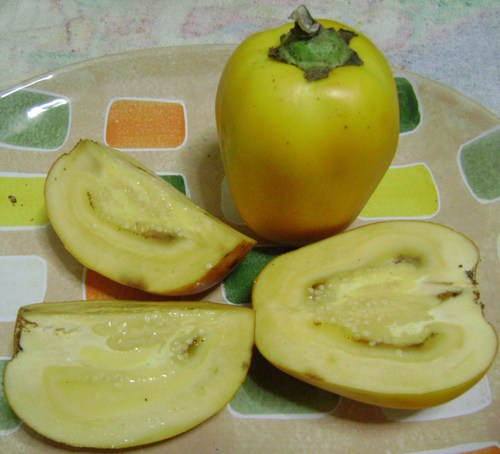
(c) zebedeugalinha, some rights reserved (CC BY)
iNaturalist· cc-by
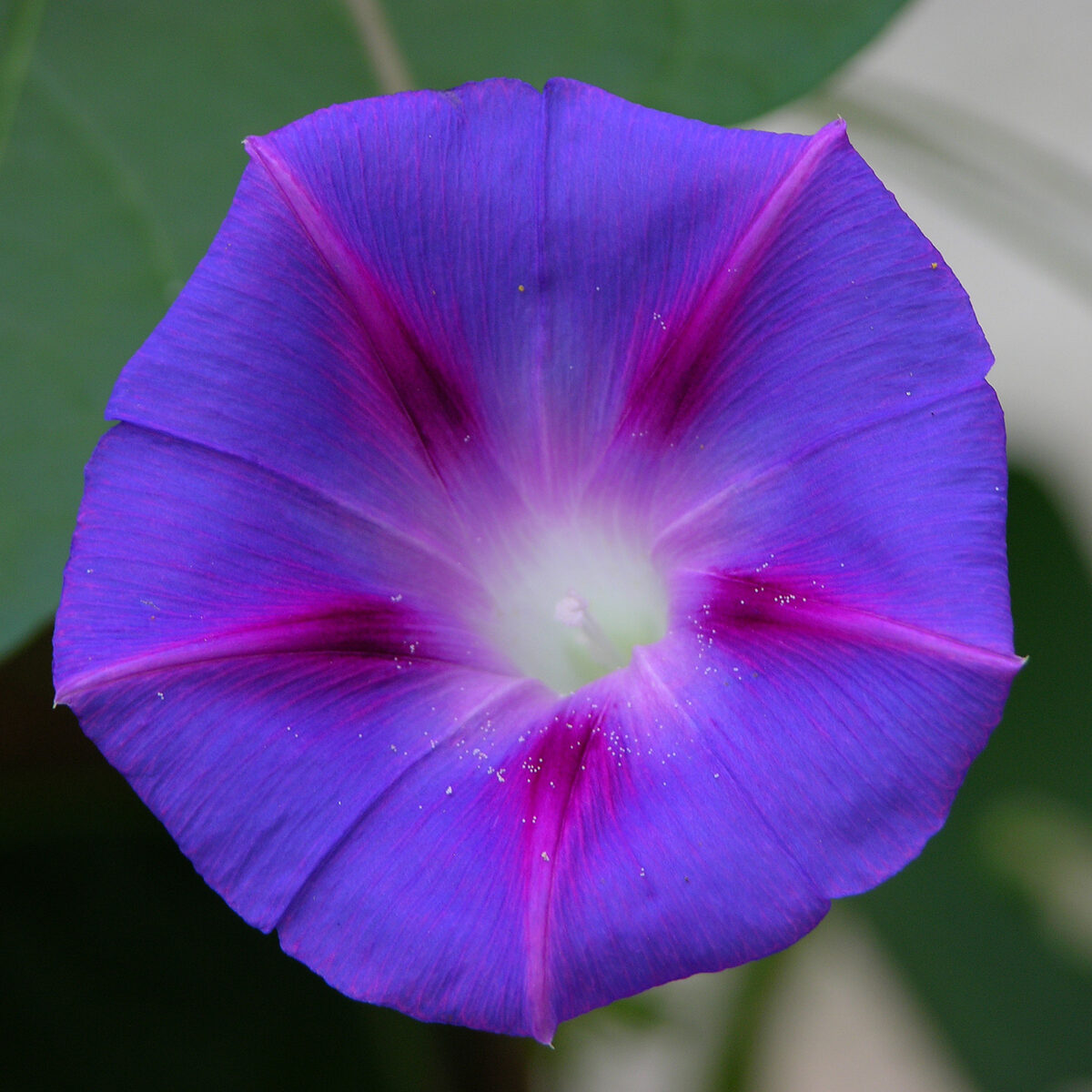
(c) zebedeugalinha, some rights reserved (CC BY)
Description
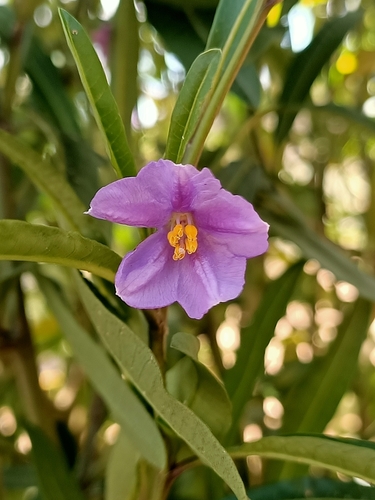
A small shrub. It may or may not have thorns. It can grow 1 m high. It is hairy. The leaves are in pairs and unequal. They are oval and 5-12 cm long by 4-7 cm wide There are a few flowers in a group near the axils of leaves. They are purple-blue or white.
Edible Uses
The unripe fruit is cooked and eaten as a vegetable. The fruit of this species is rounded, smooth, about 2.5 centimeters in diameter, and green mottled with white, or yellow.
Medicinal Uses
The leaves used in poultices are said to be mitigating and resolvent. The seeds are employed as a sedative, and are sometimes used to cure toothache.
Known Hazards
Although providing many well-known foods for people, including the potato, tomato, pepper and aubergine, most species in this genus also contain toxic alkaloids. Whilst these alkaloids can make the plant useful in treaing a range of medical conditions, they can also cause problems such as nausea, vomiting, salivation, drowsiness, abdominal pain, diarrhoea, weakness and respiratory depression. Unless there are specific entries with information on edible uses, it would be unwise to ingest any part of this plant.
Distribution
It is a tropical plant. In southern China it grows between 200-1,100 m above sea level. In Yunnan.
Where It Grows
Afghanistan, Asia, China, India, Indochina, Indonesia, Malaysia, Pakistan, SE Asia, Taiwan, Thailand, Vietnam,
Propagation
Seed - sow in trays in a nursery. Prick out the seedlings into individual pots when they are large enough to handle and grow them on fast. Plant them out when 10cm or more tall. Cuttings of half-ripe wood. Very easy, the cuttings root within a couple of weeks Division
Other Uses
An extract of the fruit is used as an ingredient in commercial cosmetic preparations as a skin protector.
Other Information
Leaves are sold in local markets.
Also Known As
Ge lan, Ke kua, Ni ga zi
References (2)
- Cao, Y., et al, 2020, Ethnobotanical study on wild edible plants used by three trans-boundary ethnic groups in Jiangcheng County, Pu’er, Southwest China. Journal of Ethnobiology and Ethnomedicine (2020) 16:66
- Ochse, J. J. et al, 1931, Vegetables of the Dutch East Indies. Asher reprint. p 695 (As Solanum undatum Poir.)