Quercus shumardii
Buckley
Shumard oak, Swamp red oak
iNaturalist· cc-by-nc
(c) ThePrairiePreacher, some rights reserved (CC BY-NC)
iNaturalist· cc-by
(c) William J. Deml, some rights reserved (CC BY), uploaded by William J. Deml
iNaturalist· cc-by-nc
(c) ThePrairiePreacher, some rights reserved (CC BY-NC)
Summary
Source: WikipediaQuercus shumardii, the Shumard oak, spotted oak, Schneck oak, Shumard red oak, or swamp red oak, is one of the largest of the oak species in the red oak group (Quercus section Lobatae). It is closely related to Quercus buckleyi (Texas red oak), Quercus texana (Nuttall's red oak), and Quercus gravesii (Chisos red oak).
Description
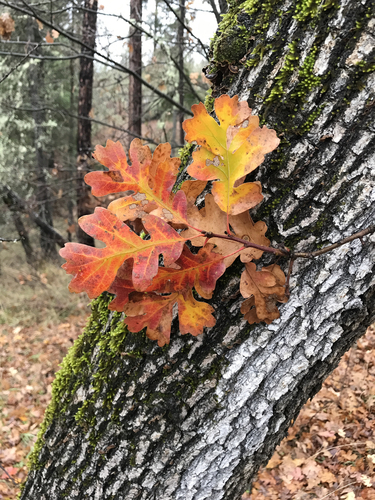
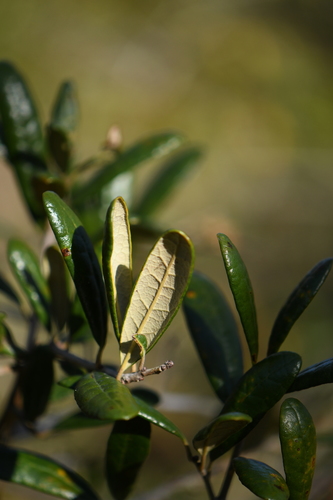
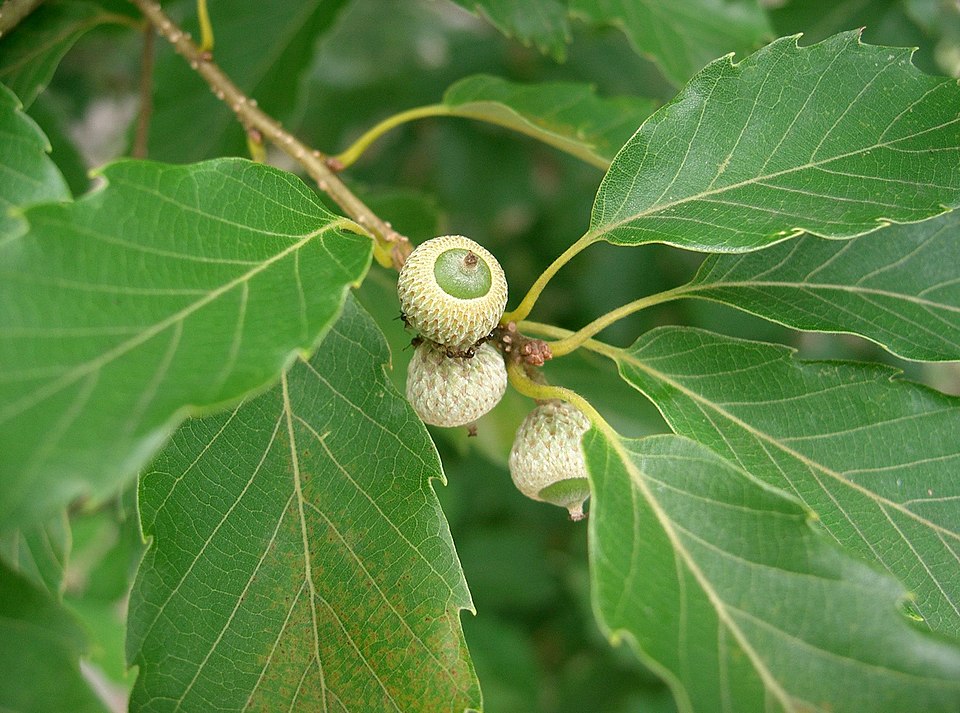
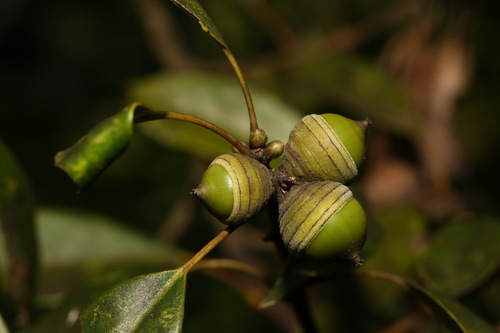
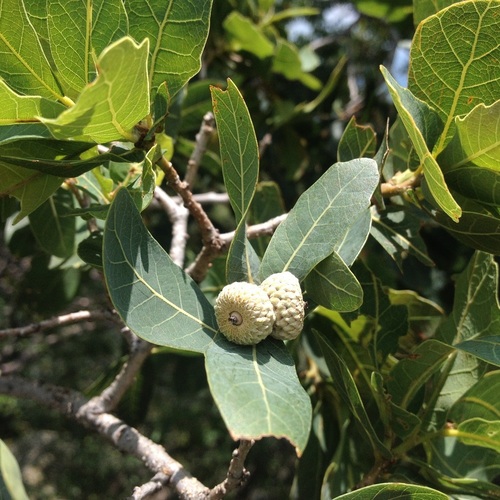
A medium to large sized tree. It grows up to 40 m high. The leaves are 12-20 cm long. There are 7-11 toothed lobes. The notches between the lobes are deep. The base is rounded. The leaves are shiny green above and paler underneath. They finally become rich red in autumn. The leaf stalks are 5-7 cm long. The acorns are large. They are 15-30 mm long. The cup is shallow and saucer shaped. It is 15-30 mm across. It is grey and slightly hairy. The cup encloses about one third of the acorn.
Edible Uses
The seed, up to 25mm long and wide, must be cooked before eating. It can be dried and ground into a powder to use as a stew thickener or mixed with cereals for bread. Bitter tannins in the seed can be leached by washing thoroughly in running water, though this also removes many minerals. Either whole seeds or ground powder can be used — whole seeds may take several days or weeks to leach adequately, and wrapping them in a cloth bag placed in a stream is one traditional method. Leaching powder is quicker. A taste test indicates when tannin levels are sufficiently reduced. Another traditional preparation involved burying seeds in boggy ground over winter; the germinating seed dug up in spring would have lost most of its bitterness. The roasted seed serves as a coffee substitute.
Medicinal Uses
Galls produced on the tree are strongly astringent and can be used in treating haemorrhages, chronic diarrhoea, and dysentery.
Distribution
It is a temperate plant. It grows in lowlands and along stream banks in poorly drained heavy soils in Canada. It suits hardiness zones 5-9. In Brisbane Botanical Gardens.
Where It Grows
Australia, Canada, North America, USA,
Cultivation
Prefers a good deep fertile loam which can be on the stiff side. Young plants tolerate reasonable levels of side shade. Tolerates moderate exposure, surviving well but being somewhat stunted. Prefers warmer summers than are usually experienced in Britain, trees often grow poorly in this country and fail to properly ripen their wood resulting in frost damage overwinter. A moderately fast-growing tree in the wild, it commences bearing seeds when about 25 years old. Seed production is cyclic, a year of high yields being followed by 1 - 3 years of low yields. The tree flowers on new growth produced in spring, the seed taking two summers to ripen. Plants in the wild are very susceptible to the disease 'oak wilt'. Closely related to Q. rubra and Q. coccinea. Intolerant of root disturbance, trees should be planted in their permanent positions whilst young. Hybridizes freely with other members of the genus. Plants in this genus are notably resistant to honey fungus.
Propagation
Seed loses viability rapidly if allowed to dry out. It can be stored moist and cool over winter but is best sown as soon as it is ripe in an outdoor seed bed, with protection from mice and squirrels. Small quantities can be sown in deep pots in a cold frame. Because plants develop a deep taproot, they should be moved to their permanent positions as soon as possible — seed sown in situ produces the best trees. Trees left in a nursery bed for more than 2 growing seasons transplant very poorly.
Other Uses
A mulch of leaves repels slugs and grubs, though fresh leaves should not be used as they can inhibit plant growth. Oak galls produced by insect larvae are a useful source of tannin once the insect has pupated and left; the tannin can also be used as a dyestuff. The wood is heavy, hard, strong, and close-grained, weighing 57lb per cubic foot. It is a very valuable timber, used for lumber, flooring, furniture, veneers, and cabinet making.
Notes
There are about 600 Quercus species.
Synonyms
References (6)
- Cundall, P., (ed.), 2004, Gardening Australia: flora: the gardener's bible. ABC Books. p 1127
- Farrar, J.L., 1995, Trees of the Northern United States and Canada. Iowa State University press/Ames p 254
- Jordan, J., et al, 2006, Vascular Plants Utilized by the Plains Apache in Southwestern Oklahoma, Publications of the Oklahoma Biological Survey. 2nd Series. Volume 7: 24-33, 2006
- Little, E.L., 1980, National Audubon Society Field Guide to North American Trees. Alfred A. Knopf. p 408
- Plants for a Future database, The Field, Penpol, Lostwithiel, Cornwall, PL22 0NG, UK. http://www.scs.leeds.ac.uk/pfaf/
Show all 6 references Hide references
- Proc. Acad. Nat. Sci. Philadelphia 12:444. 1861 ("1860")