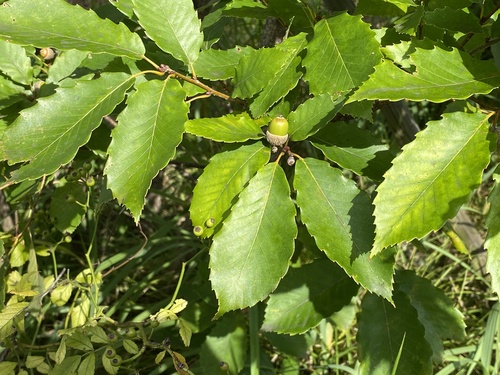
Quercus rugosa
Nee
Netleaf oak
iNaturalist· cc-by
(c) Neptalí Ramírez Marcial, some rights reserved (CC BY), uploaded by Neptalí Ramírez Marcial
Summary
Source: WikipediaQuercus rugosa, commonly known as the netleaf oak, is a broad-leaved tree in the beech and oak family Fagaceae. It is native to southern North America.
Description
Evergreen tree reaching 20m tall and 10m wide, growing at slow rate. Hardy to UK zone 8, frost tender. Wind-pollinated, monoecious flowers. Noted for wildlife attraction. Adapts to light sandy, medium loamy and heavy clay soils with well-drained preference across mildly acid to basic pH. Requires full sun, cannot grow in shade. Prefers moist soil and withstands strong winds but not salt spray.
Edible Uses
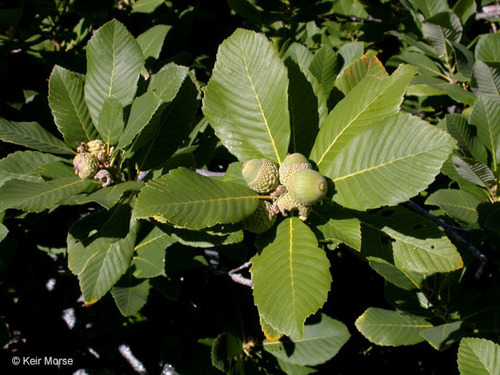
The light brown, ovoid to elliptic seed measures 7–28mm long and 7–15mm wide and is typically toasted before eating. Seeds can be eaten whole or, more commonly, dried and ground into a powder for use as a stew thickener or mixed with cereals for bread. Some oak species — particularly those classed as white oaks — have seeds naturally low in tannins with a sweet, agreeable flavour. Netleaf oak acorns, however, are high in tannins despite their pale colour, and both shells and nutmeats sink in water, making leaching more challenging and requiring multiple water changes. Several leaching methods can be used: burying seeds in boggy ground over winter allows soil moisture to gradually draw out tannins, with the germinating seed dug up in spring once bitterness has diminished. Alternatively, seeds wrapped in a cloth bag and placed in a stream for several weeks will leach adequately. Grinding the dried seed to a powder before soaking speeds the process considerably. Hot water is fastest — cook the powder and change the water repeatedly until it no longer tastes bitter. Cold water leaching, considered to produce the best quality flour, involves soaking the powdered seed for 12–24 hours, discarding the water, and repeating until the soak water is no longer bitter. Once leached, acorns can be mashed into nut butter or ground into flour. Roasting the leached nutmeat helps drive off moisture and improves flavour, though the result is only average compared to the sweeter Gambel oak. Acorns can also be used to make porridge or baked goods. The roasted seed serves as a coffee substitute.
Traditional Uses
The acorn is used to make coffee.
This uses section is brief — help expand it
Medicinal Uses
The bark is rich in tannins and used internally to treat diarrhoea, dysentery, and haemorrhages. As a mouthwash it helps strengthen the gums and ease toothache, and applied externally it treats cuts and burns. The leaves and bark together, prepared as an infusion, are used to treat muscular pain and coughs. Oak species more broadly are valued in traditional medicine across many cultures for their tannin content. Leaves, bark, seeds, seed cups, and insect-produced galls are all employed medicinally. A decoction or infusion is astringent, antibacterial, antifungal, antiseptic, styptic, and haemostatic, taken internally for acute diarrhoea, dysentery, and haemorrhages. Externally, it serves as a mouthwash for toothache and gum problems, and is applied as a topical wash on cuts, burns, skin conditions, haemorrhoids, and inflammation of oral, genital, and anal mucosa. Plant extracts can also be incorporated into ointments to aid wound healing.
Known Hazards
All parts of the plant contain tannins. Whilst tannins are found in many foods, and have a range of medicinal uses. They are usually only present in low concentrations. In some foods made from oaks (particularly the seeds), the tannin content can be quite high unless the food is treated to reduce tannin content. Tannins are only of low toxicity and, because of their bitter taste and astringency, are unlikely to be eaten in large quantities. However, if they are taken in excess, they can cause stomach pains; constipation followed by bloody diarrhoea: excessive thirst; and excessive urination.
Distribution
It is a tropical plant. Arboretum Tasmania.
Where It Grows
Australia, Central America, Guatemala, Mexico, North America, Tasmania, USA,
Cultivation
Quercus rugosa is a moderately cold-hardy tree, known to have tolerated temperatures down to at least -18°c when dormant. It grows best in areas with hot summers, doing well in Mediterranean climates. In areas with cooler summers ()even where the winters are mild), such as the maritime regions of the temperate zone, it often grows poorly, failing to properly ripen its wood and suffering frost damage over the winter. Quercus species generally grow well in a sunny position, though young plants usually tolerate reasonable levels of side shade. They usually prefer a good deep fertile loam which can be on the stiff side. They are also often tolerant of moderate exposure, surviving well but being somewhat stunted. Seedlings soon develop a taproot and become intolerant of root disturbance, they should be planted into their permanent positions whilst young. Most Quercus species hybridize freely with other members of the genus. Plants in this genus are notably resistant to honey fungus. USDA Hardiness & Weed Potential: Netleaf oak is native to southern Arizona, southern New Mexico, and into Mexico, especially in mountain ravines. It grows best at elevations between 1,200–2,700 meters and is generally considered suited to USDA Hardiness Zones 7–10. Being a native oak, it is not regarded as weedy or invasive.
Propagation
Seed loses viability rapidly if allowed to dry out. It can be stored moist and cool over winter but is best sown as soon as it is ripe in an outdoor seed bed, with protection from mice and squirrels. Small quantities can be sown in deep pots in a cold frame. Because plants develop a deep taproot, they should be moved to their permanent positions as soon as possible — seed sown in situ produces the best trees. Trees left in a nursery bed for more than 2 growing seasons transplant very poorly.
Other Uses
Leaves are more or less rich in tannins across this genus. A mulch of partially decayed leaves placed around vulnerable plants repels slugs, snails, and grubs, while breaking down over time to add humus and nutrients to the soil. Fresh leaves should be used with caution, as their decomposition draws nitrogen from the soil and can inhibit plant growth. Oak galls — growths caused by insect larvae feeding within the tissue — can be harvested once the insect has pupated and left, providing a rich source of tannin used as a dyestuff and, in many cultures, for making ink. Oak bark is also rich in tannins and has been used as a dyestuff and for waterproofing rope. The wood serves as a source of pulp for paper, and oak timber generally is valued for its strength, durability, and beauty, used for fuel, railroad ties, building construction, shipbuilding, interior trim, flooring, and furniture at all grades. The physical qualities of wood vary by species, ranging from very hard and tough to lighter and softer. The wood is also used as fuel.
Notes
There are about 600 Quercus species.
Synonyms
Also Known As
Alvellana, Avellana, Cu-ho, Encino
References (4)
- Altschul, S.V.R., 1973, Drugs and Foods from Little-known Plants. Notes in Harvard University Herbaria. Harvard Univ. Press. Massachusetts. no. 657 (As Quercus rhodophlebia)
- Farfan, B., et al, 2007, Mazahua Ethnobotany and Subsistence in the Monarch Butterfly Biosphere Reserve, Mexico. Economic Botany 61(2) 2007, pp 173-191
- Kermath, B. M., et al, 2014, Food Plants in the Americas: A survey of the domesticated, cultivated and wild plants used for Human food in North, Central and South America and the Caribbean. On line draft. p 736
- Reis, S. V. and Lipp, F. L., 1982, New Plant Sources for Drugs and Foods from the New York Botanical Garden herbarium. Harvard. p 39 (As Quercus reticulata)