Baccaurea deflexa
Mull.Arg.
gbif· cc0
President and Fellows of Harvard College
gbif· cc0
President and Fellows of Harvard College
gbif· cc0
President and Fellows of Harvard College
Description
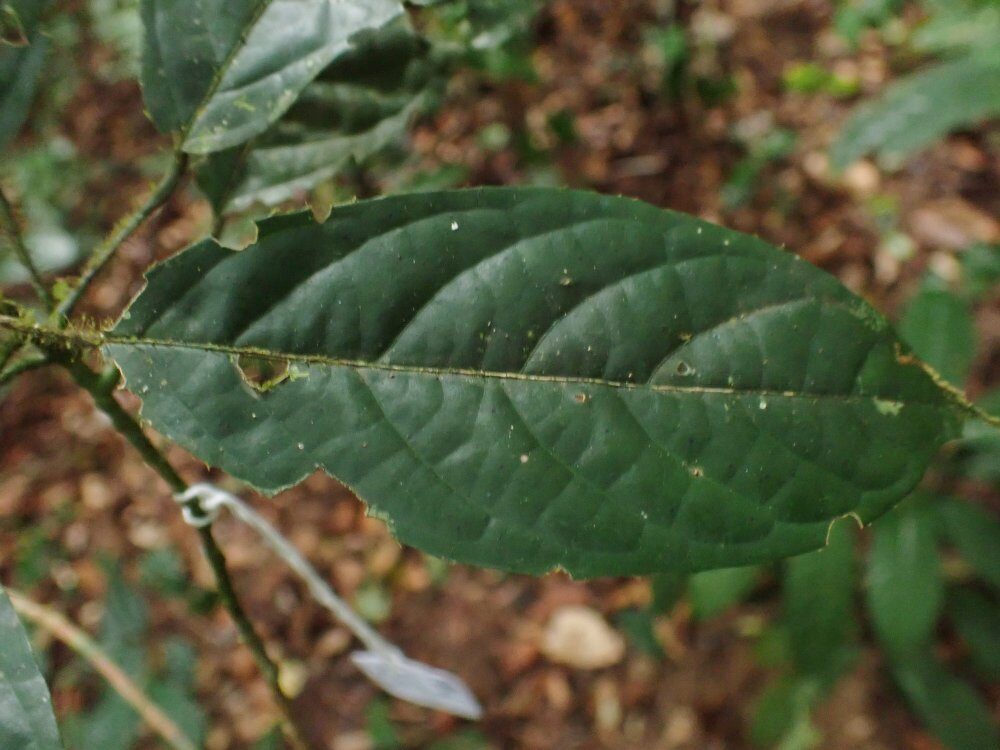
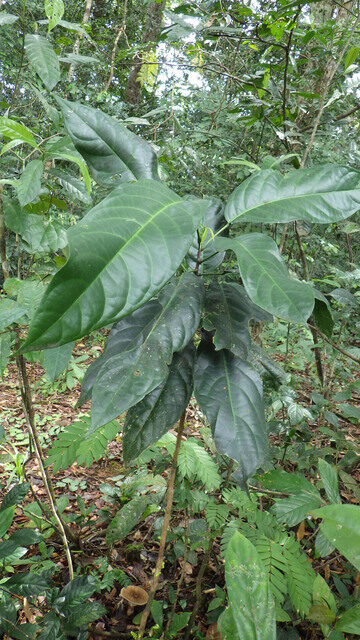
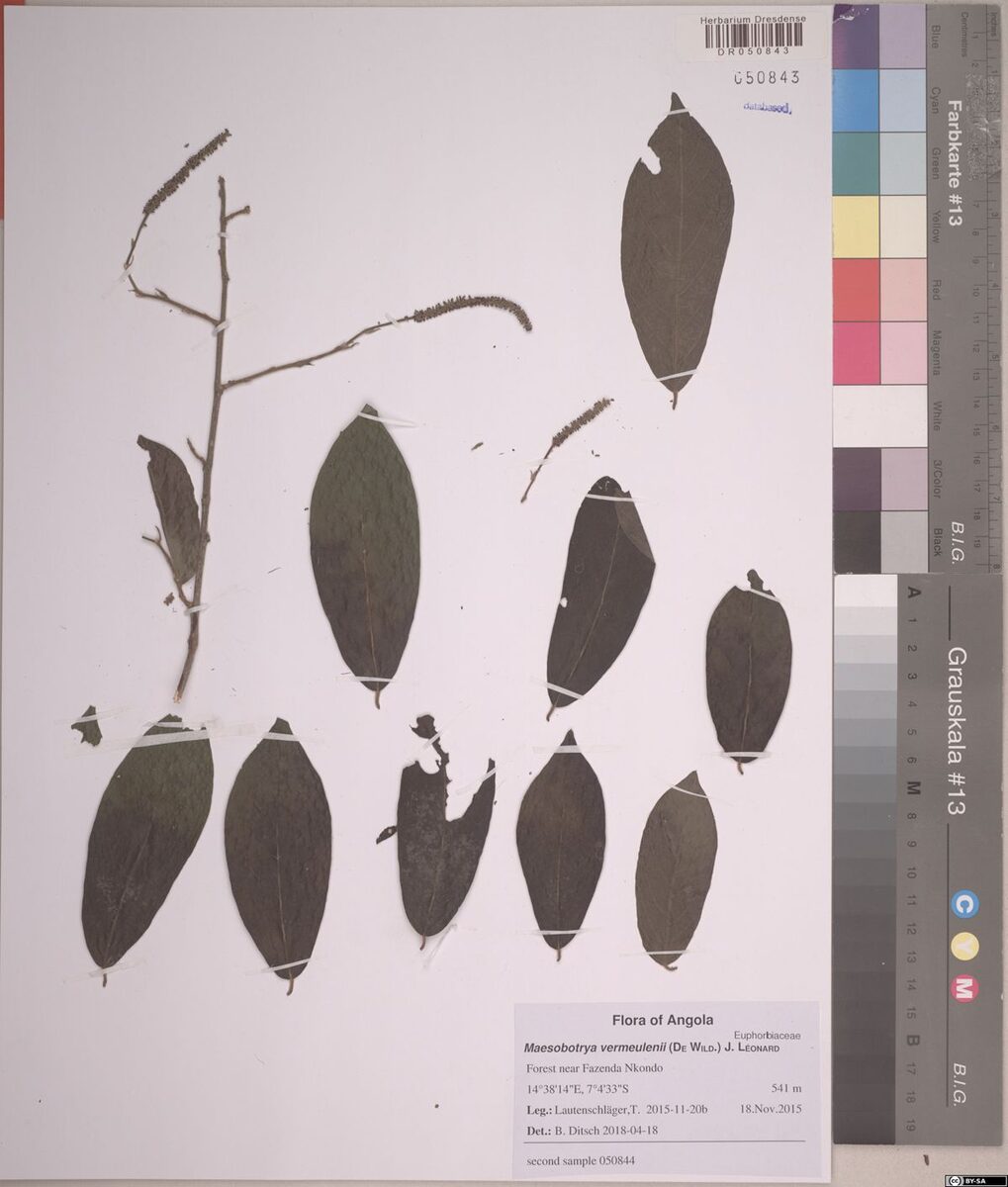
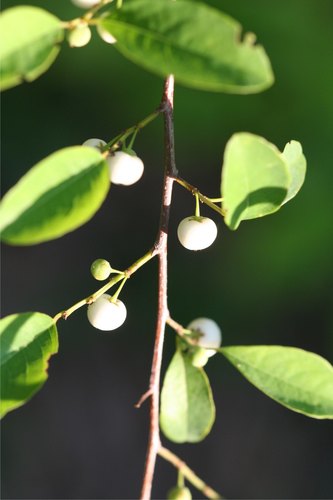
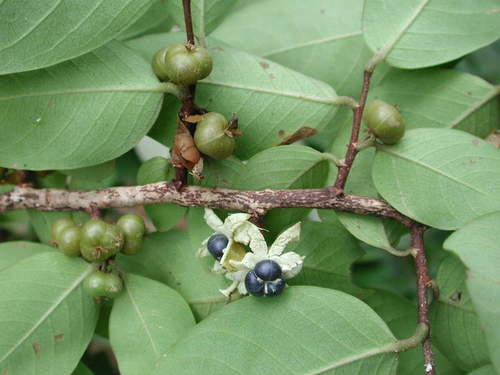
A tree. It grows about 30 m tall. The leaves are in groups near the ends of twigs. They are alternate and simple. They are hairy underneath. The flowers are about 1.5 mm across and in unbranched groups. They are yellow to white. The fruit are about 2 cm long. They are a greenish yellow colour. They are fleshy. The seeds are covered with an orange coat or aril.
Edible Uses
Although we have no specific record of edibility for this species, the fruits of all members of this genus are said to be edible, with a flavour that can be acid to sweet. The ellipsoid fruit is up to 15mm long and 14mm wide.
Medicinal Uses
We have no specific information on this species, but the bark of several members of this genus is used to relieve eye inflammation.
Distribution
It is a tropical plant. It grows up to 200 m above sea level. It grows on alluvial and dry sandy soils.
Where It Grows
Asia, Indonesia, Malaysia, SE Asia,
Cultivation
Found in sandy and clay soils in the wild. A dioecious species, both male and female forms need to be grown if fruit and seed are required.
Propagation
Seed - when sown fresh it usually germinates in a few days.
Other Uses
We have no specific information for this species, but the bark of several members of this genus is used, along with other ingredients, as a dyestuff to colour silk yellow, red or mauve, using the dyeing process known as 'pekan' in Malay. Although we have no specific information for this species, most members of this genus produce an excellent timber, which can be used to build houses and boats and to make furniture. In common with other trees that produce their flowers and fruits on the trunk of the tree, members of this genus are generally considered to be good support trees for the climbing rattan palms, which are grown to provide material for basket making, weaving into furniture, making ropes etc.
Other Information
It is a cultivated plant.
Also Known As
Ancia, Jentihan, Keliwan, Lubi, Mata tingan, Tampoi
References (1)
- Slik, F., www.asianplant.net