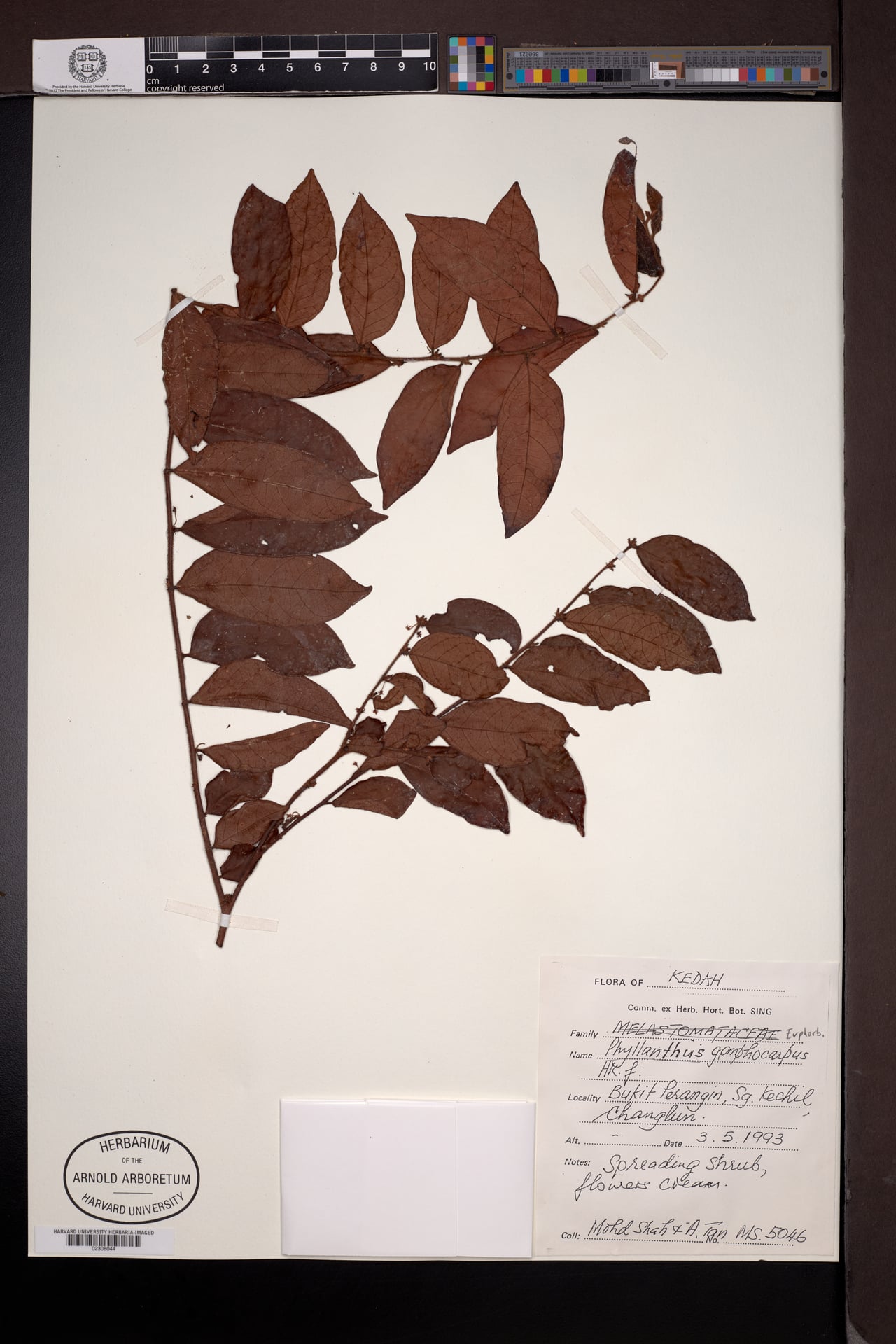
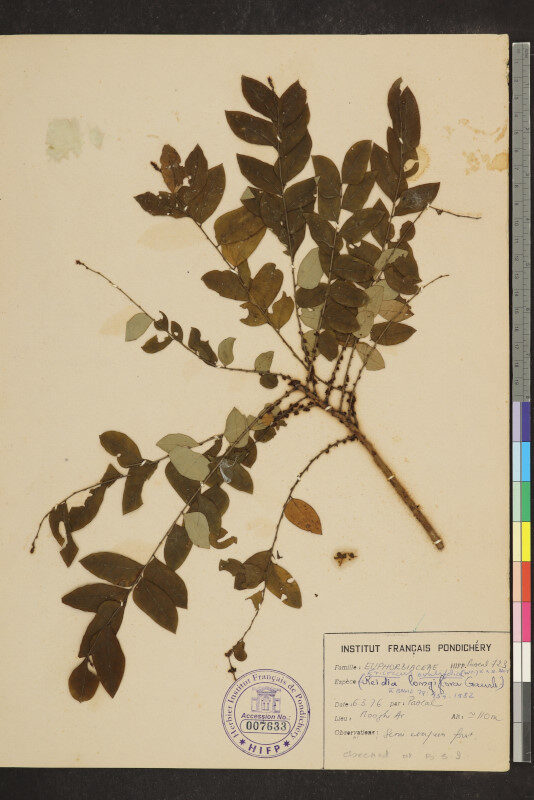
Margaritaria discoidea
(Baill.) Webster
Common pheasant-berry, Peacock berry
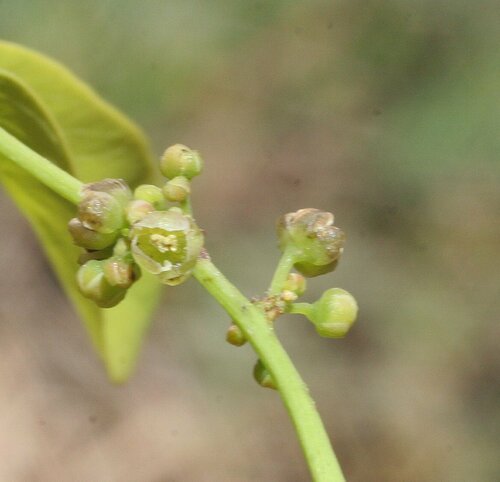
iNaturalist· cc-by-nc-sa
(c) Stefan Dressler, some rights reserved (CC BY-NC-SA)
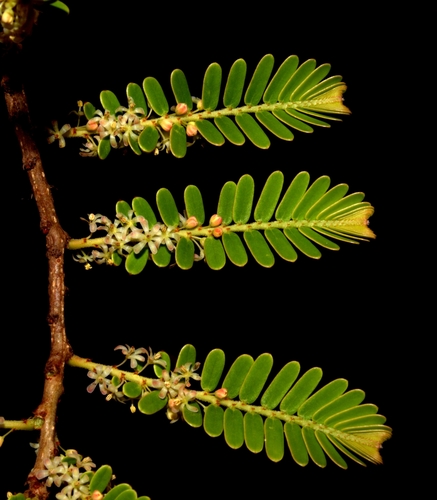
iNaturalist· cc-by-nc
(c) Mark Hyde, Bart Wursten and Petra Ballings, some rights reserved (CC BY-NC)
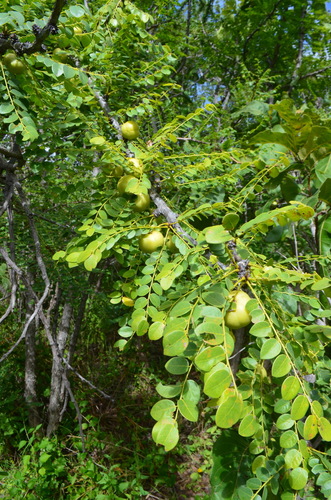
iNaturalist· cc-by-nc
(c) Mark Hyde, Bart Wursten and Petra Ballings, some rights reserved (CC BY-NC)
Summary
Source: WikipediaMargaritaria discoidea is a tree in the family Phyllanthaceae, commonly known as the pheasant-berry, egossa red pear or bushveld peacock-berry. These trees are native to the warmer, higher rainfall areas of Africa.
Description
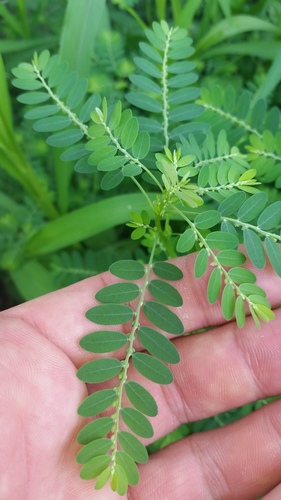
It can be a shrub but also a large tree. It can be 8 m high or 20 m high. The bark is pale grey and smooth. In large trees with buttresses the bark can be rough. The leaves are oval and 2-8 cm long by 1.3-4 cm wide. They can be larger in large trees. The leaves are bright green. The edges roll under. The flowers are small and greenish-yellow. The sexes are on different trees. Male flowers are many and in the axils of leaves. Female flowers occur in pairs in the axils of leaves. The fruit is a 3 lobed capsule. It is yellow and 10 mm across. They turn blue when ripe. There are 6-8 seeds per fruit. There are several varieties.
Edible Uses
The fruit is edible. The blue, subglobose fruit is up to 13mm wide, containing a single large seed. The fruit is a green capsule containing 4 seeds, each of which is covered by a thin layer of flesh. The wood-ash yields a vegetable salt. The young leaves have occasionally been eaten.
Traditional Uses
The fruit are eaten cooked.
This uses section is brief — help expand it
Medicinal Uses
These trees are used in traditional medicine across Africa: A leaf-decoction is taken in Ivory Coast for blennorrhoea and for poisoning, while in Ubangi a decoction of roots and leafy twigs is also used for blennorrhoea A wash of the decoction is a stimulant in case of general fatigue. The bark is used as a purgative in West Africa and anthelmintic in Central Africa. The Fula people use the bark for toothache, in the Central African Republic a decoction is used for post-partum pains, and in the Republic of the Congo for stomach and kidney complaints and to facilitate parturition. In Malawi the powdered bark extract is applied to swellings and inflammation for quick relief.
Distribution
It is a tropical plant. It grows in damper sites of the savannah and closed secondary forest in West Africa. In Zimbabwe it grows up to 1,700 m above sea level.
Where It Grows
Africa, Benin, Botswana, Burkina Faso, Burundi, Cameroon, Central Africa, Central African Republic, CAR, Congo DR, Congo R, Côte d'Ivoire, East Africa, Ethiopia, Gabon, Gambia, Ghana, Guinea, Guinée, Guinea-Bissau, Ivory Coast, Kenya, Liberia, Malawi, Mali, Mozambique, Namibia, Nigeria, Sao Tome and Principe, Senegal, Sierra Leone, South Africa, Southern Africa, Tanzania, Togo, Uganda, West Africa, Zambia, Zimbabwe,
Cultivation
Plants are grown from seeds. The seeds are soaked in water overnight before planting.
Other Uses
Both the young stems and the roots are used as chew-sticks for cleaning the teeth, strengthening the gums and maintaining oral hygiene. The bark yields about 10% tannin. The bark is stringy and fibrous. This report does not say that the bark can be used as a source of fibre. The heartwood is pinkish-white to brownish-red, the sapwood is yellowish. The wood is hard, heavy, of medium texture, not difficult to work. It is not resistant to insects and decay. It can be sawn into planks and used for ordinary building purposes, and is suitable for cabinetry, finishing smoothly and taking a fine polish. It is cut for roof-shingles and is used for boatbuilding as the wood is said to bend ideally after steaming for shaping ribs. It is a good firewood, and charcoal is made of it. The plant is one of the known hosts of the fungus Armillaria heimii, which is the causative fungus of collar-crack disease of cacao. Therefore its presence on cacao plantations as a shade-bearer may not be desirable.
Notes
There are about 14 Margaritaria species. They grow in the tropics. It is a host to a fungus that can damage cacao.
Synonyms
Also Known As
Ashasha, Asiyin, Be, Budela, Cocuer, Ebegeng, Kango, Kinsende, Lie, N'nakali, Pepea, Vino
References (17)
- Abbiw, D.K., 1990, Useful Plants of Ghana. West African uses of wild and cultivated plants. Intermediate Technology Publications and the Royal Botanic Gardens, Kew. p 48
- Achigan-Dako, E, et al (Eds), 2009, Catalogue of Traditional Vegetables in Benin. International Foundation for Science.
- Burkill, H. M., 1985, The useful plants of west tropical Africa, Vol. 5. Kew.
- Chapman, J. D. & Chapman, H. M., 2001, The Forest Flora of Taraba and Andamawa States, Nigeria. WWF & University of Canterbury. p 175
- Fowler, D. G., 2007, Zambian Plants: Their Vernacular Names and Uses. Kew. p 27
Show all 17 references Hide references
- Jardin, C., 1970, List of Foods Used In Africa, FAO Nutrition Information Document Series No 2.p 154 (As Phyllanthus discoideus)
- Keay, R.W.J., 1989, Trees of Nigeria. Clarendon Press, Oxford. p 334
- Latham, P & Mbuta, A., 2017, Useful Plants of Central Province, Democratic Republic of Congo. Volume 2. Salvation Army p 23
- Le Houerou, H. N., (Ed.), 1980, Browse in Africa. The current state of knowledge. International Livestock Centre for Africa, Ethiopia. p 162
- Oryema, C., et al, 2013, Edible wild fruit species of Gulu District, Uganda. International Journal of Biology and Biological Sciences Vol 2(4) pp 068-082
- Palgrave, K.C., 1996, Trees of Southern Africa. Struik Publishers. p 397
- Peters, C. R., O'Brien, E. M., and Drummond, R.B., 1992, Edible Wild plants of Sub-saharan Africa. Kew. p 111
- Schatz, G.E., 2001, Generic Tree Flora of Madagascar. Royal Botanical Gardens, Kew and Missouri Botanical Garden. p 159 (Genus)
- Vascular Plants of Korup National Park. korupplants.myspecies.info
- Vivien, J. & Faure, J.J., 1985, Abres des forets dense d'Afrique Centrale. Agence de Cooperation Culturelle et Technique. Paris. p 196
- von Katja Rembold, 2011, Conservation status of the vascular plants in East African rain forests. Dissertation Universitat Koblenz-Landau p 172
- World Checklist of Useful Plant Species 2020. Royal Botanic Gardens, Kew