Margaritaria nobilis
L.f.
iNaturalist· cc-by-nc
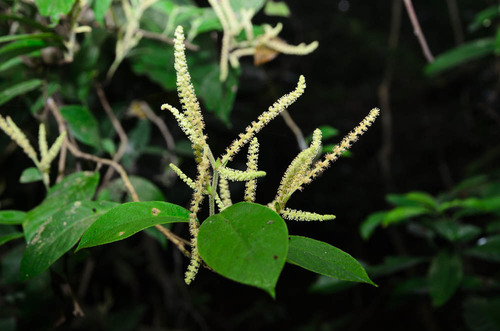
(c) marciocampelo, some rights reserved (CC BY-NC)
iNaturalist· cc-by-nc
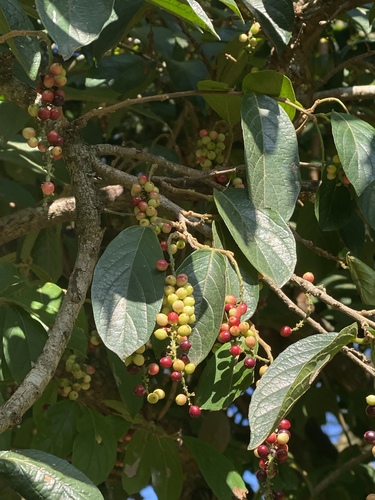
(c) Gustavo Gonsioroski, some rights reserved (CC BY-NC), uploaded by Gustavo Gonsioroski
iNaturalist· cc-by-nc
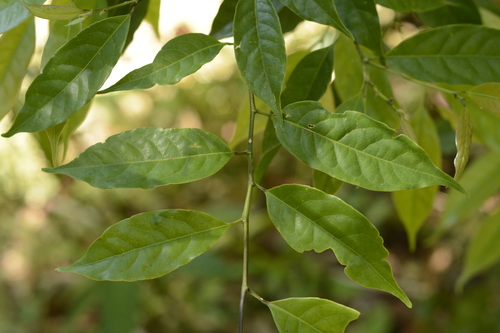
(c) Leonardo Venegas P, some rights reserved (CC BY-NC), uploaded by Leonardo Venegas P
Summary
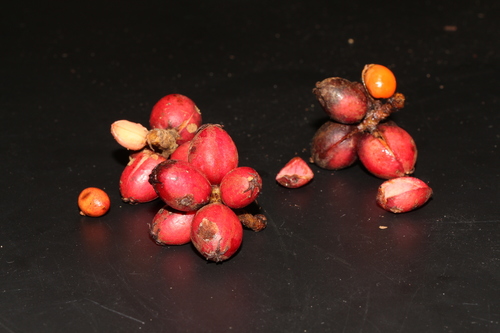
Source: WikipediaMargaritaria nobilis, also known as bastard hogberry, is a fruit-bearing plant found in Mexico, Central America, South America, and the West Indies. The fruit is a bright iridescent blue color, resulting from a complex surface structure which interferes with light waves.
Description
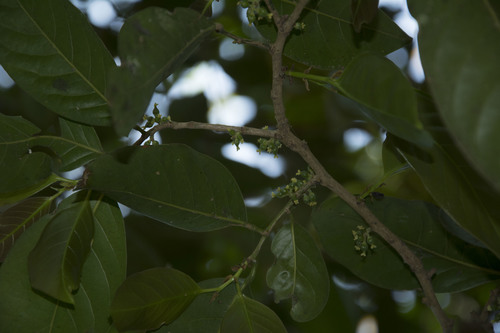
A shrub or small tree. It keeps growing from year to year. It can grow 14 m tall. The leaves have short stalks and the leaves are 6-13 cm long by 3-5 cm wide. The flowers are greenish-white. Male flowers are in groups and female flowers occur singly. The fruit is a capsule 13 mm long. It is somewhat fleshy and has 4 seeds. The fruit are bluish when ripe.
Edible Uses
The immature green fruit are eaten.
Traditional Uses
The immature green fruit are eaten.
This uses section is brief — help expand it
Distribution
It is a tropical plant. In Argentina it grows from sea level to 1,000 m above sea level.
Where It Grows
Argentina, Bolivia, Brazil, Central America, Colombia, Costa Rica, Dominican Republic, Ecuador, Mexico, Paraguay, Peru, South America*, West Indies,
Cultivation
Succeeds in full sun and in dappled shade. Plants can tolerate seasonal inundation of the soil. A moderate to fast-growing tree. Plants can flower and produce fruit nearly all year round. A dioecious species, both male and female forms need to be grown if fruit and seed are required.
Propagation
Seed - it has a viability of around 60 days and so is best sown as soon as it is ripe in a partially shaded position in a nursery seedbed. A high germination rate can usually be expected, with the seed sprouting within a few weeks. When the seedlings are 4 - 5cm tall, pot them up into individual containers and they should be ready to plant out about 4 - 5 months later.
Other Uses
The heartwood is brownish, sometimes pinkish; the sapwood is light brown. The wood is light in weight, soft, with poor mechanical properties, not durable when exposed to the elements. The wood is hard according to another report.. Easy to work with but of low quality, it is only used for low value items such as boxes, crates, linings posts and toys. The wood is used for fuel. A fast-growing tree, it can be used in projects to restore native woodland.
Synonyms
Also Known As
Antachibuca, Barudo, Kutu kaspi, Loronaue, Nowetikano, Onwamowe, Pepito de puerco, Sara muyu, Ttontton ardepacho, Ucariviro, Yaku paparu, Yantsa
References (5)
- Kermath, B. M., et al, 2014, Food Plants in the Americas: A survey of the domesticated, cultivated and wild plants used for Human food in North, Central and South America and the Caribbean. On line draft. p 524
- Macbride, J. F., 1962, Flora of Peru. Vol. 8, Part V-B No. 1 p 260 (As Phyllanthus nobilis)
- Reis, S. V. and Lipp, F. L., 1982, New Plant Sources for Drugs and Foods from the New York Botanical Garden herbarium. Harvard. p 160
- Roa, J. A. G. & Boada, D. S. G., 2018, Fundación para el Fortalecimiento de la Fruticultura y Plantas Alimenticias no Convencionales en Colombia.
- Torre, de la, L., et al, 2008, Enciclopedia de las Plantas Útiles del Ecuador. Herbario QCA. Pontificia Universidad Católica del Ecuador. p 490