Phlogacanthus curviflorus
Nees
Wild nongmangkha
iNaturalist· cc-by-nc
(c) michi1, some rights reserved (CC BY-NC), uploaded by michi1
gbif· cc-by-nc
ymr01230
iNaturalist· cc-by
(c) Prashanth N S, some rights reserved (CC BY), uploaded by Prashanth N S
Description
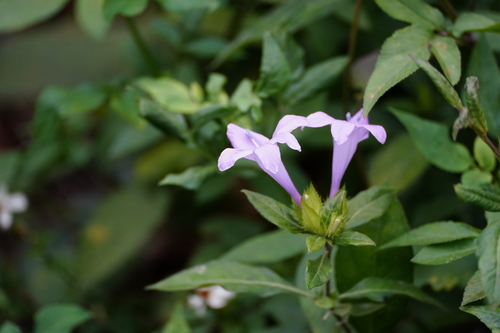
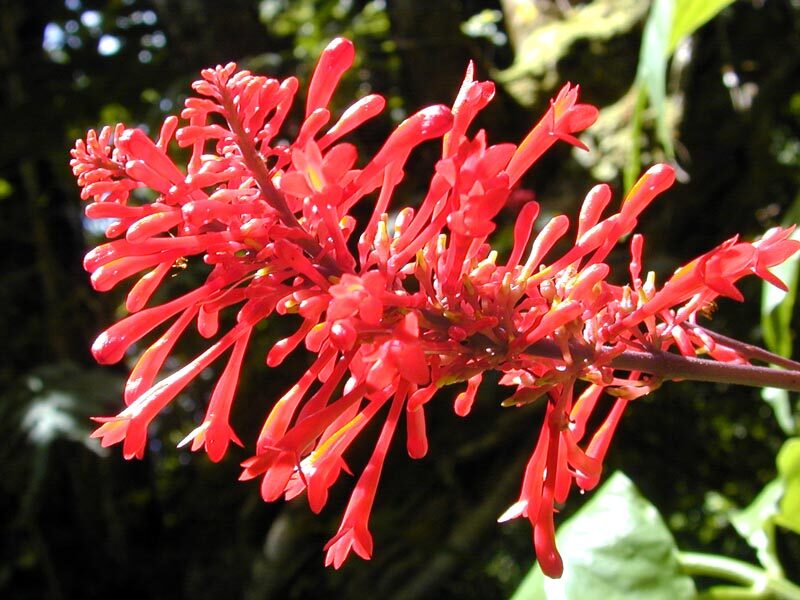
A shrub. It grows 3-6 m tall. The leaves are oblong and 12-35 cm long by 9-18 cm wide. They are hairy along the veins underneath. The flowers are at the top of the plant. They are in groups 14-18 cm long by 6-8 cm wide. The flowers are pink or red.
Edible Uses
The young flowers are eaten as a vegetable, typically boiled with rice, or dried and pounded into a spice or condiment. The plant is sold in local markets.
Traditional Uses
The young flowers are eaten as a vegetable. They are boiled with rice. They are also dried. They are also pounded and used as a spice or condiment.
Distribution
It is a tropical and subtropical plant. It grows in ravines and on the edge of forests between 400-1,600 m above sea level. In Yunnan.
Where It Grows
Asia, Bangladesh, Bhutan, China, Himalayas, India, Indochina, Laos, Myanmar, Northeastern India, SE Asia, Thailand, Tibet, Vietnam,
Other Information
It is sold in local markets.
Synonyms
Also Known As
Aluso, Dhapa tita, Geurim-heu, Heyavu, Kham-chhit, Ko-na oing, Kola bahak, Kolhou, Lamgi, Maidang, Mogang sudi, Nongmangkha, Pilamola, Tew-phot-saw, Totsiipa
References (10)
- Dutta, B., et al, 2016, Diversity and Ethnobotany of the Genus Phlogacanthus Nees in Assam, India. Int. J. Life. Sci. Scienti. Res., 2(4):472-477
- Medhi, P. & Borthakur, S. K., 2012, Phytoresources from North Cachur Hills of Assam -3: Edible plants sold at Hflong market. Indian Journal or Natural Products and Resources. 3(1) pp 84-109
- Medhi, P. & Borthakur, S. K., 2013, Wild edible plants sold by the Zeme Nagas at the makeshift market of Mahur, Dima Hasao district of Assam. Pleione 7(1): 84 - 93. 2013
- Medhi, P., Sarma, A and Borthakur, S. K., 2014, Wild edible plants from the Dima Hasao district of Assam, India. Pleione 8(1): 133-148
- Meitei, L. R., et al, 2022, An ethnobotanical study on the wild edible plants used by forest dwellers in Yangoupokpi Lokchao Wildlife Sanctuary, Manipur, India. Ethnobotany Research and Application 23:15
Show all 10 references Hide references
- Patiri, B. & Borah, A., 2007, Wild Edible Plants of Assam. Geethaki Publishers. p 94
- Pfoze, N. L., et al, 2012, Survey and assessment of floral diversity on wild edible plants from Senapati district of Manipur, Northeast India. Journal or Biodiversity and Environmental Sciences. 1(6):50-52
- Sarma, H., et al, 2010, Updated Estimates of Wild Edible and Threatened Plants of Assam: A Meta-analysis. International Journal of Botany 6(4): 414-423
- Srivastava, R. C., 2010, Traditional knowledge of Nyishi (Daffla) tribe of Arunachal Pradesh. Indian Journal of Traditional Knowledge. 9(1):26-37
- Thokchom, R., et al, 2016, Documentation and assessment of wild medicinal and edible flowers of valley districts of Manipur. International Journal of Research in Applied, Natural and Social Sciences. 4(11):13-20