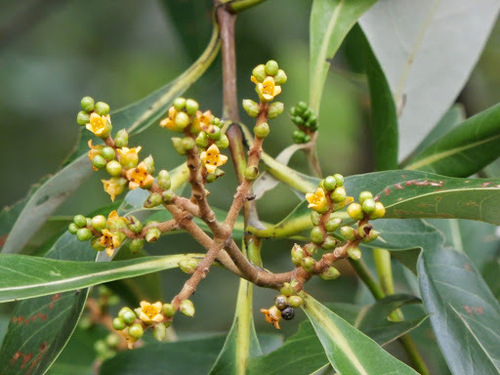
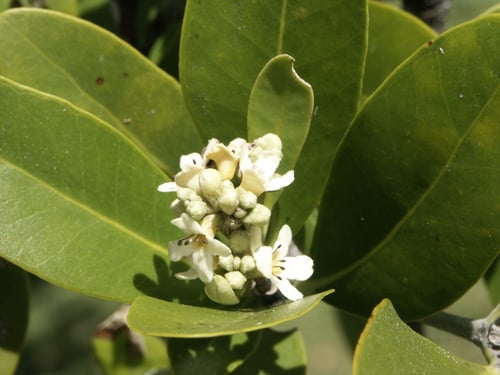
Staurogyne elongata
(Bl.) Kuntze
Cross flower
iNaturalist· cc-by-nc
(c) Naufal Urfi Dhiya'ulhaq, some rights reserved (CC BY-NC)
iNaturalist· cc-by-nc
(c) Naufal Urfi Dhiya'ulhaq, some rights reserved (CC BY-NC)
wikimedia· cc-by-sa
Wikimedia Commons - VpuipV
Description
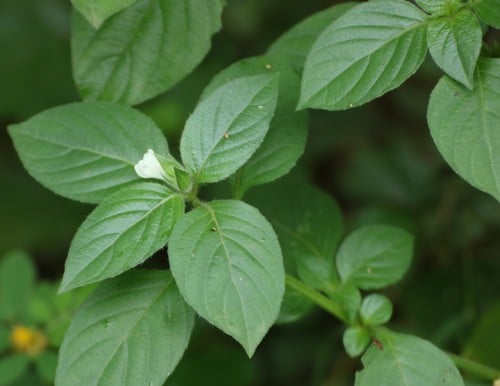
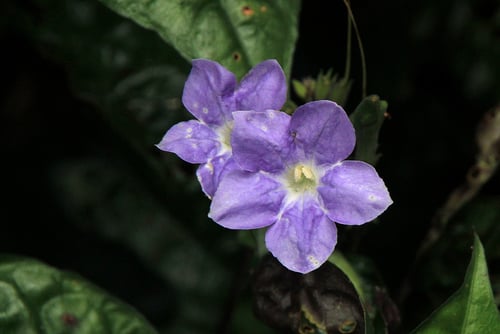
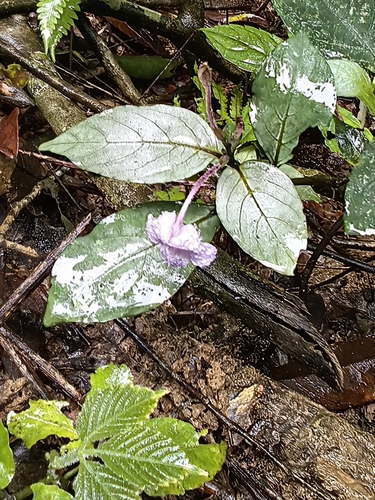
A herb. It keeps growing from year to year. It can be erect or lie over from the base. It grows 15-75 cm high. The stems are hairy. The leaves have long leaf stalks. The leaves are 5-17 cm long by 2-8 cm wide. The flowers are at the top of the plant. They are on a simple stalk but there can be some small branches at the base. The flowers are white or pale red.
Edible Uses
Young leaves are eaten raw, used in stews, or steamed as a condiment and spice.
Traditional Uses
The young leaves are eaten uncooked but also used in stews or steamed.
This uses section is brief — help expand it
Medicinal Uses
The roots are diuretic.
Distribution
A tropical plant. It grows in moist forests. It grows between 200 to 1,200 m above sea level. It needs a moist and humus rich soil.
Where It Grows
Asia, Indonesia, SE Asia,
Cultivation
Plants grow from seeds. Seedlings can be transplanted.
Other Information
It is sold in markets.
Synonyms
Also Known As
Pokok serawan kubang, Kakedjii, Kedjii, Rende
References (5)
- Burkill, I.H., 1966, A Dictionary of the Economic Products of the Malay Peninsula. Ministry of Agriculture and Cooperatives, Kuala Lumpur, Malaysia. Vol 2 (I-Z) p 2109
- Heyne, K., 1927, p 1375
- Martin, F.W. & Ruberte, R.M., 1979, Edible Leaves of the Tropics. Antillian College Press, Mayaguez, Puerto Rico. p 99, 172
- Ochse, J.J. et al, 1931, Vegetables of the Dutch East Indies. Asher reprint. p 2
- World Checklist of Useful Plant Species 2020. Royal Botanic Gardens, Kew