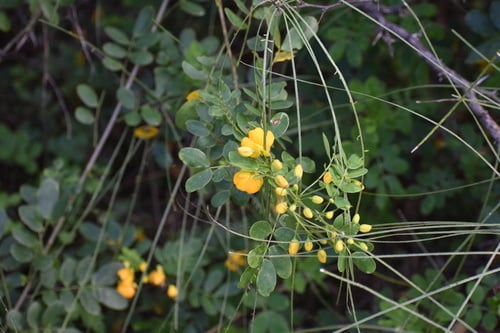
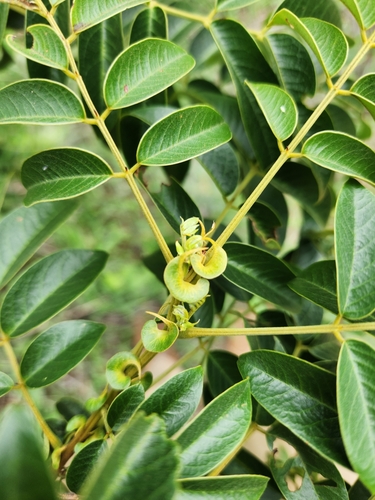
Cassia fistula
Linn.
Cassia, Golden Shower
iNaturalist· cc-by-nc
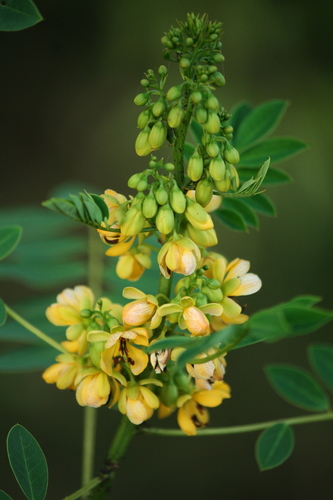
(c) Robin Gwen Agarwal, some rights reserved (CC BY-NC), uploaded by Robin Gwen Agarwal
iNaturalist· cc-by-nc
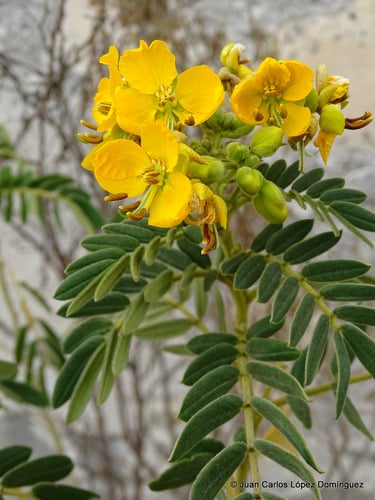
(c) Rujuta Vinod, some rights reserved (CC BY-NC), uploaded by Rujuta Vinod
iNaturalist· cc-by
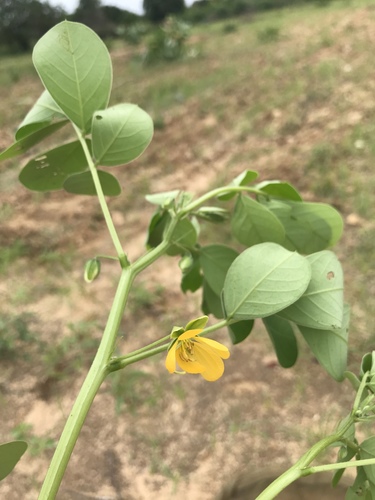
(c) Tony van Kampen, some rights reserved (CC BY), uploaded by Tony van Kampen
Summary
Source: WikipediaCassia fistula, also known as golden shower, purging cassia, Indian laburnum, kani konna, or pudding-pipe tree, is a flowering plant in the family Fabaceae. The species is native to the Indian subcontinent and adjacent regions of Southeast Asia. It is the official state flower of Kerala state and Delhi UT in India, as well as the national tree and flower of Thailand. It is also a popular ornamental plant and is also used in herbal medicine.
Description
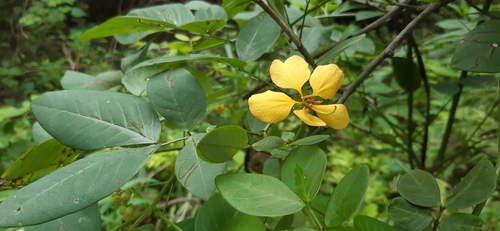
A deciduous or evergreen tree. It grows to 9-20 m high and spreads 3-5 m wide. The stem is erect and slender. Sometimes it has small buttresses. The leaves are 45-60 cm long and divided with 6-16 leaflets which are 15 cm long and 4-9 cm wide. The leaflets are wedge shaped at the base. The leaves are bright green. The leaf stalk is 7-10 cm long. The flowers are yellow and have a smell. They occur in long drooping sprays which can be 20-40 cm long. The flowers are 4 cm across. The fruit are brown pods. These can be 20-60 cm long and 1.5-2 cm wide. They are black and smooth. The seeds are brown and glossy. They are 1.3 cm long and flattened.
Edible Uses
The bark of Cassia fistula is an ingredient in betel paste, the mildly narcotic masticatory popular in parts of Asia. The flowers are edible and can be fried. Young leaves and flower buds are cooked as a vegetable; both have mild laxative properties. The fruit pulp has a sweet taste and mucilaginous texture and is also mildly laxative; it contains derived anthracenes. The pulverised seeds are used as a laxative. The fruit pulp is used as an ingredient in spiced Indian tobacco.
Traditional Uses
The young leaves and flower buds are cooked as a vegetable. The leaves are chopped small before cooking. The flowers are fried. The pulp of the pods is eaten but not the seeds. CAUTION: The pod pulp is a purgative but safe. It is only eaten in small quantities. The pulp is used as an ingredient in spiced Indian tobacco.
Medicinal Uses
The ripe pods and seeds are widely used in traditional and conventional medicine as a laxative. The root bark, leaves and flowers share laxative properties to a lesser degree. In modern medicine, the fruit pulp is sometimes used as a mild laxative in paediatrics. The pulp and leaves contain anthraquinone derivatives (around 2%) and glycosides responsible for the laxative effect, as well as pectins and mucilage. In-vitro and in-vivo tests show seed powder has amoebicidal and cysticidal activity against Entamoeba histolytica and could cure intestinal amoebiasis. The aqueous pod fraction has produced a significant decrease in glycaemia. Aqueous and methanolic bark extracts show significant antioxidant and anti-inflammatory activity. An alcohol extract of the leaves has demonstrated antibacterial activity in vivo against Staphylococcus aureus and Pseudomonas aeruginosa, and accelerated wound healing. A water extract of the leaves has shown antifungal activity against Trichophyton spp., Epidermatophyton floccosum and Microsporum ferruginum. The pods are used as a remedy for malaria, blood poisoning, anthrax, diabetes and dysentery. A decoction of the sweet, sticky pod pulp is taken for kidney stones, as a vermifuge and as a laxative; the pulp is extracted by bruising the pods, boiling in water and evaporating the decoction, or by opening pods at the sutures and removing pulp with a spatula. The pulp can turn sour if exposed to air or mouldy if stored in damp conditions. The bark or leaves are widely applied to skin problems. Broken bones and tropical ulcers are bandaged with bark scrapings and leaf sap. The heartwood is traditionally used as an anthelmintic. A root decoction is applied to purify wounds and ulcers. In India, roots are used to treat fevers. Leaf sennoside content is highest shortly after the onset of the rainy season when new leaves appear; pod sennoside content peaks at the mid-stage of fruit maturation when pods are pale brown.
Known Hazards
All parts of plant are poisonous if ingested.
Distribution
A tropical plant. It is native to India. It prefers a rich well drained soil. It needs a protected sunny position. It is drought and frost tender. Plants need a temperature above 16°C for growth. It grows all over India up to 1500 m altitude. It can grow in arid places. In XTBG Yunnan. It suits hardiness zones 10-12.
Where It Grows
Africa, Asia, Australia, Bangladesh, Bermuda, Cambodia, Central America, China, Colombia, Costa Rica, Dominican Republic, East Africa, East Timor, Egypt, Ethiopia, Grenada, Guiana, Guyana, Haiti, Hawaii, Himalayas, India, Indochina, Indonesia, Kenya, Laos, Malawi, Malaysia, Maldives, Marquesas, Mozambique, Myanmar, Nauru, Nepal, Nicaragua, Nigeria, Niue, Northeastern India, Pacific, Pakistan, Panama, Papua New Guinea, PNG, Philippines, Rotuma, Sao Tome and Principe, SE Asia, Senegal, Singapore, Sikkim, South America, Sri Lanka, Tanzania, Thailand, Timor-Leste, USA, Vanuatu, Vietnam, West Africa, West Indies, Zimbabwe,
Cultivation
Plants succeed in the dry to moist tropics and subtropics, growing in areas where the annual rainfall is in the range 500 - 2,700 mm and the average annual temperatures is 18 - 29°c. Plants are vulnerable to frost. Prefers a deep, well-drained, moderately fertile sandy loam and a position in full sun. It seems to favour calcareous and red, volcanic soils, but is also found on sandy and loamy soils with a pH of 5.5 - 8.7. Tolerates some shade. Established plants are fairly drought resistant. The plants are slow-growing and generally take 8 - 10 years from sowing to flowering. This period can be reduced by vegetative propagation. At the beginning of flowering, the whole crown is covered with flowers; sporadic flowering continues for up to 3 months. The seeds take about a year to ripen. The tree coppices well and produces root suckers freely. It does not compete well with weeds. Although it is a legume, the roots of this species lack nodulating ability and do not fix atmospheric nitrogen. Trees start flowering when 5 years old.
Propagation
Seed germination is improved by mechanical scarification or treatment with concentrated sulphuric acid for at least 45 minutes. Pre-soaking for 12–24 hours in warm water can also be tried. Sow in full light with an adequate water supply — seed can absorb up to three times its weight in water. Germination takes place within a few days. Direct sowing is practised in Asia, and seed can be stored for prolonged periods without loss of viability. Cuttings of half-ripe wood can also be used.
Other Uses
The bark is used for tanning and dyeing. The seeds are a potential commercial source of gum with binding properties superior in viscosity to other binders, making them a candidate for pharmaceutical tablet formulations. The heartwood is yellow, distinctly demarcated from white sapwood; the wood is reddish, hard, heavy, strong and durable, with a straight to slightly interlocked grain and moderately coarse texture. It is used for buildings, carts, fence posts and agricultural implements, and makes good-quality charcoal. The tree can be used as a pioneer species for restoring degraded lands and woodland; because it is not palatable to domestic animals, it is suitable for reforesting overgrazed areas. It attracts wildlife and is suitable for coppicing and carbon farming.
Production
It is fairly slow growing. Trees start flowering when 5 years old.
Other Information
The leaves are eaten in Africa. It is cultivated. It is unknown whether they are used in Papua New Guinea.
Notes
There are 100 Cassia species. This group has been revised to a smaller more consistent group. Also as Caesalpinaceae.
Synonyms
Also Known As
Ai-kadus, Alash, Ali, Amaltas, Amultas, Anmalthassh, Bahava, Bahawa, Banag, Banar lauri, Bandarlauri, Bangru, Bereska, Bhungadu, Bo-cap nuoc, Cana fistola, Cana pistula, Chaiya-pruek, Dhanbahera, Garmala, Gawkngu, Girimalah, Girmala, Golden rain tree, Golden rain, Guayaba cimarrona, Guolong liang, Honaru, Indian Laburnum, Kakke, Kanikkonna, Ka-zo, Khuun, Kiar, Kirwara, Konnai, Konnei, Koon, Koonna, Lom leng, Mai-lum, Muong hoang yen, Ngu, Ngu-gyi, Ngu-shwe, Ngushwe-ama, Phung-ril, Poe yow, Pohon trangguli, Pudding-pipe tree, Purging Cassia, Pwabet, Rajah kayu, Rajataru, Rajbrikh, Rajbriksh, Rajbrikshya, Rajvriksha, Rela, Riechpuhs, Sarakkondrai, Shonaru, Sonarkhi pump, Sonalu, Sonaru, Sondali, Sunari, Sundali, Suvarnaka, Trengguli
References (96)
- Ambasta S.P. (Ed.), 2000, The Useful Plants of India. CSIR India. p 109
- Bandyopadhyay, S. et al, 2009, Wild edible plants of Koch Bihar district, West Bengal. Natural Products Radiance 8(1) 64-72
- Barwick, M., 2004, Tropical and Subtropical Trees. A Worldwide Encyclopedic Guide. Thames and Hudson p 92
- Behera K. K., et al, 2008, Wild Edible Plants of Mayurbhanj District, Orissa, India. J. Econ. Taxon. Bot. Vol. 32 (Suppl.) pp 305-314
- Bhogaonkar, P. Y. & Devarkar, V. D., 2018, Inventory for ethnovegetable knowledge of the tribals of Satpura hill area-Melghat, Dist. Amravati (India), Plantae Scientia, 2018; Vol. 01 Issue 01: 01-08
Show all 96 references Hide references
- Bodkin, F., 1991, Encyclopedia Botanica. Cornstalk publishing, p 221
- Bohra, N., et al, 2017, Ethnobotany of wild edible plants traditionally used by the local people in the Ramnagar regions from Nainital District, Uttarakhand, India. Biolife 5(1): 12-19
- Bole, P.V., & Yaghani, Y., 1985, Field Guide to the Common Trees of India. OUP p 57
- Brahma, S., et al, 2013, Wild edible fruits of Kokrajhar district of Assam, North-East India, Asian Journal of Plant Science and Research 3(6):95-100
- Bremness, L., 1994, Herbs. Collins Eyewitness Handbooks. Harper Collins. p 42
- Brickell, C. (Ed.), 1999, The Royal Horticultural Society A-Z Encyclopedia of Garden Plants. Convent Garden Books. p 234
- Burkill, H. M., 1985, The useful plants of west tropical Africa, Vol. 3. Kew.
- Burkill, I.H., 1966, A Dictionary of the Economic Products of the Malay Peninsula. Ministry of Agriculture and Cooperatives, Kuala Lumpur, Malaysia. Vol 1 (A-H) p 481
- Chandrakumar, P., et al, 2015, Ethnobotanical studies of wild edible plants of Gond, Halba and Kawar tribes of Salekasa Taluka, Gondia District, Maharashtra State, India. International Research Journal of Pharmacy 6(8)
- Chandrashekara, U. M., 2009, Tree species yielding edible fruit in the coffee-based homegardens of Kerala, India: their diversity, uses and management. Food Sec. 1:361-370
- Condit, R., et al, 2011, Trees of Panama and Costa Rica. Princeton Field Guides. p 170
- Cowie, I, 2006, A Survey of Flora and vegetation of the proposed Jaco-Tutuala-Lore National Park. Timor-Lests (East Timor) www.territorystories.nt/gov.au p 45
- Cribb, A.B. & J.W., 1976, Wild Food in Australia, Fontana. p 82
- Cundall, P., (ed.), 2004, Gardening Australia: flora: the gardener's bible. ABC Books. p 337
- Dangol, D. R., 2002, Economic uses of forest plant resources in western Chitwan, Nepal. Banko Janakari, 12(2): 56-64
- Dangol, D. R. et al, 2017, Wild Edible Plants in Nepal. Proceedings of 2nd National Workshop on CUAOGR, 2017.
- Devarkar, V. D., et al, 2011, Dietary and Medicinal Significance of Wild Vegetables from Osmanabad Region, Maharashtra (India). Life sciences Leaflets 11:317-332.
- Dey, A. & Mukhererjee, A., 2015, Living and Survival Amidst Hunger: Wild Edible Botanicals as a Prime Forest Productivity in the Rural Purulia District, West Bengal, India from Colonial to Present. Research Journal of Forestry 9(3): 71-86
- Dunlop, C.R., Leach, G.J. & Cowie, I.D., 1995, Flora of the Darwin Region. Vol 2. Northern Territory Botanical Bulletin No 20. p 30
- Ekman Herbarium records Haiti
- Engel, D.H., & Phummai, S., 2000, A Field Guide to Tropical Plants of Asia. Timber Press. p 25, 57, 96
- Etherington, K., & Imwold, D., (Eds), 2001, Botanica's Trees & Shrubs. The illustrated A-Z of over 8500 trees and shrubs. Random House, Australia. p 186
- Facciola, S., 1998, Cornucopia 2: a Source Book of Edible Plants. Kampong Publications, p 67
- FAO, 1988, Traditional Food Plants, FAO Food and Nutrition Paper 42. FAO Rome p 161
- Flora of Australia Volume 12, Mimosaceae (excl. Acacia) Caesalpiniaceae. Melbourne: CSIRO Australia (1998) p 76, 77
- Gardner, S., et al, 2000, A Field Guide to Forest Trees of Northern Thailand, Kobfai Publishing Project. p 170
- Gautam, R. S., et al, 2020, Wild Edible Fruits of Nepal. Int. J. Appl. Sci. Biotechnol. Vol 8(3): 289-304
- Gunjatkar, N., & Vartak, V.D., 1982, Enumeration of wild edible legumes from Pune District, Maharashtra State. J.Econ. Tax. Bot. Vol 3 pp 1-9
- Hall, N. et al, 1972, The Use of Trees and Shrubs in the Dry Country of Australia, AGPS, Canberra. p 207
- Hearne, D.A., & Rance, S.J., 1975, Trees for Darwin and Northern Australia. AGPS, Canberra p 39, Pl 11
- Hedrick, U.P., 1919, (Ed.), Sturtevant's edible plants of the world. p 174
- Hibbert, M., 2002, The Aussie Plant Finder 2002, Florilegium. p 61
- Hossain, U. & Rahman, A., 2018, Study and quantitative analysis of wild vegetable floral diversity available in Barisal district, Bangladesh. Asian J. Med. Biol. Res. 2018, 4 (4), 362-371
- Hussey, B.M.J., Keighery, G.J., Cousens, R.D., Dodd, J., Lloyd, S.G., 1997, Western Weeds. A guide to the weeds of Western Australia. Plant Protection Society of Western Australia. p 124
- Jackes, B.R., 2001, Plants of the Tropics. Rainforest to Heath. An Identification Guide. James Cook University. p 45
- Jadhav, R., et al, 2015, Forest Foods of Northern Western Ghats: Mode of Consumption, Nutrition and Availability. Asian Agri-History Vol. 19, No. 4: 293-317
- Kar, A., & Borthakur, S. K., 2008, Wild vegetables of Karbi - Anglong district, Assam, Natural Product Radiance, Vol. 7(5), pp 448-460
- Kar, A., et al, 2013, Wild Edible Plant Resources used by the Mizos of Mizoram, India. Kathmandu University Journal of Science, Engineering and Technology. Vol. 9, No. 1, July, 2013, 106-126
- Kiran, K. C., et al, 2019, Diversity and Seasonal Availability of Potential Wild Edible Plants from Vidarbha Region of Maharashtra State, India. Int.J.Curr.Microbiol.App.Sci (2019) 8(2): 1434-1446
- Krishen P., 2006, Trees of Delhi, A Field Guide. DK Books. p 228
- Kumar, A., 2013, Ethnobotanical study of wild vegetables used by rural communities of Kannauj district, Uttar Pradesh, India. Emir. J. Food Agric. 2013. 25 (10): 760-766
- Lazarides, M. & Hince, B., 1993, Handbook of Economic Plants of Australia, CSIRO. p 50
- Llamas, K.A., 2003, Tropical Flowering Plants. Timber Press. p 202
- Lord, E.E., & Willis, J.H., 1999, Shrubs and Trees for Australian gardens. Lothian. p 212
- Manandhar, N.P., 2002, Plants and People of Nepal. Timber Press. Portland, Oregon. p 139
- Marandi, R. R. & Britto, S. J., 2015, Medicinal Properties of Edible Weeds of Crop Fields and Wild plants Eaten by Oraon Tribals of Latehar District, Jharkhand. International Journal of Life Science and Pharma Research. Vo. 5. (2) April 2015
- Martin, F.W. & Ruberte, R.M., 1979, Edible Leaves of the Tropics. Antillian College Press, Mayaguez, Puerto Rico. p 198
- McMakin, P.D., 2000, Flowering Plants of Thailand. A Field Guide. White Lotus. p 20
- Morley, B. & Everard, B., 1970, Wild Flowers of the World. Ebury press. Plate 112
- Pandy, R. K. & Saini, S. K., 2007, Edible plants of tropical forests among tribal communities of Madhya Pradesh. Indian Journal of Traditional Knowledge. 6(1), pp 185-190
- Patiri, B. & Borah, A., 2007, Wild Edible Plants of Assam. Geethaki Publishers. p 44
- Peekel, P.G., 1984, (Translation E.E.Henty), Flora of the Bismarck Archipelago for Naturalists, Division of Botany, Lae, PNG. p 218. 217
- Pham-Hoang Ho, 1999, An Illustrated Flora of Vietnam. Nha Xuat Ban Tre. p 847
- Phon, P., 2000, Plants used in Cambodia. © Pauline Dy Phon, Phnom Penh, Cambodia. p 138
- Plants of Haiti Smithsonian Institute http://botany.si.edu/antilles/West Indies
- Polunin, O., & Stainton, A., 2006, Flowers of the Himalaya, Oxford India Paperbacks. p 90
- Prabha, Y. P., et al, 2010, Documentation of Wild Edible Plants of Melghat Forest, Dist. Amravati, Maharashtra State, India. Ethnobotanical Leaflets 14: 751-58, 2010.
- Prafulla, S., 2017, Wild Food Diversity of Nawegaon-Nagzira Tiger Reserve in Gondia-Bhandara district of Maharashtra, India. Int. J. of Life Sciences, 2017, Vol. 5 (4): 620-626
- Rahangdale, D.R. & Rahangdale, S.S., 2014, Potential Wild Edible Plant Resources from Maharashtra Future Prospects for their Conservation and Improvement. Life Science Leaflets. http://lifesciencesleaflets.ning.com
- Recher, P, 2001, Fruit Spirit Botanical Gardens Plant Index. www.nrg.com.au/~recher/ seedlist.html p 5
- Reddy, B. M., 2012, Wild edible plants of Chandrapur district, Maharashtra, India. Indian Journal of Natural Products and Resources. 3(1) pp 110-117
- Royal Botanic Gardens, Kew (1999). Survey of Economic Plants for Arid and Semi-Arid Lands (SEPASAL) database. Published on the Internet; http://www.rbgkew.org.uk/ceb/sepasal/internet [Accessed 21st April 2011]
- Sahni, K.C., 2000, The Book of Indian Trees. Bombay Natural History Society. Oxford. p 84
- Sarma, H., et al, 2010, Updated Estimates of Wild Edible and Threatened Plants of Assam: A Meta-analysis. International Journal of Botany 6(4): 414-423
- Seidemann J., 2005, World Spice Plants. Economic Usage, Botany, Taxonomy. Springer. p 88
- Selvam, V., 2007, Trees and shrubs of the Maldives. RAP Publication No. 2007/12 p 56
- Sharma, B.D., & Lakshminarasimhan, P., 1986, Ethnobotanical Studies on the Tribals of Nasik District (Maharashtra). J. Econ. Tax. Bot. Vol. 8 No. 2 pp 439-446
- Shrestha, S., 2021, Wild Edible Plants of Dhankuta, Eastern Nepal. Rupantaran : A Multidisciplinary Journal Vol. V : pp 100-109, September, 2021 p 103
- SHORTT, (As Cathartocarpus fistula)
- Staples, G.W. and Herbst, D.R., 2005, A tropical Garden Flora. Bishop Museum Press, Honolulu, Hawaii. p 311
- Sp. pl. 1:377. 1753
- Sujanapal, P., & Sankaran, K. V., 2016, Common Plants of Maldives. FAO & Kerala FRI, p 72
- Sukarya, D. G., (Ed.) 2013, 3,500 Plant Species of the Botanic Gardens of Indonesia. LIPI p 181
- Sundriyal, M., et al, 1998, Wild edibles and other useful plants from the Sikkim Himalaya, India. Oecologia Montana 7:43-54
- Sundriyal, M., et al, 2004, Dietary Use of Wild Plant Resources in the Sikkim Himalaya, India. Economic Botany 58(4) pp 626-638
- Sutjaritjai, N., et al, 2019, Traditional Uses of Leguminosae among the Karen in Thailand. Plants 2019, 8, 600 p 5
- Swaminathan, M.S., and Kochnar, S.L., 2007, An Atlas of Major Flowering Trees in India. Macmillan. p 112
- Tamil herbs, 2007, Edible Plants of the Tropical Dry Evergreen Forest.
- Teron, R. & Borthakur, S. K., 2016, Edible Medicines: An Exploration of Medicinal Plants in Dietary Practices of Karbi Tribal Population of Assam, Northeast India. In Mondal, N. & Sen, J.(Ed.) Nutrition and Health among tribal populations of India. p 150
- Thapa, L. B., et al, 2014, Wild Edible Plants used by endangered and Indigenous Raji Tribe in Western Nepal. International Journal of Applied Sciences and Biotechnology. Vol 2(3):243-252
- Toppo, P. et al, 2016, Wild edible plants of Dhamtari district of Chhattisgarh, India. Van Sangyan Vol. 3, No. 4
- Van Sam, H. et al, 2004, Trees of Laos and Vietnam: A Field Guide to 100 Economically or Ecologically Important Species. Blumea 29 (2004) 201-349
- Verdcourt, B., 1979, Manual of New Guinea Legumes. Botany Bulletin No 11, Division of Botany, Lae, Papua New Guinea. p 40
- WATT,
- Wild edible plants of Himachal Pradesh
- World Checklist of Useful Plant Species 2020. Royal Botanic Gardens, Kew
- www.worldagroforestrycentre.org/treedb/
- Xu, You-Kai, et al, 2004, Wild Vegetable Resources and Market Survey in Xishuangbanna, Southwest China. Economic Botany. 58(4): 647-667.
- Young, J., (Ed.), 2001, Botanica's Pocket Trees and Shrubs. Random House. p 203
- Zeven, A. C. & de West, J. M. J., 1982, Dictionary of cultivated plants and their regions of diversity. Wageningen. p 76
- Zuchowski W., 2007, Tropical Plants of Costa Rica. A Zona Tropical Publication, Comstock Publishing. p 30