Eriosema laurentii
De Willd.
iNaturalist· cc-by-nc
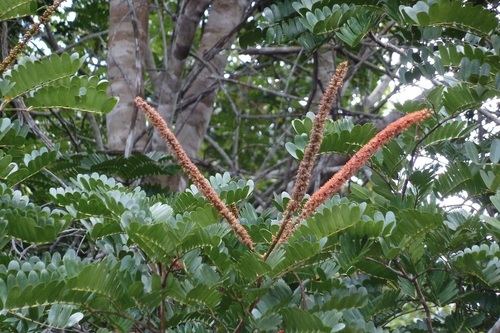
(c) Carel Jongkind, some rights reserved (CC BY-NC), uploaded by Carel Jongkind
Description
A herb or woody under shrub. It keeps growing from year to year. It grows 1.3 m high.
This description is brief — help expand it
Edible Uses
The plant is used for food. We have no further information, but this report probably refers to the leaves being used as a cooked food, since we have a report for Eriosema glomeratum (often confused with this species) being used as a spinach.
Medicinal Uses
The plant has a wide range of traditional uses in Africa, where it is considered to be generally healing and is used in the treatment of eye complaints, pulmonary troubles, naso-pharyngeal afflictions, skin problems including leprosy, venereal diseases etc. It is considered to be laxative. The plant is a popular treatment for infertility and gynaecological or menstrual complaints in Cameroon. A methanol extract of the leaves and stems has shown agonistic activities at the estrogen receptor α and the aryl hydrocarbon receptor, and prevented menopause-related symptom. The methanol extract of the aerial parts of Eriosema laurentii does not seem to have an undesirable influence on the endometrium, but might prevent vaginal dryness and bone mass loss and improve the lipid profile..
Known Hazards
Phytochemistry: fish-poisons.
Distribution
It is a tropical plant. It grows in moist sites in grassy and wooded savannah. It grows along river banks.
Where It Grows
Africa, Guinea, Guinée, Guinea-Bissau, Nigeria, Senegal, Sierra Leone, West Africa,
Propagation
Like many species within the family Fabaceae, once they have ripened and dried the seeds of this species may benefit from scarification before sowing in order to speed up and improve germination. This can usually be done by pouring a small amount of nearly boiling water on the seeds (being careful not to cook them!) and then soaking them for 12 - 24 hours in warm water. By this time they should have imbibed moisture and swollen - if they have not, then carefully make a nick in the seedcoat (being careful not to damage the embryo) and soak for a further 12 hours before sowing.
Synonyms
Also Known As
Acobogel, Otu
References (3)
- Burkill, H. M., 1985, The useful plants of west tropical Africa, Vol. 3. Kew.
- Grubben, G. J. H. and Denton, O. A. (eds), 2004, Plant Resources of Tropical Africa 2. Vegetables. PROTA, Wageningen, Netherlands. p 561
- World Checklist of Useful Plant Species 2020. Royal Botanic Gardens, Kew