Eriosema lebrunii
Staner & De Craene
iNaturalist· cc-by-nc
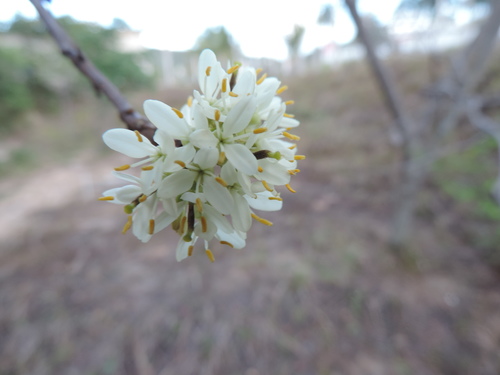
(c) Bart Wursten, niektóre prawa zastrzeżone (CC BY-NC), przesłane przez użytkownika Bart Wursten
Description
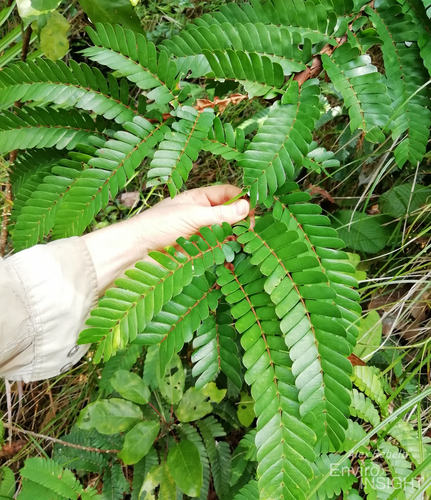
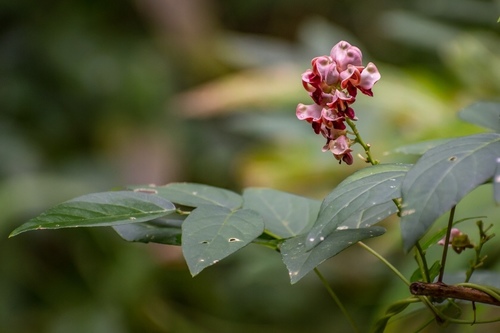
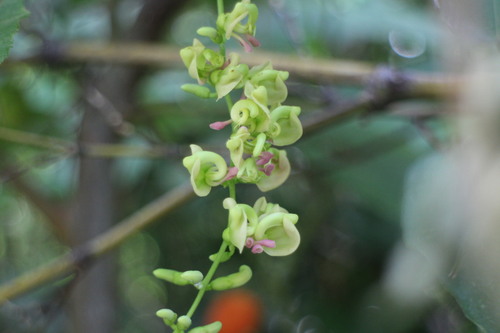
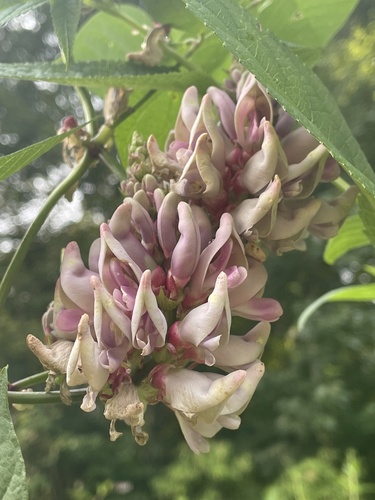
A herb that keeps growing from year to year. It has a few branches. It is 15-30 cm long. It has turnip shaped roots. These are 1.5 cm across by 3 cm long. The stems are slender. They can have a white coating. The leaves have one leaflet. They are 2-10 cm long by 0.5-2 cm wide. They are broadly sword shaped and hairy above. The flowers are greenish-yellow. The pods are 6-7 mm long by 4-5 mm wide. They are oblong and covered with rusty hairs. The seeds are greenish-brown. They are speckled with dark purple. They are 2.5 mm long by 1.5 mm wide.
Edible Uses
Root. The globose tuber is 20 - 30mm x 15mm.
Distribution
It is a tropical plant. It grows in savannah and swamps in mountain locations in West Africa. It grows between 1,650-2,400 m above sea level.
Where It Grows
Africa, Burundi, Cameroon, Central Africa, Congo DR , East Africa, Malawi, Mozambique, Nigeria, Southern Africa, Tanzania, West Africa, Zimbabwe,
Cultivation
This species has a symbiotic relationship with certain soil bacteria; these bacteria form nodules on the roots and fix atmospheric nitrogen. Some of this nitrogen is utilized by the growing plant but some can also be used by other plants growing nearby.
Propagation
Like many species within the family Fabaceae, once they have ripened and dried the seeds of this species may benefit from scarification before sowing in order to speed up and improve germination. This can usually be done by pouring a small amount of nearly boiling water on the seeds (being careful not to cook them!) and then soaking them for 12 - 24 hours in warm water. By this time they should have imbibed moisture and swollen - if they have not, then carefully make a nick in the seedcoat (being careful not to damage the embryo) and soak for a further 12 hours before sowing.
Synonyms
References (3)
- Burkill, H. M., 1985, The useful plants of west tropical Africa, Vol. 2. Kew.
- Nzigidahera, B., 2006, Assessment of Socio-cultural, Economic Characteristics and Livelihood of Riparian Population of the Kibira National Park. (Rukoma-Mutana locality). UNDP p 30
- World Checklist of Useful Plant Species 2020. Royal Botanic Gardens, Kew