Gymnosporia senegalensis
(Lam.) Loes.
Confetti spikethorn, Red spikethorn
iNaturalist· cc-by-nc
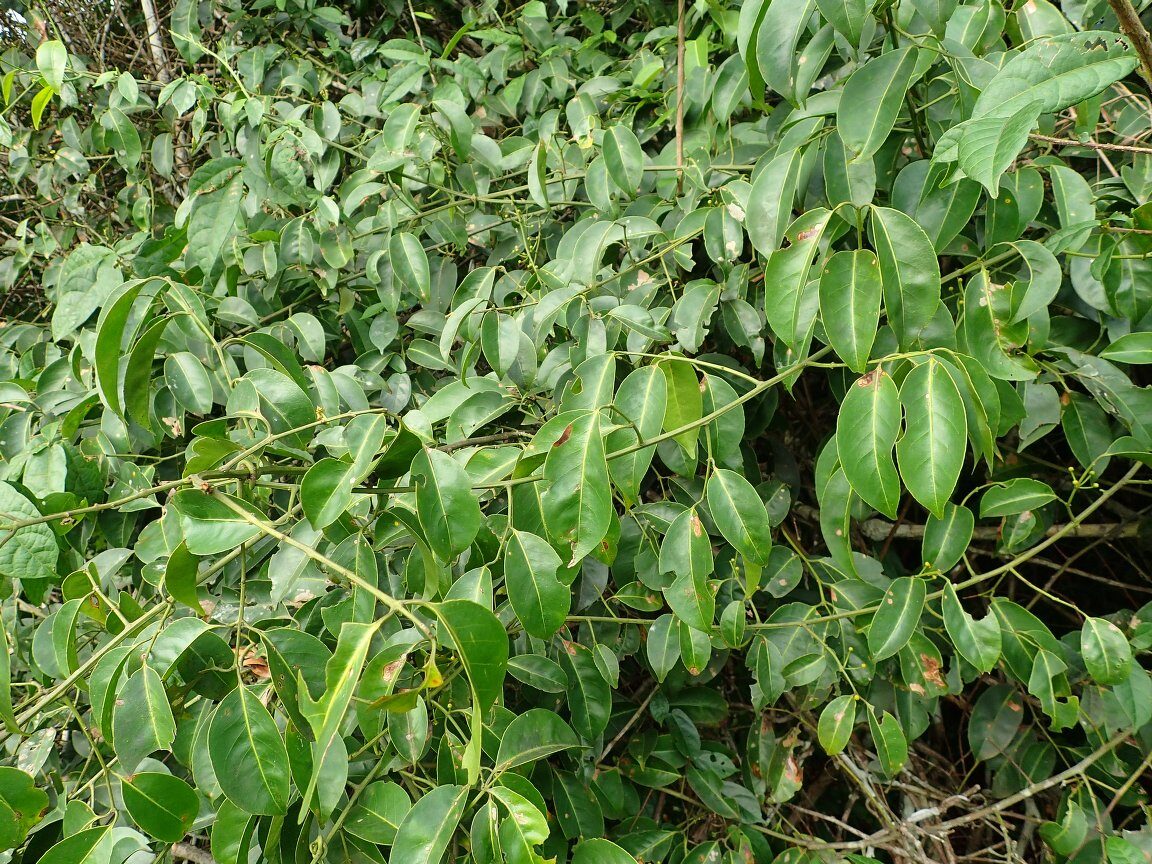
(c) Alex Dreyer, some rights reserved (CC BY-NC), uploaded by Alex Dreyer
iNaturalist· cc-by-nc
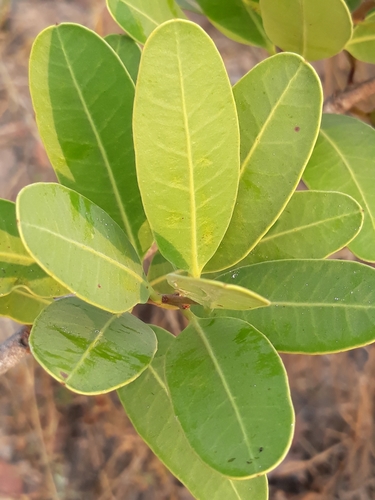
(c) faluke, some rights reserved (CC BY-NC), uploaded by faluke
iNaturalist· cc-by-nc
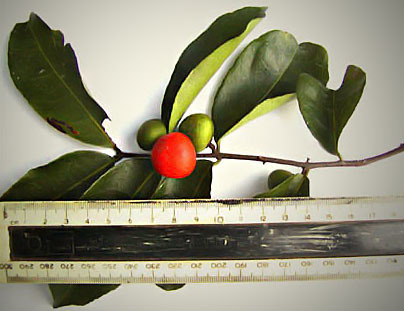
(c) Leonid Rasran, some rights reserved (CC BY-NC), uploaded by Leonid Rasran
Description
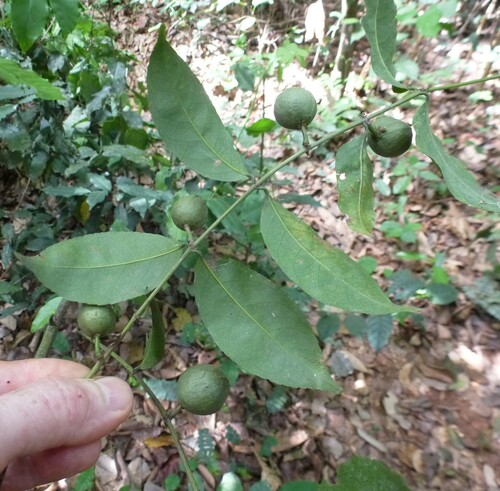
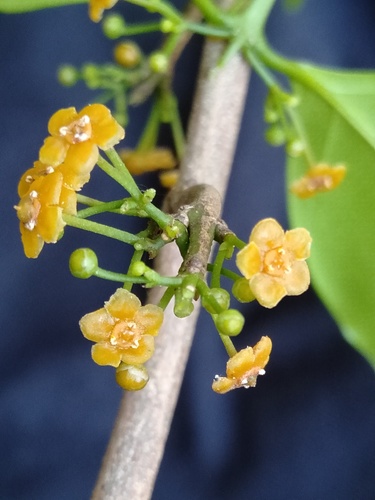
A shrub or small tree. It can grow 9 m tall. The leaves are oval and have fine teeth around the edge. The flowers are greenish-white to pale yellow. The capsule has 2 round sections and is red.
Edible Uses
Its wood, hard and fine-grained, is used as fuel because it provides good firewood and charcoal. Its leaves are used as an aphrodisiac and central nervous system stimulant.
Medicinal Uses
The plant is commonly used in traditional medicine in Africa, with various parts of the plant being utilized. Research has shown the presence of various active compounds. The leaves and branches contain some dulcite and tannins. The leaves also contain a wax which is mainly esters of ceryl alcohol, and also a sterol, flavenol, Slavonic glycoside, a holoside, and a substance which appears to be a rubber. Saponosides, flavone derivatives and tannins are present in the bark. The leaves are vermifuge and have a slight laxative action. They are commonly used in the treatment of gastro-intestinal troubles and as a vermifuge in treating dysentery. The powdered dried leaves are mixed with milk and used as a vermifuge for children. The young shoots are employed to relieve blennorrhoea. Sap from the pounded leaves, combined with sugar, is used in the treatment of schistosomiasis and, combined with a root-decoction of Cyperus papyrus, is used to treat female sterility. A leaf-decoction is widely used as a mouthwash for toothache, tooth-abscesses and mouth-infections. The green leaves are pounded up and used as a plaster for sores. A decoction of leafy twigs is used to bathe new-born infants. The leaves, combined with those of Crossopteryx febrifuga, are decocted for giving as an enema for strengthening debilitated children. The leaf-sap is recommended for use in eye-trouble. The bark is commonly used in Senegal for treating infants with fevers, loss of appetite and general ill-health, and for adults with jaundice and costal pains. It is also considered excellent for treating gastric ulcers, obviating surgical intervention. A decoction of the stem bark, combined with the stem barks of Ozoroa insignis, Entada abyssinica and Lannea schimper plus the aerial parts of Rhynchosia resinosa, is used in the treatment of peptic ulcers. This decoction has been shown to have a dose-dependant protective activity and also to have moderate antibacterial activity A bark-decoction is used for washing sores - after which the powdered bark, along with the bark of Terminalia macroptera, is applied as a dressing.. The root is slightly bitter in taste and has a mild laxative action. It is widely used in the soudanian region for all gastro-intestinal troubles. The root is used against tertiary syphilis, female complaints, leprosy, dysentery, blennorrhoea, etc. The root-bark is used in infusions for treating long-standing dysentery, and a decoction is used to relieve pain especially at childbirth. A root-infusion is applied externally to sores. A decoction of seeds is taken in the treatment of catarrh
Known Hazards
Though the leaves are widely used in medicines they are free enough of toxic substances not to kill laboratory test mice, unlike the root-bark which can cause a 40% mortality. A leaf-infusion does however intoxicate fish.
Distribution
It is a tropical plant.
Where It Grows
Africa, Benin, Botswana, Burkina Faso, East Africa, Kenya, Malawi, Mozambique, Namibia, South Africa, Southern Africa, West Africa, Zimbabwe,
Cultivation
A plant of dry areas in the tropics, it can grow in areas where the mean annual rainfall is as low as 700mm. Succeeds in most soils. A dioecious species, both male and female forms need to be grown if fruit and seed are required..
Other Uses
In India an insecticidal action is claimed for the powdered bark mixed with mustard oil in dusting on the head for Pediculus capitis, but inconclusive insecticidal activity for the root and bark is also reported. The wood is whitish to red-brown, hard, fine-grained and durable. The stems are commonly used to make stools, wooden platters and spoons, axe handles etc. Cattle-bells made from the wood have a characteristic sound resulting in the Turkana name for the tree: koro-koro-koro. The branches with their spiny armature are favoured by cattle-folk for making intrusion-proof cattle-enclosures. The plant rapidly colonizes fallow land. This comment, along with the plant's tolerance of soils, make it a potentially good pioneer species for restoring woodland in drier areas.
Synonyms
Also Known As
Bloupendoring, Bobue, Chichangua, Muiua
References (5)
- Achigan-Dako, E, et al (Eds), 2009, Catalogue of Traditional Vegetables in Benin. International Foundation for Science.
- Dansi, A., et al, 2008, Traditional leafy vegetables and their use in the Benin Republic. Genet Resour Crop Evol (2008) 55:1239–1256
- Mutie, F. G., 2020, Conservation of Wild Food Plants and Their Potential for Combatting Food Insecurity in Kenya as Exemplified by the Drylands of Kitui County. Plants 2020, 9, 1017
- Mutie, F. M., et al, 2023, Important Medicinal and Food Taxa (Orders and Families) in Kenya, Based on Three Quantitative Approaches. Plants 2023, 12, 1145
- World Checklist of Useful Plant Species 2020. Royal Botanic Gardens, Kew