Hippocratea africana
(Willd.) Loes.
African paddle-pod
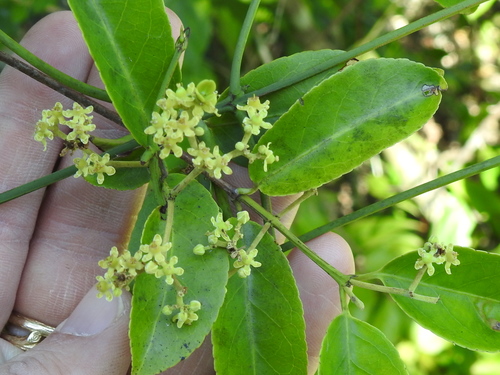
iNaturalist· cc-by-nc
(c) madzhuta, some rights reserved (CC BY-NC)
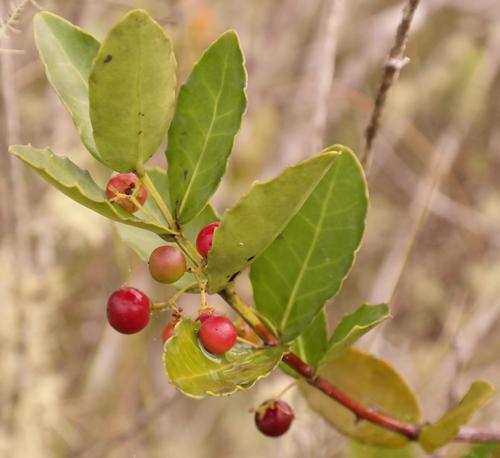
iNaturalist· cc-by-nc
(c) Troos van der Merwe, some rights reserved (CC BY-NC)
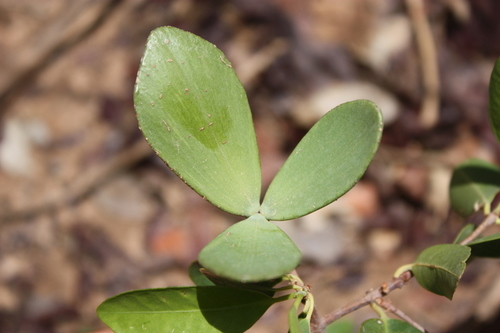
iNaturalist· cc-by-nc
(c) Troos van der Merwe, some rights reserved (CC BY-NC)
Description
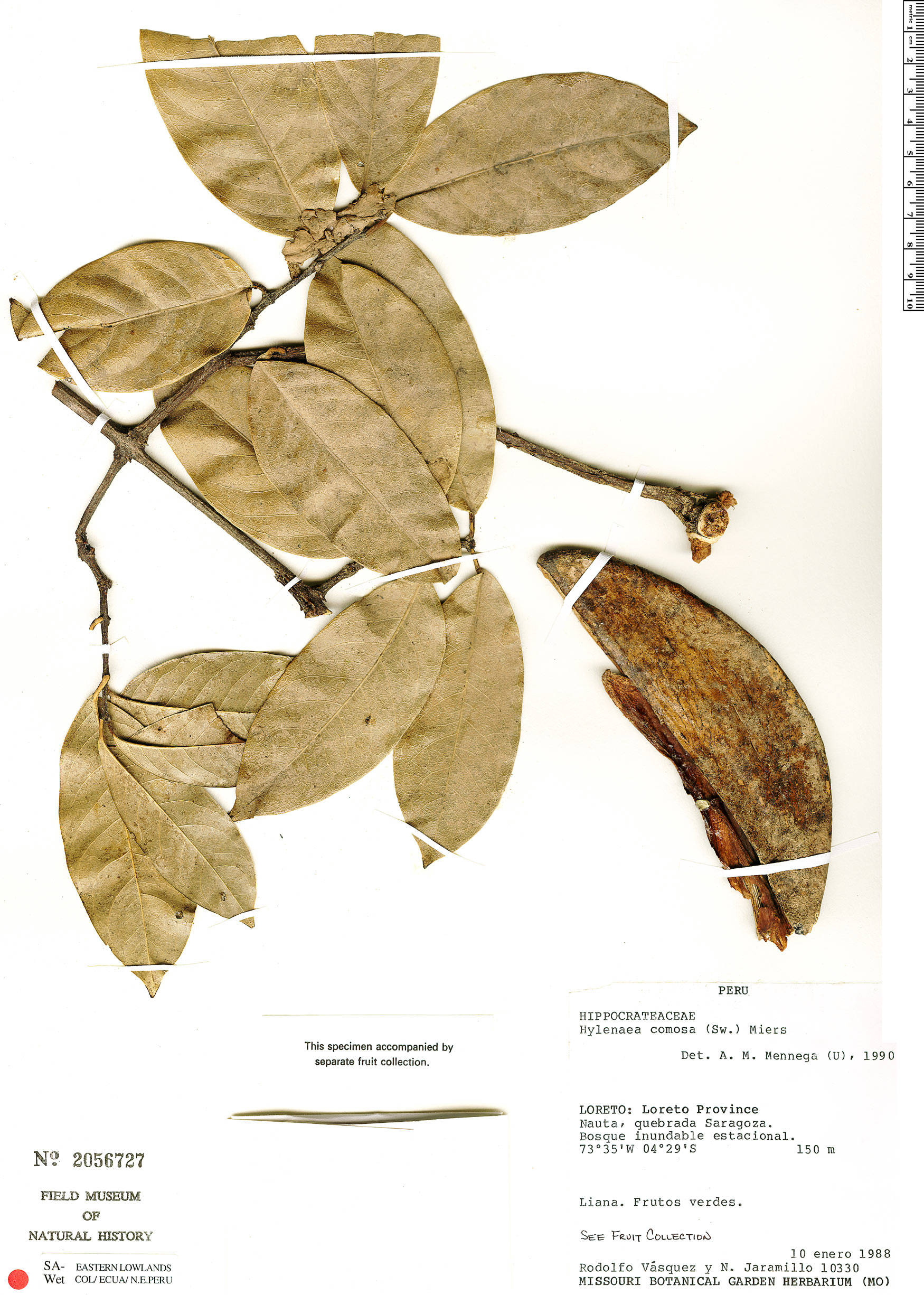
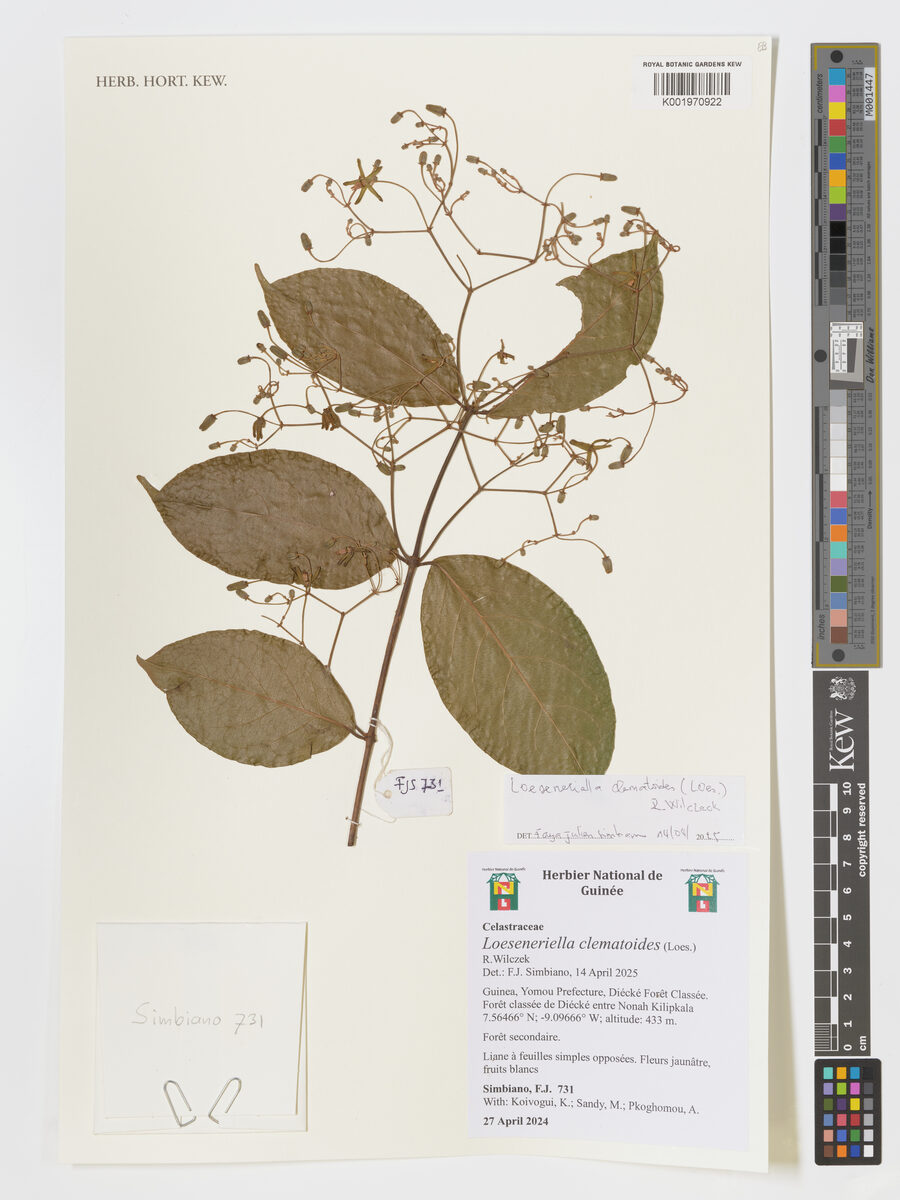
A shrub or creeper. It can be 15 m long. The young branches are green and 4 angled. The leaves are opposite and broadly oval. There can be teeth along the edge and the edge is often rolled under. The flowers are in clusters in the axils of leaves or at the ends of branches. They are green with red stigma. The fruit are paddle shaped pods. They are in groups of 1-3.
Edible Uses
The fruit is eaten, and the root is prepared as a drink.
Medicinal Uses
The root is used medicinally and has anti-malarial activity.
Distribution
A tropical plant. It grows in thickets and along rivers. It grows up to 1,250 m above sea level. It grows in savannah woodland.
Where It Grows
Africa, Botswana, East Africa, Gambia, Ghana, Guinea-Bissau, Kenya, Malawi, Mozambique, Namibia, Nigeria, Senegal, Sierra Leone, Southern Africa, Tanzania, West Africa, Zimbabwe,
Cultivation
Plants are grown from seeds.
Notes
There are about 100 Hippocratea species. They grow in the tropics. The root is used for medicine. It also has anti-malarial activity.
Synonyms
References (1)
- Udo, E. S., et al, 2009, Life-form and Density of Valuable Non-timber Plants in Ukpom Community Forest, Akwa Ibom State, Nigeria. African Research Review 3(3) p 8