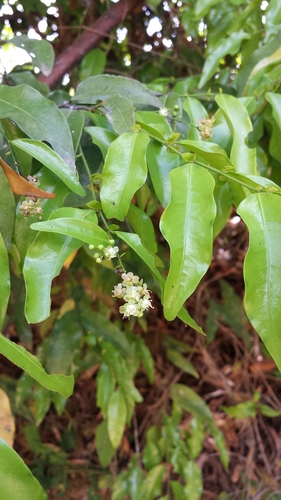
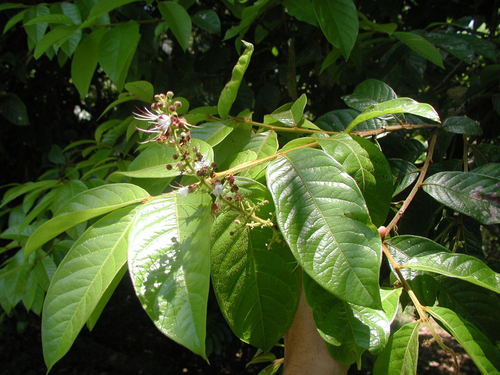
Licania apetala
(E. Mey.) Fritsch
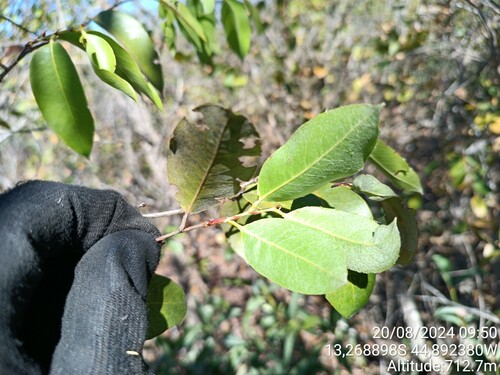
iNaturalist· cc-by-nc-sa
(c) Mauricio Mercadante, some rights reserved (CC BY-NC-SA)
iNaturalist· cc-by-nc-sa
(c) Mauricio Mercadante, some rights reserved (CC BY-NC-SA)
iNaturalist· cc-by-nc-sa
(c) Mauricio Mercadante, some rights reserved (CC BY-NC-SA)
Description
A tropical tree in the Chrysobalanaceae family with edible fruit.
This description is brief — help expand it
Edible Uses
The fruit is eaten.
Distribution
It is a tropical plant.
Where It Grows
Amazon, Bolivia, Brazil, Colombia, Guiana, Guianas, Guyana, Peru, South America, Suriname, Venezuela,
Cultivation
Often found on sandy soils in the wild.
Other Uses
The bark is burned, and the ashes are mixed with clay for making pots. The wood is strong. It is used for general construction and carpentry. We have no more specific information on the qualities of this wood, the following is the general description for the genus:- The wood is a pale or pinkish brown with a greyish tinge, sometimes darkening on exposure, and with long, broad, prominent, dark reddish brown gum streaks. Straight-grained; medium or coarse-textured; when seasoned it is odourless and tasteless. The wood is heavy, hard, strong, and durable. It is easy to split and takes a smooth, fairly lustrous polish. It should be suitable for heavy construction
Synonyms
Also Known As
Ajuru, Apacharama, Caraipe, Caripe
References (3)
- Kermath, B. M., et al, 2014, Food Plants in the Americas: A survey of the domesticated, cultivated and wild plants used for Human food in North, Central and South America and the Caribbean. On line draft. p 485
- Martin, F. W., et al, 1987, Perennial Edible Fruits of the Tropics. USDA Handbook 642 p 92
- Roa, J. A. G. & Boada, D. S. G., 2018, Fundación para el Fortalecimiento de la Fruticultura y Plantas Alimenticias no Convencionales en Colombia.