Annona dolabripetala
Raddi
Lancewood, Laurel leaf annona
iNaturalist· cc-by-nc
(c) Geovane Siqueira, some rights reserved (CC BY-NC), uploaded by Geovane Siqueira
iNaturalist· cc-by-nc
(c) Pedro Igor Monteiro, some rights reserved (CC BY-NC), uploaded by Pedro Igor Monteiro
iNaturalist· cc-by-nc
(c) Geovane Siqueira, some rights reserved (CC BY-NC), uploaded by Geovane Siqueira
Description
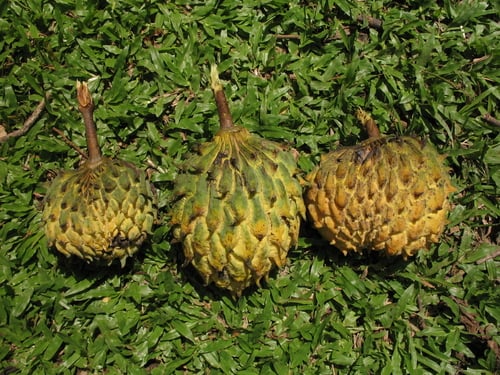
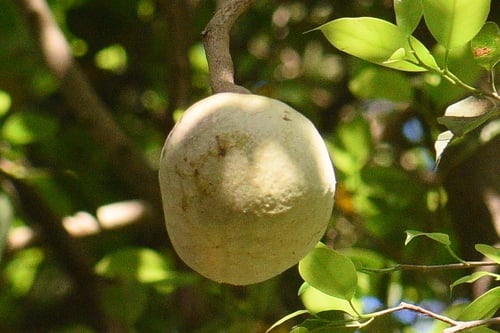
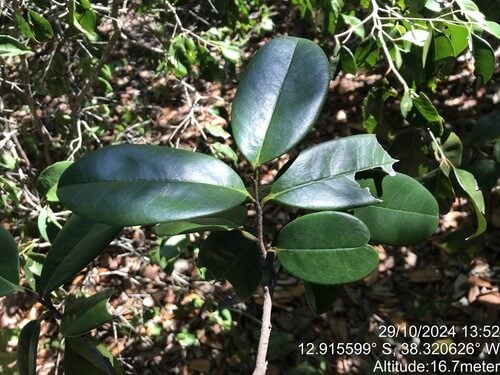
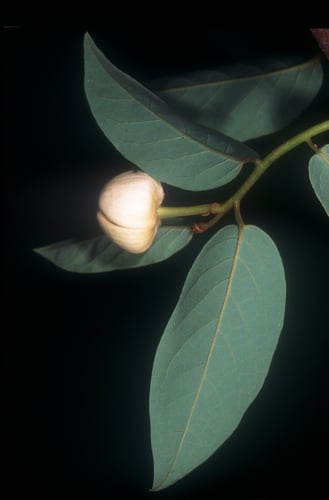
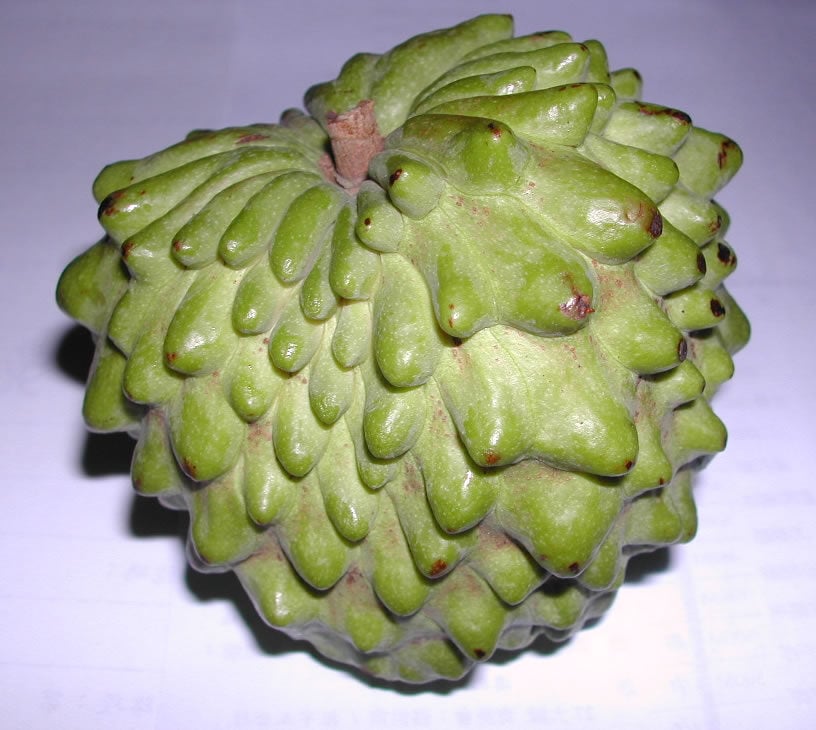
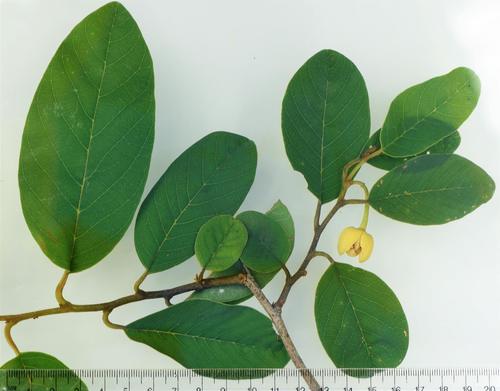
A shrub or tree. It grows 5-7 m tall. It can be taller up to 25 m tall. The trunk is 40 cm across. The young twigs have rusty hairs. The leaves are narrowly oval. They are a dark brown above and more pale underneath. They are 6-17 cm long by 2-5 cm wide. The flowers are near the leaves and in groups of 1-3. The flowers are green to yellow. The fruit are almost round and 2-3 cm long by 2-3 cm wide. They are yellow when ripe.
Edible Uses
Fruit - raw. Fleshy. The yellow, subglobose to broadly ovoid fruit is around 15 - 30mm long and 20 - 30mm in diameter, composed of around 50 - 100 carpels with seeds 8mm x 5mm.
Traditional Uses
The fruit are eaten raw.
This uses section is brief — help expand it
Distribution
It is a tropical plant. It grows in the rainforest. It grows up to 1,450 m above sea level.
Where It Grows
Amazon, Brazil, Central America, Costa Rica, Peru, South America,
Cultivation
Succeeds in dry soils and silicaceous soils.
Propagation
The seed of many species in this genus has a hard seedcoat and may benefit from scarification before sowing in order to speed up germination. This can usually be done by pouring a small amount of nearly boiling water on the seeds (being careful not to cook them!) and then soaking them for 12 - 24 hours in warm water. By this time they should have imbibed moisture and swollen - if they have not, then carefully make a nick in the seedcoat (being careful not to damage the embryo) and soak for a further 12 hours before sowing.
Other Uses
The wood is very light in weight and elastic. It is suitable for the shafts of carts and stretcherss as well as for small items of carpentry. It is used for construction
Production
Flowers occur from July to November and fruit from November to March.
Other Information
It is a cultivated fruit tree.
Synonyms
Also Known As
Achecou, Araticu cagao, Araticum, Aratimoia, Jangada preta, Pindaiba, Pinha, Ubatuba annona, Yangada
References (8)
- Fern, K., 2012, Tropical Species Database http://theferns.info/tropical/
- Fouqué, A. 1972. Espèces fruitières d'Amérique tropicale. Institut français de recherches fruitierès outre-mer (ifac) (As Annona neolaurifolia)
- Grandtner, M. M. & Chevrette, J., 2013, Dictionary of Trees, Volume 2: South America: Nomenclature, Taxonomy and Ecology. Academic Press p 39 (As Annona neolaurifolia and Annona ubatubensis)
- GRIN (As Annona neolaurifolia)
- Kermath, B. M., et al, 2014, Food Plants in the Americas: A survey of the domesticated, cultivated and wild plants used for Human food in North, Central and South America and the Caribbean. On line draft. p 68 and p 752 (As Rollinia laurifolia)
Show all 8 references Hide references
- Martin, F. W., et al, 1987, Perennial Edible Fruits of the Tropics. USDA Handbook 642 p 81 (As Rollinia longifolia) and Also as Rollinia laurifolia)
- Vael, L., 2015, Ethnobotanical study of the plant use in the natural landscape of two mestizo communities in the Ucayali region of the Peruvian Amazon. Universiteit Gent.
- www.colecionandofrutas.org (Also as Annona neolaurifolia and Annona ubatubensis)