Stelechocarpus burahol
(Blume) Hook. f. & Thomson
Kepel apple
iNaturalist· cc-by-nc
(c) farhanmaulana, some rights reserved (CC BY-NC)
iNaturalist· cc-by-nc
(c) Ananda Virgiana Prima Dewi, some rights reserved (CC BY-NC)
iNaturalist· cc-by-nc
(c) Ananda Virgiana Prima Dewi, some rights reserved (CC BY-NC)
Summary
Source: WikipediaStelechocarpus burahol, commonly known as kepel, is a plant in the custard apple family Annonaceae, native to the humid evergreen forests of Malesia, and known for its edible fruit. It is cultivated only in Java, Indonesia.
Description
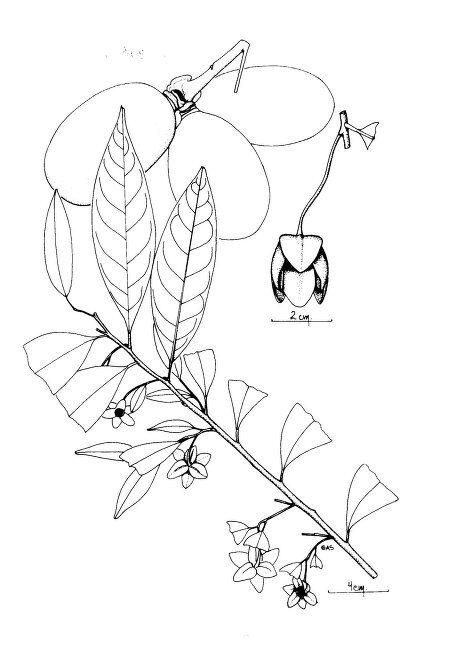
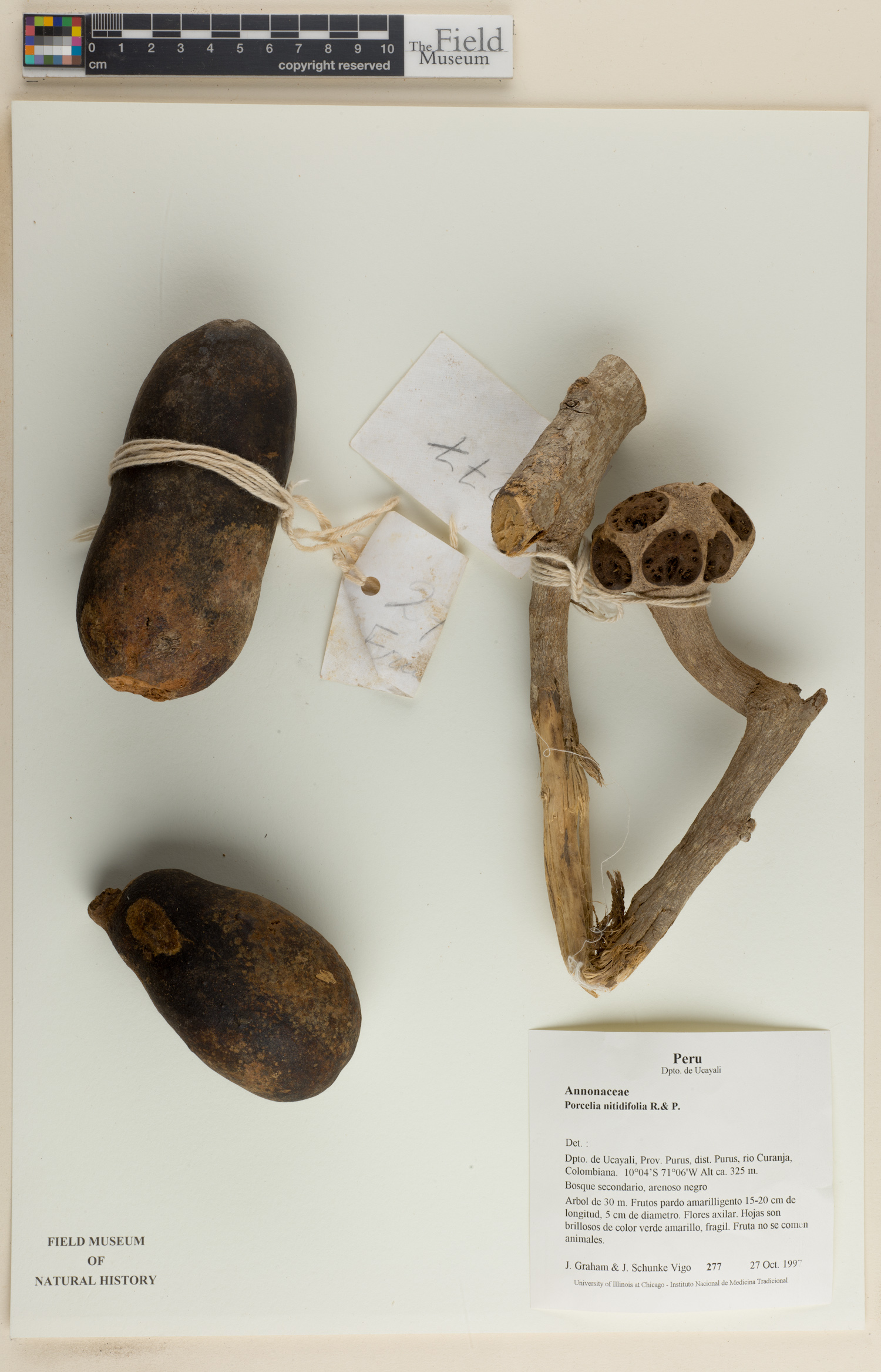
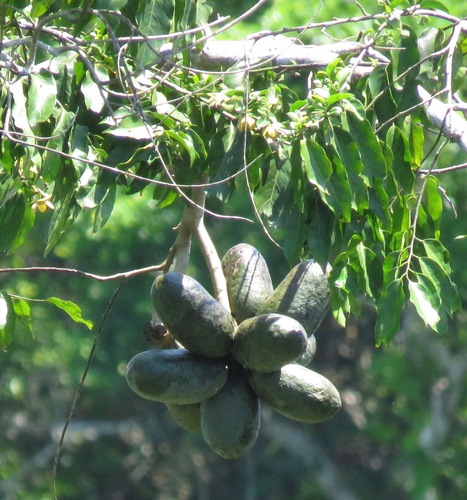
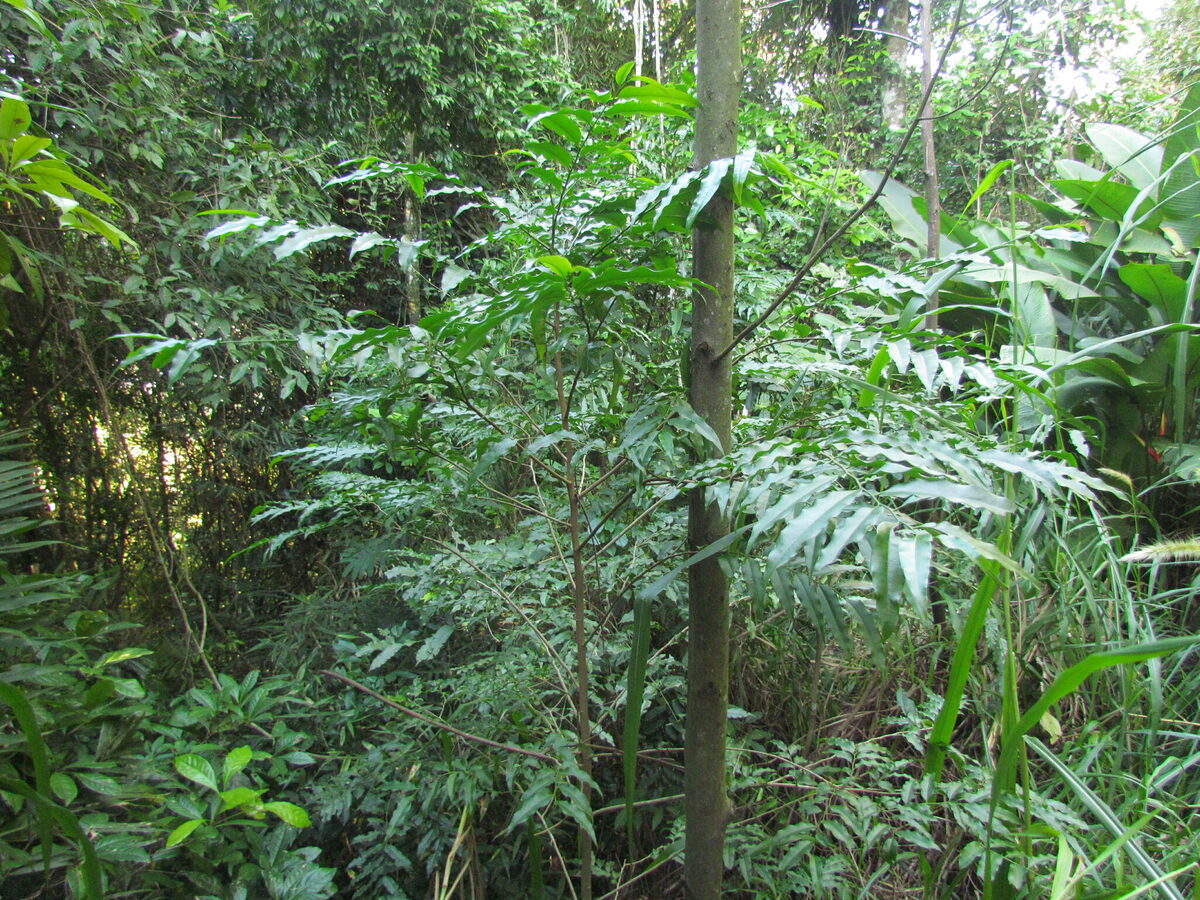
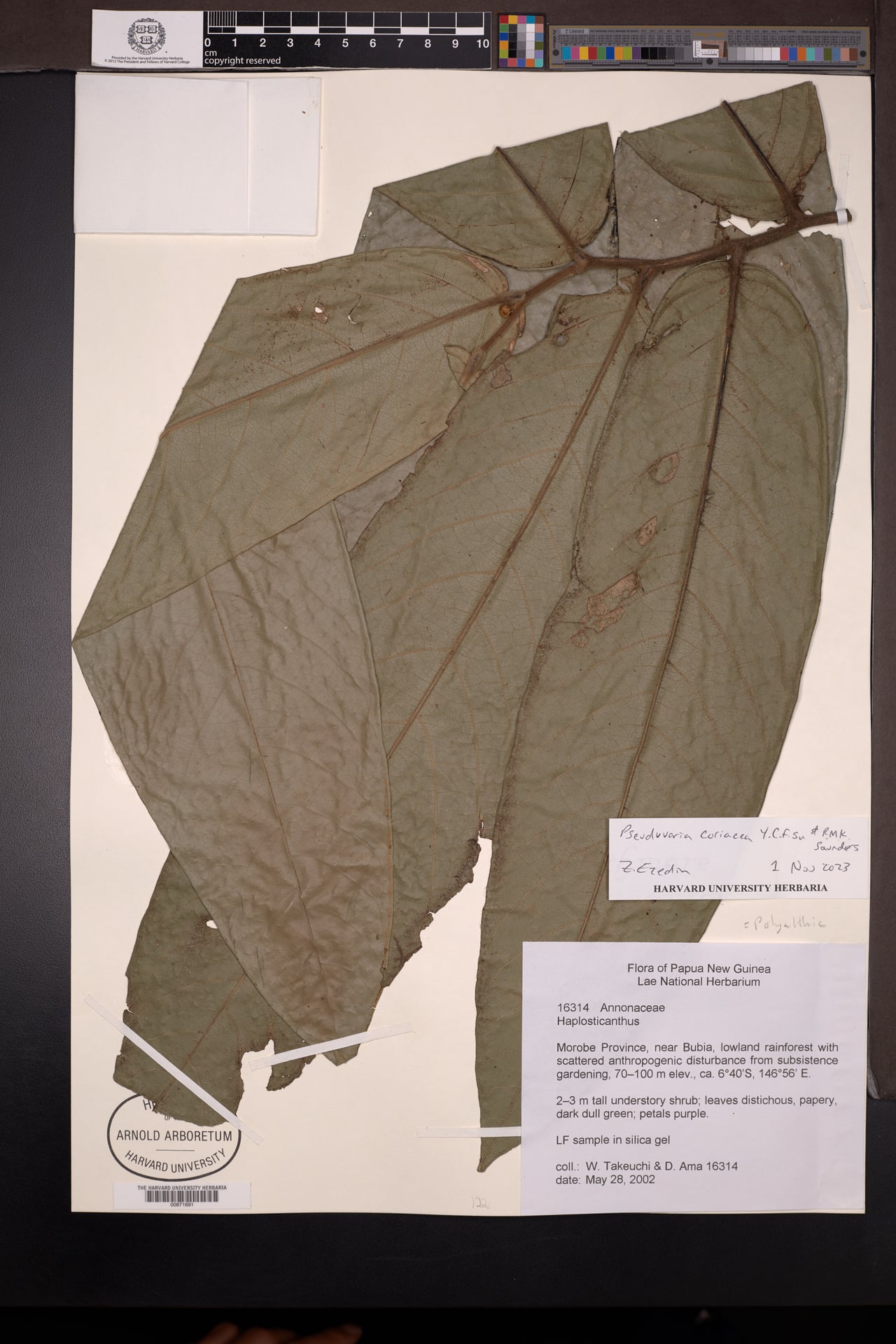
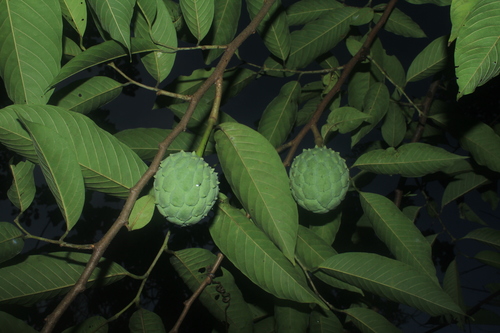
A shrubby evergreen tree. It grows 20 m tall. The leaves are simple and bright green. They are narrowly oval and 30 cm long. They are glossy and have deep veins. The male and female flowers are separate on the same tree. The flowers are pale yellow. The female flowers are slim on long stalks and are trumpet shaped. The male flowers are on the branches and female flowers are on the lower trunk. Fruit are borne on the lower trunk. The fruit has a violet like smell which also continues in the body once the fruit is eaten. The fruit are about 6-7 cm across. They are brown when mature. The pulp is sweet and edible. The seeds are large and brown. There are 4-6 seeds.
Edible Uses
The ripe fruit pulp is eaten fresh and has a sweet, spicy mango-like flavor. The fruit has a violet-like scent that persists in the body after eating.
Traditional Uses
The ripe fruit are eaten fresh. Fruit have a spicy mango-like flavour.
This uses section is brief — help expand it
Medicinal Uses
The fruit pulp is a diuretic and is used to prevent and treat kidney inflammation. It is said to cause temporary sterility in women. It is said that the orange, juicy pulp of the fruit gives the fragrance of violets to body excretions (urine, transpiration, breath). Hence it served aristocratic ladies as a perfume and a family-planning agent. In Java its use was traditionally restricted to the consorts of the sultan of Jogja.
Distribution
It is a tropical plant. It is native to SE Asia. It is an understorey tree in the lowland evergreen forest and rainforest. It is cultivated in central Java. It grows up to 600 m above sea level.
Where It Grows
Asia, Australia, Hawaii, Indonesia*, Malaysia, Pacific, Philippines, SE Asia, Suriname, USA,
Cultivation
Plants can be grown from seeds and from cuttings.
Propagation
Seed - usually taken from mature fruits and sown immediately. The seed is cleaned by washing and is dried under shade. Before sowing the seed is scarified, but germination may still take many months. Eventually a high percentage of the seeds does germinate. Initially seedlings are slow-growing. Softwood cuttings.
Other Uses
The wood is suitable for household articles; the straight trunk, after immersion in water for several months, is used in house building and is said to last for more than 50 years.
Other Information
Fruit are enjoyed. It is a cultivated food plant.
Notes
There are 5 Stelechocarpus species. A rare and endangered species.
Synonyms
Also Known As
Bungkul, Burahol, Kecindul, Kepel, Keppel
References (18)
- Arora, R. K., 2014, Diversity in Underutilized Plant Species - An Asia-Pacific Perspective. Bioversity International. p 87
- Barwick, M., 2004, Tropical and Subtropical Trees. A Worldwide Encyclopedic Guide. Thames and Hudson p 381
- Darley, J.J., 1993, Know and Enjoy Tropical Fruit. P & S Publishers. p 120
- Dodo, 2015, Keanekaragaman dan konservasi Tumbuhan Buah Langka Indonesia. Pusat Konservasi Tumbuhan Kebun Raya – LIPI. Warta Kebun Raya 13(2)
- Facciola, S., 1998, Cornucopia 2: a Source Book of Edible Plants. Kampong Publications, p 14 (As Stelechocarpus burakol)
Show all 18 references Hide references
- Fl. ind. 1:94. 1855
- Hariyadi, B., 2008, The Entwined Tree: Traditional Natural Resource Management of Serampas, Jambi, Indonesia. Ph. D thesis. Univ. or Hawaii. p 402
- Hedrick, U.P., 1919, (Ed.), Sturtevant's edible plants of the world. p 665 (As Uvaria burahol)
- Lembaga Biologi Nasional, 1977, Buah-Buahan, Balai Pustaka, Jakarta. p 68
- Priyadi, H., et al, Five hundred plant species in Gunung Halimun Salak National Park West Java. A checklist including Sundanese names, distribution and use. CIFOR, FFPRI, SLU p 24
- PROSEA
- Staples, G.W. and Herbst, D.R., 2005, A tropical Garden Flora. Bishop Museum Press, Honolulu, Hawaii. p 112
- Sukarya, D. G., (Ed.) 2013, 3,500 Plant Species of the Botanic Gardens of Indonesia. LIPI p 519
- Tankard, G., 1990, Tropical fruit. An Australian Guide to Growing and using exotic fruit. Viking p 110
- USDA, ARS, National Genetic Resources Program. Germplasm Resources Information Network - (GRIN). [Online Database] National Germplasm Resources Laboratory, Beltsville, Maryland. Available: www.ars-grin.gov/cgi-bin/npgs/html/econ.pl (10 April 2000)
- Wiersema, J. H. & Leon, B., 2013, World Economic Plants. A Standard Reference CRC Press. 2nd Ed. p 659
- World Checklist of Useful Plant Species 2020. Royal Botanic Gardens, Kew
- Zeven, A. C. & de West, J. M. J., 1982, Dictionary of cultivated plants and their regions of diversity. Wageningen. p 49