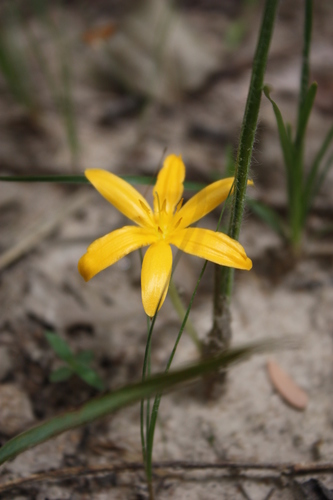
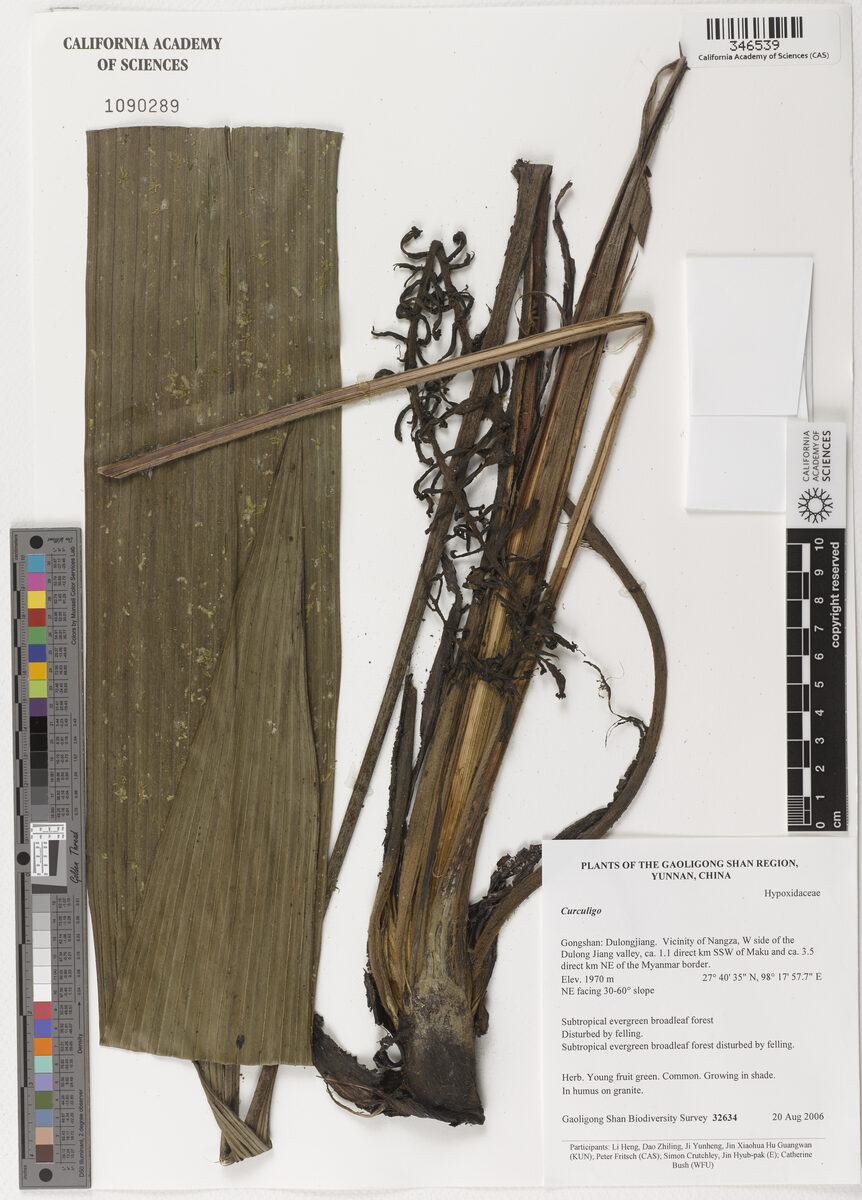
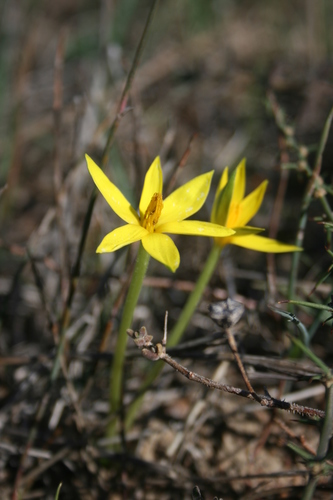
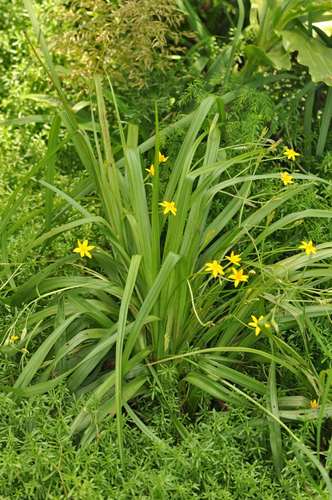
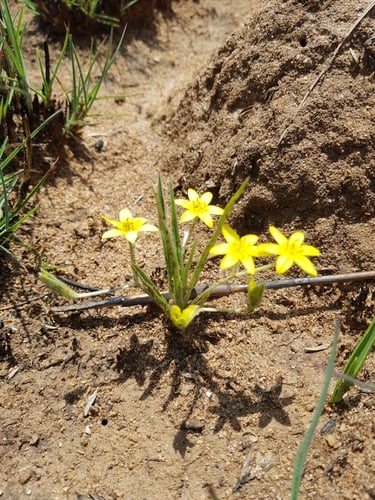
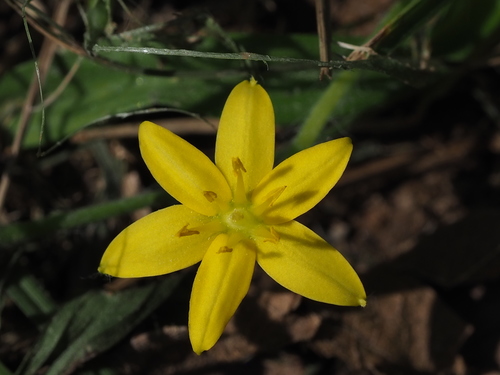
Hypoxis goetzei
De Wild.
iNaturalist· cc-by-nc
(c) Nicholas Wightman, some rights reserved (CC BY-NC), uploaded by Nicholas Wightman
Description
A herb. It grows 36 cm tall. It has an underground stem or rhizome 2-5 cm long and 1.4-4.5 cm thick. There are 4-8 roots. They are 40 cm long by 2-8 cm wide. There are 6-12 flowers in a group 5-12 cm long.
Edible Uses
Root - cooked. Eaten as a vegetable. Juicy. A white flesh, becoming bluish when exposed to air. The subglobose rhizome is around 37 - 15cm long and 4 - 10cm in diameter. The plant is used in the treatment of headaches. One leaf from the plant is closed around the head until recovery.
Medicinal Uses
An infusion of the corm is used in the treatment of epilepsy, HIV/AIDS, abdominal pain and stomachache. Used as a treatment for headaches - one leaf from the plant is closed around the head until recovery.
Distribution
It is a tropical plant. It grows between 900-2,600 m above sea level.
Where It Grows
Africa, Congo DR, East Africa, Malawi, Tanzania, Zambia, Zimbabwe,
Cultivation
Hypoxis species are generally not very cold tolerant plants and most species are badly damaged or killed by even light frosts. They will usually grow well in a Mediterranean type of climate with little or no frost. Species in this genus generally require a light, freely draining soil and a position in full sun or light shade. This species is found in the wild on dry to swampy ferralite, pale brown sandy loam, black loam, light loam, stony soil, sometimes very compact soils. Hypoxis species greatly resent root disturbance, plants should be placed in their permanent positions as soon as possible and left undisturbed for as long as possible. Hypoxis goetzei is unique among other species of Hypoxis of the East Tropical Africa in developing inflorescences long before leaves. The flowers are finely sweet-scented.
Propagation
Seed - best sown as soon as it is ripe. Division.
Synonyms
References (1)
- http://biostor.org/reference/13137.text