Stephania glabra
(Roxb.) Miers
wikimedia· cc-by-sa
Wikimedia Commons - Dinesh Valke from Thane, India
wikimedia· cc-by-sa
Wikimedia Commons - Dinesh Valke from Thane, India
Description
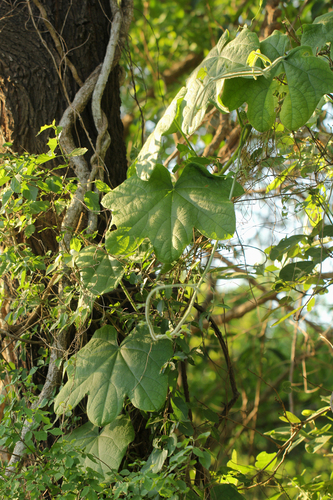
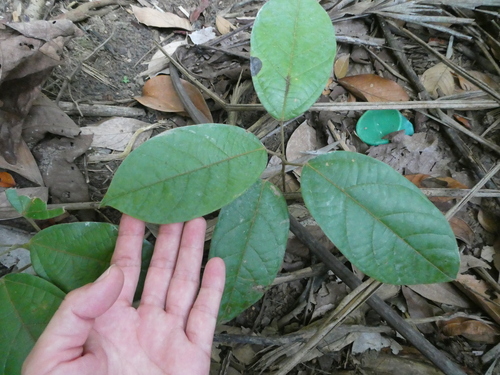
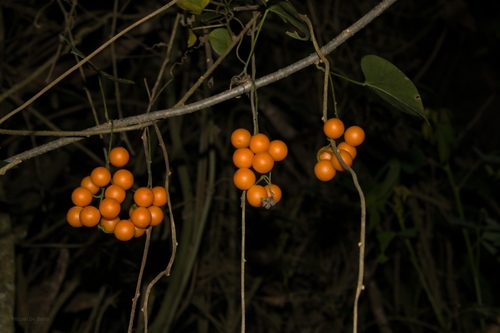
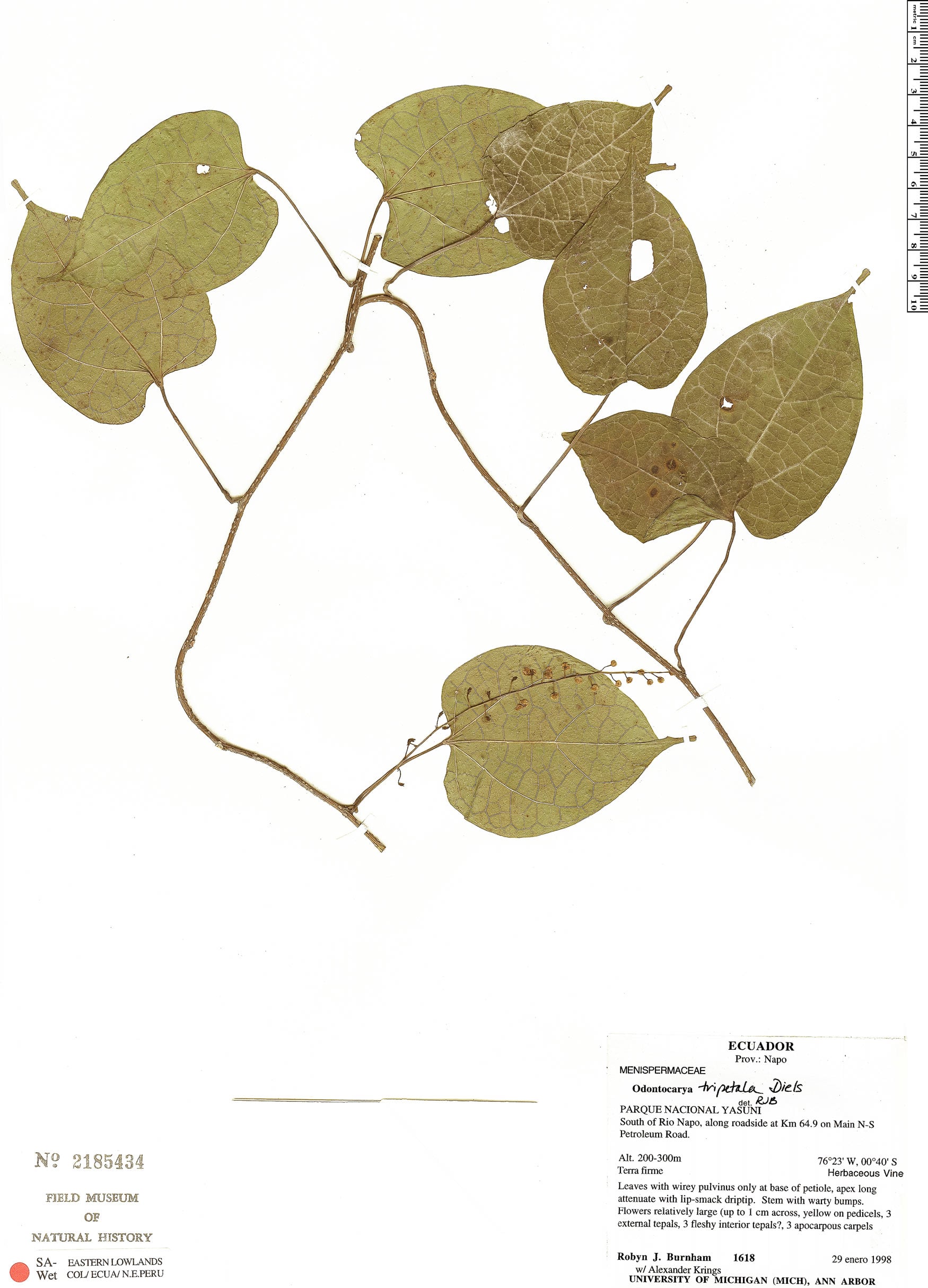
A vine. It has a tuberous rootstock. The tubers can weigh 30 kg. The stems are hollow and have lines along them. The leaf stalk is slender and 5-15 cm long. The leaves are round and the leaf stalk joins away from the edge of the leaf. The leaves are 6-12 cm wide. The male flowers are in the axils of leaves on stalks 4-8 cm long. The female flowers are more condensed. The fruit are oval and 6 mm long.
Edible Uses
The tubers and roots are eaten.
Medicinal Uses
The plant is used medicinally.
Known Hazards
Contains alkaloids.
Distribution
It is a subtropical and temperate plant. It grows in upland fields in Thailand. It grows in the Himalayas between 1,600-1,900 m above sea level.
Where It Grows
Asia, Bangladesh, Bhutan, China, Himalayas, India, Indochina, Myanmar, Nepal, Northeastern India, SE Asia, Thailand, Tibet,
Cultivation
Seedlings are transplanted.
Other Uses
The large root has a very bitter taste. This has led to it being used to make a container for lime which is being used with betel as a masticatory.
Notes
It contains alkaloids.
Also Known As
Khabukka, Maa noi, Purha, Thun newe, Thaya nuya
References (3)
- Price, L. L., 1997, Wild Plant Food in Agricultural Environments: A Study of Occurrence, management and gathering Rights in Northeast Thailand. Human Organization. 56(2)
- Wild edible plants of Himachal Pradesh
- Yeshi, K. et al, 2017, Taxonomical Identification of Himalayan Edible Medicinal Plants in Bhutan and the Phenolic Contents and Antioxidant Activity of Selected Plants. TBAP 7 (2) 2017 pp 89 - 106